Nouveautés — Découvrez les dernières arrivées dans notre catalogue. Voir →
Aperçus sur les connaissances et la culture du sabre japonais
Menukishi (目貫師) are metalworkers who specialize in creating menuki (目貫), small ornamental metal plates attached to Japanese sword hilts. Crafted from copper, shakudo (赤銅), silver, and gold, menuki transformed from practical fastener protectors into refined artistic expressions of samurai aesthetic and social status. The article traces their evolution through major schools like the Goto family, explains key techniques such as high-relief carving and metal inlay, describes how menuki are designed as symmetric pairs, and addresses the modern challenges facing this heritage craft as traditional craftspeople become increasingly rare.
Marking the Onin War (1467–1477) as a turning point, this study clarifies the armament realities of ashigaru, who became the leading force of the Sengoku period. It examines the types, quality, and acquisition routes of swords actually carried by ashigaru, and discusses the structural changes that the proliferation of kazuuchi mono brought to the sword industry, within the historical context of the era.
Japanese swords were not limited to domestic gifts; from the Muromachi through Edo periods, they were utilized as tools of diplomacy. This article elucidates the actual circumstances of sword diplomacy presented by the shogunal house to Korea, Ming China, Ryukyu (琉球), and the Netherlands, and the influence those customs continue to have on modern gift-giving culture.
A guide to understanding and using the tōkō meikan (刀工名鑑), a reference work listing swordmakers' names, pseudonyms, origins, eras, and genealogies. Covers professional methods for identifying makers from blade inscriptions: reading the mei (銘), narrowing candidates by regional and stylistic characteristics, understanding school lineages and the transmission of forging techniques, and comparing across regions and periods. Also discusses available meikan publications and digital databases including NBTHK, with practical recommendations for collectors beginning their research.
Not all rust on Japanese swords is harmful. This article scientifically explains the differences in chemical composition and formation conditions of ubu-sabi (the healthy patina of old sword surfaces), aka-sabi (corrosive rust), and kuro-sabi (stable protective patina), along with the rust treatment and anti-corrosion techniques employed by togishi (sword polishers) and conservators.
Modern science is increasingly revealing the internal structure and manufacturing methods of the nihonto (日本刀). This article explains the secrets of forging invisible to the naked eye—discovered through X-ray transmission, CT cross-sectional imaging, and fluorescent X-ray elemental analysis—and their applications to authenticity appraisal.
Unearth Shikoku's sword culture, often overshadowed by the Honshū Gokaiden (Five Great Traditions). Organized by region, this work explores the genealogy of sword smiths, characteristics of production centers, and surviving masterworks in Awa, Sanuki, Tosa, and Iyo.
Sword dealers follow a four-step assessment process: verifying registration, authenticating the blade, evaluating condition, and determining price. Authentication examines jigane (地鉄/ground steel), hamon (刃文/blade pattern), and mei (銘/signature). Condition evaluation considers blade damage, rust, polish quality, scabbard condition, and mounting status. Pricing incorporates auction records and NBTHK certification grades.
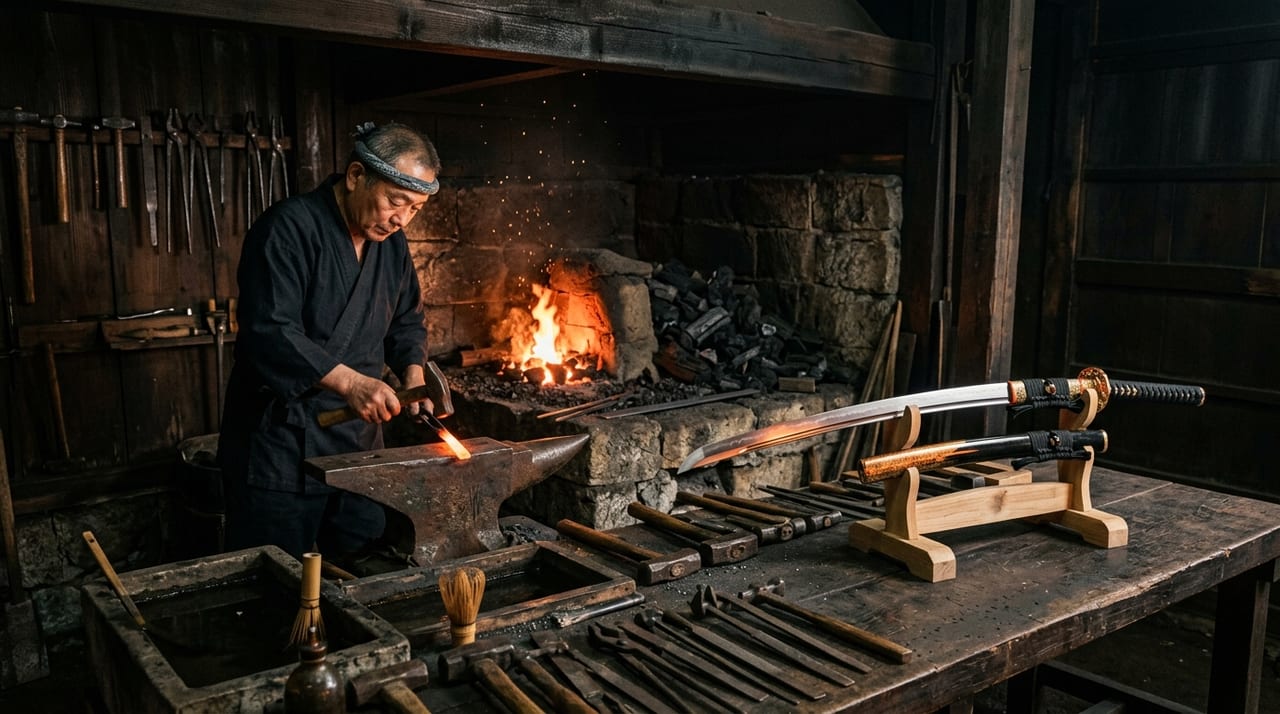
Contemporary sword smiths who complete their apprenticeship face multiple hurdles before establishing independence and operating their own smithy: certification from the Cultural Affairs Bureau, settling accounts with their master, equipment investment, and securing income. This article explains the realities of establishing an independent forge and the customs within the sword smith community.
Tamahagane (玉鋼) from tatara iron smelting cannot be used directly for sword-making. This article explains the refining process called oroshi-tetsu (卸し鉄) that swordsmiths employ, including slag removal, carbon equalization, and the separation of high-carbon kawagane (皮鉄) and low-carbon shingane (心鉄). These material management steps fundamentally determine the quality of Japanese swords.
The tōsu (刀子), said to be one of the prototypes of the Japanese sword, is a small blade deeply connected to Nara period court culture. From tōsu preserved in the Shōsō-in Imperial Repository to pieces circulating in modern antique markets, this article details their history, uses, and craft value.
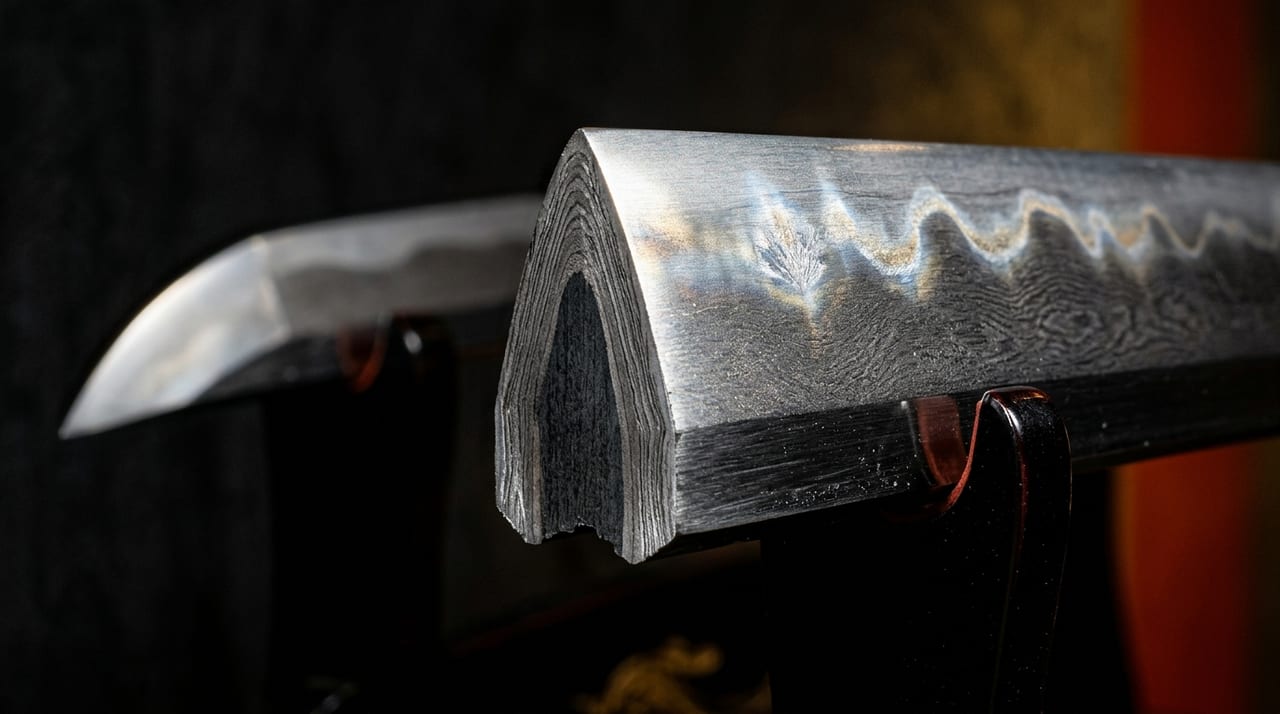
Modern science is revealing that in yaki-ire (焼き入れ)—the water quenching of Japanese swords—hamon (刃文) formation is influenced not only by water temperature but also by hardness, pH, and dissolved oxygen content. This explanation integrates the empirical knowledge of sword smiths with modern water quality science.