Nouveautés — Découvrez les dernières arrivées dans notre catalogue. Voir →
Aperçus sur les connaissances et la culture du sabre japonais
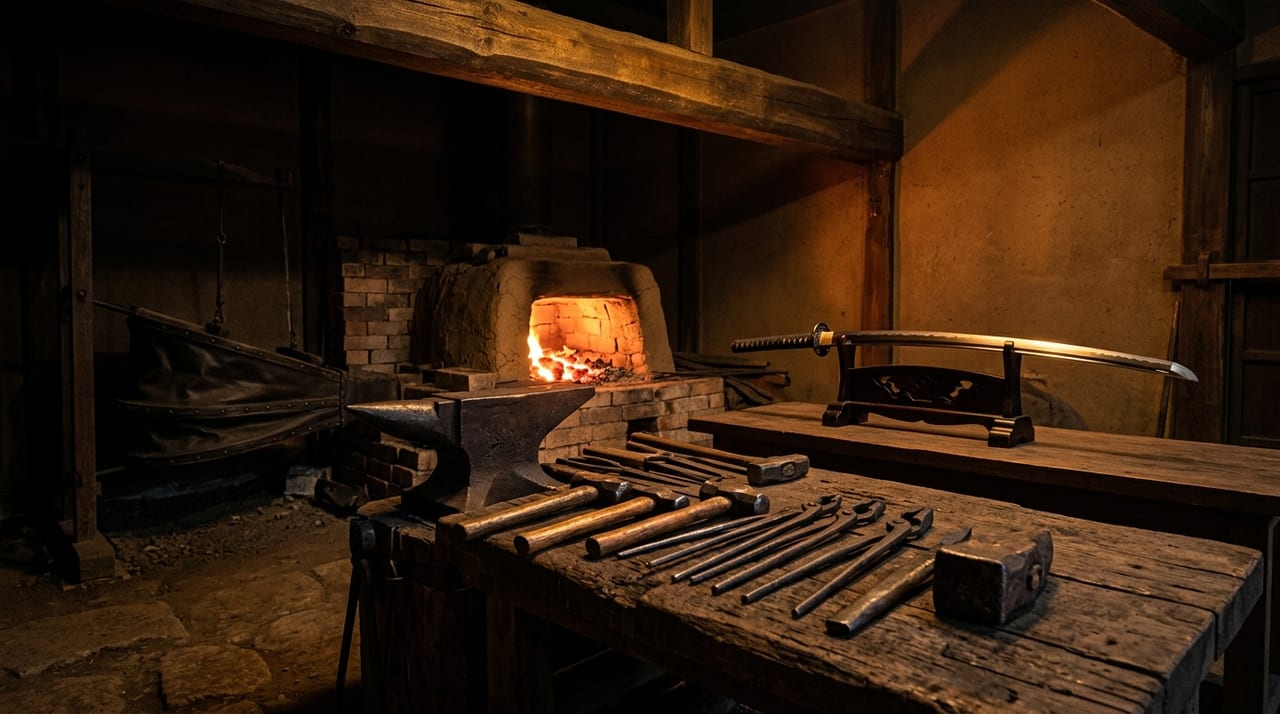
Shared forge facilities (kyodo kajiba) are emerging as a solution for Japanese sword-makers to reduce overhead costs by pooling equipment such as furnaces and bellows. This article examines pioneering examples from Shimane, Fukuoka, and Gifu, discussing economic benefits and operational challenges, municipal subsidies, and future prospects for broader industry adoption.
Exploring the regional promotion agreements between sword-producing areas like Bizen, Seki, and Satsuma with local governments and tourism associations, and the commercial and cultural value of production-area branding.
Tracing the history of specialty magazines that supported knowledge dissemination and market formation in the Japanese sword industry, this article examines the roles played by Tōken Bijutsu and Tōken Shunjū, and discusses their transformation in the digital age.
Ōkaneihira is a tachi sword from the late Heian period attributed to Kanehira of Bizen, and this great tachi with a blade length of 89.2 centimeters is a national treasure among national treasures, also evaluated as "the finest sword under heaven." This article details its provenance passed down through the Ikeda clan (Okayama domain), the technical significance embedded in its remarkably large blade, and its preservation status at the Tokyo National Museum.
The meimei keshō (銘名継承) system passes a sword master's name to a chosen disciple. It transmits technique, aesthetic principles, and the school's philosophy—like kabuki's myōseki (名跡) tradition. Succession requires ten years of training and mukansa (無鑑査) certification. The article traces lineages including Gassan Sadakazo (月山貞一) and discusses modern challenges: successor shortages and balancing rigorous standards with attracting new practitioners.
Explores how swordsmiths technically judge and develop toughness (tenacity) alongside hardness when forging tamahagane, integrating both materials science and traditional artisan expertise.
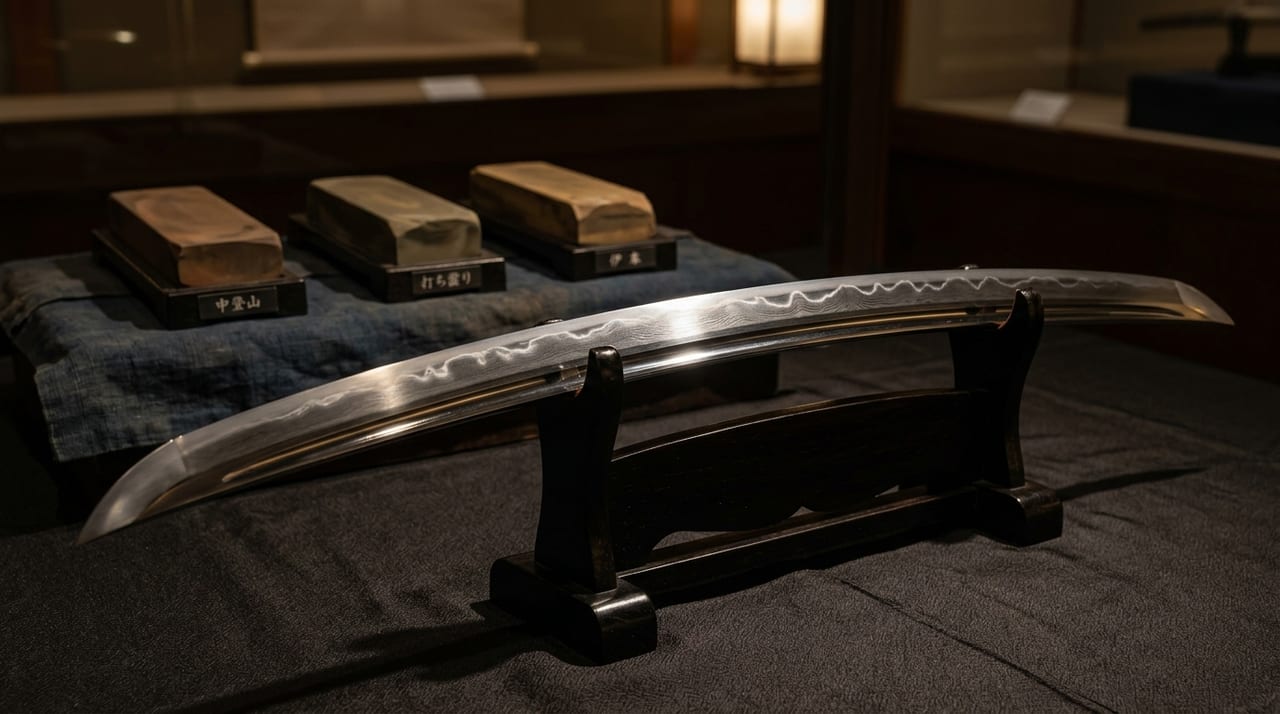
A detailed look at the school systems, years of apprenticeship, whetstone origins, and technical distinctions that define the work of Japanese sword polishers (togishi).
Uesugi Kenshin (1530-1578), revered as the God of War, had a profound relationship with Japanese swords and supported swordsmiths in Echigo Province.
An exploration of the aesthetic of swords, their religious significance, and social roles in the Heian period, read through descriptions of blades in literary works. From sword-wearing rituals in The Tale of Genji and the warrior worldview in The Pillow Book to the image of warriors in Tales of Times Now Past, this article approaches Heian sword culture through the lens of literature.
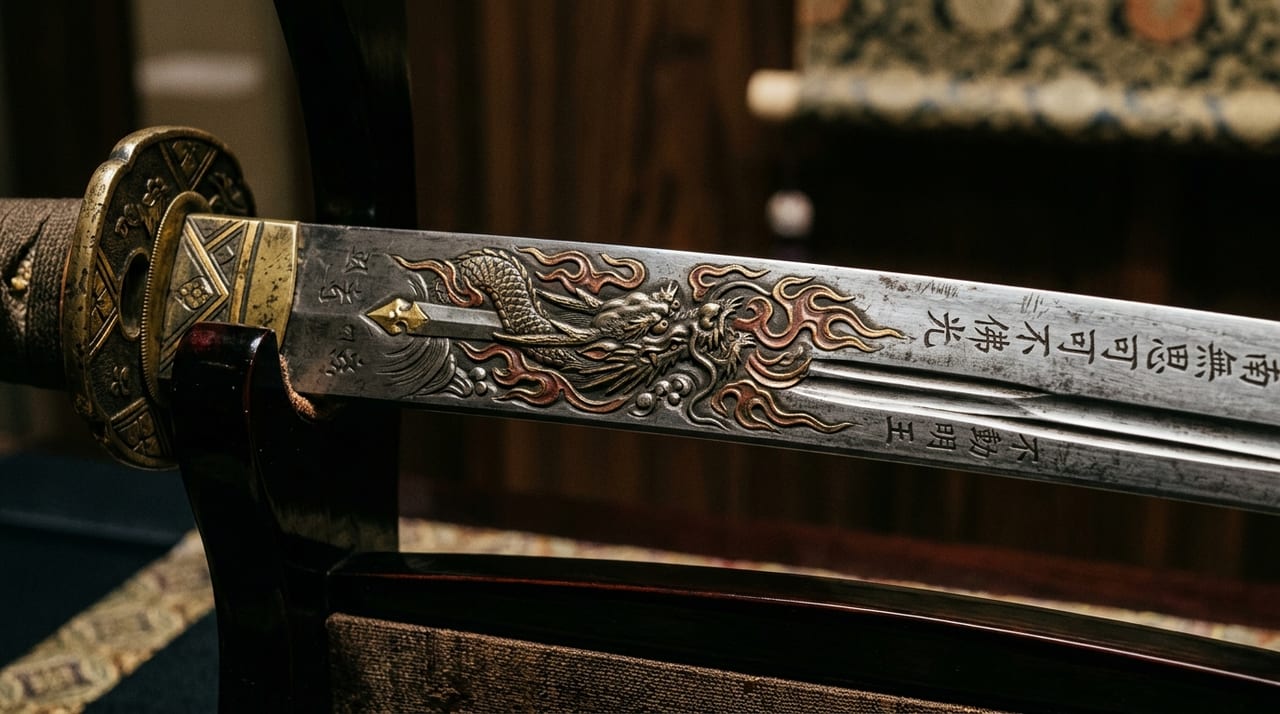
Reading the types and meanings of carvings engraved on Japanese sword blades through the lens of spiritual history and religious iconography.
An examination of changes in sword styles during the turbulent Genko-Shokyo period just before the fall of the Kamakura shogunate, and the early signs of the great sword expansion of the Nanbokucho era.
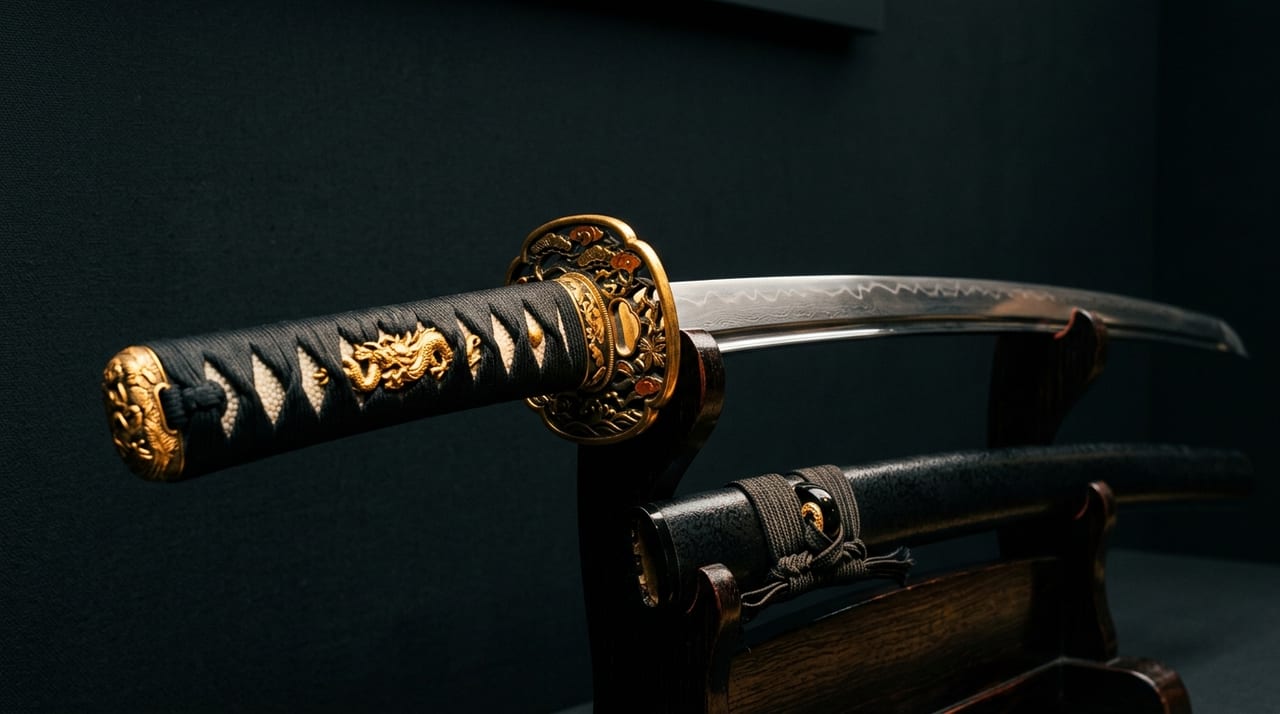
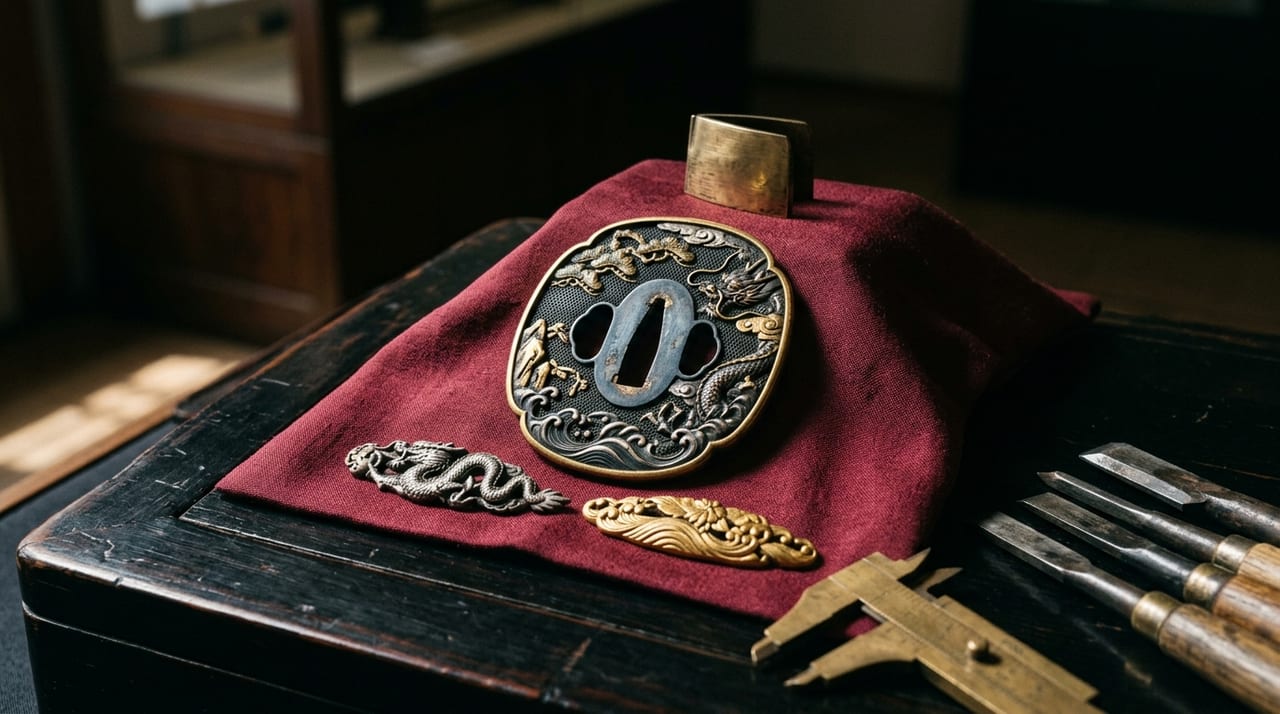
An explanation of the modern realities of training craftspeople (kinko-shi) who make sword fittings such as tsuba, menuki, fuchigashira, and kozuka. Covers the learning process for advanced metalworking techniques like chasing, inlay, and nanako punching, the current state of the apprenticeship system and vocational schools, and the challenges young metalworkers face in income, material procurement, and customer development.