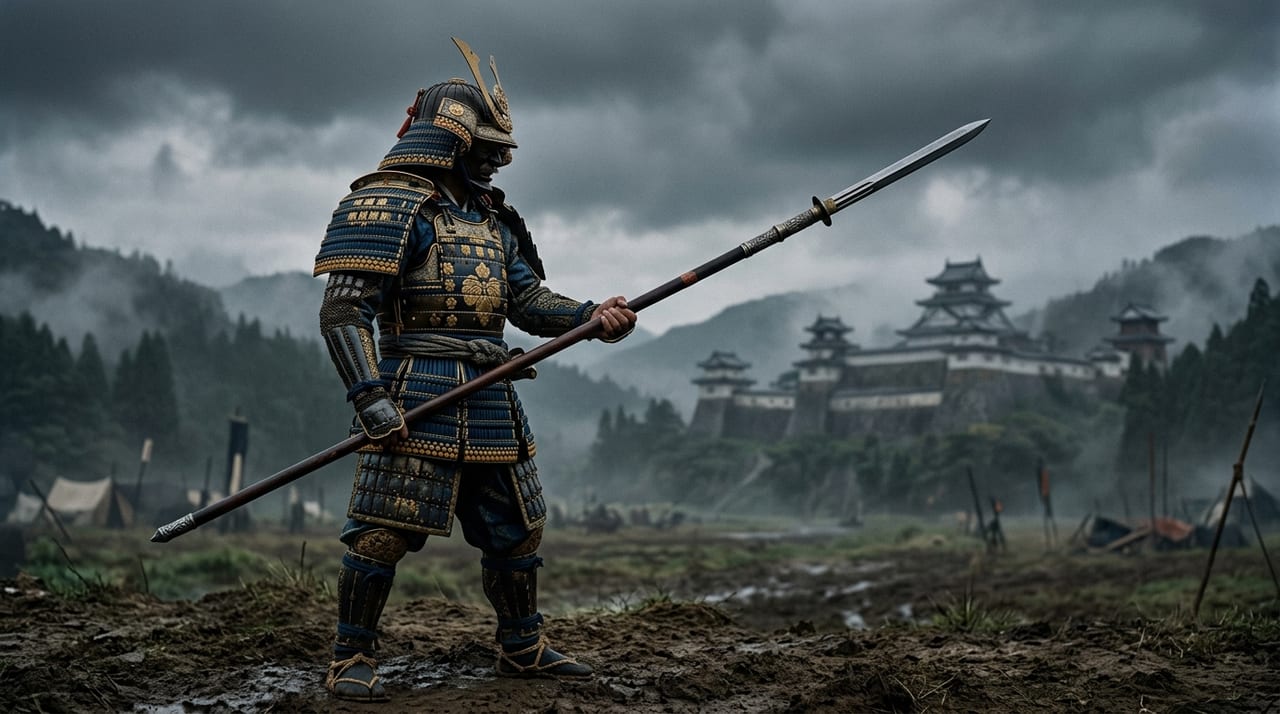
 * Image is for illustrative purposes only.
Fukushima Masanori
福島正則
Chief of the Seven Spears of Shizugatake——A Sengoku warlord renowned for his unparalleled courage and spear prowess
Description
The Hero of Shizugatake
Born in Eiroku 4 (1561) in Kaito District, Owari Province, Fukushima Masanori entered the service of Toyotomi Hideyoshi at a young age, as his mother was Hideyoshi's aunt. Through his fierce courage, he made a name for himself as one of the strongest warriors of the Sengoku period. At the Battle of Shizugatake in Tensho 11 (1583), Masanori displayed fierce spearmanship by slaying Haigo Ieyoshi, a formidable commander serving under Shibata Katsuie. Together with Kato Kiyomasa and Wakisaka Yasuharu, he was counted foremost among the "Seven Spears of Shizugatake." At this time, Hideyoshi greatly praised Masanori for having won the merit of the first spear, and from then on Masanori was known as the representative of the military faction of the Toyotomi house.
Tales of Valor
Masanori's valor is adorned with numerous anecdotes. The most famous is the drinking contest involving the spear "Nihongo." Masanori offered a large cup of sake to Mori Tahei Tomonobu, a retainer of the Kuroda house who had come as an envoy of Kuroda Nagamasa, and proposed: "If you can drink it all, I will grant you whatever reward you like." Tahei, renowned as a great drinker even among his own clan, at first declined because of his duties as an envoy. However, when insulted with words belittling the Kuroda warriors, he drained the large cup and requested as his reward the "Nihongo," one of the Three Great Spears of Japan, which Masanori had received from Hideyoshi. Unable to go back on his word, Masanori gave this famous spear of the realm to Tahei. The episode was sung in the Fukuoka folk song "Kuroda-bushi." This anecdote shows both Masanori's bold temperament and the chivalrous spirit of always keeping a samurai's promise.
The Battle of Sekigahara
At the Battle of Sekigahara, owing to his feud with Ishida Mitsunari, he sided with the Eastern Army (the Tokugawa side). After the war, he was elevated to the status of a great daimyo with 498,000 koku in Aki and Bingo provinces.
Loyalty to the Toyotomi and Forfeiture
Though Masanori had sided with Tokugawa Ieyasu's Eastern Army at Sekigahara, he never abandoned his sense of duty to the Toyotomi house. As the Osaka campaigns drew near, he was forced to submit to the Tokugawa while suppressing his desire to side with Toyotomi Hideyori. Even after the Edo period began, Masanori's martial renown and popularity did not fade, and his very existence was a latent threat to the Tokugawa shogunate. In Genna 5 (1619), the shogunate used Masanori's unauthorized repair of a castle as a pretext to carry out his forfeiture. It confiscated his domains in Aki and Bingo provinces and transferred him to a reduced 45,000 koku in Takai District of Shinano Province and Uonuma District of Echigo Province. The fall from a great daimyo of the realm to a minor daimyo dealt Masanori a severe blow, and he died in despair in Kan'ei 1 (1624).
Assessment as a Warlord
Masanori is known as a warrior of the military faction who fiercely opposed the civil-minded Ishida Mitsunari, but his governance was not purely martial. During his time in Hiroshima, he carried out land surveys and set taxes in accordance with actual yields, among other measures, and he increased his assessed revenue from 498,000 koku to 515,000 koku. Though rugged, he was loyal, and his bold, open-hearted, and warm-hearted character is said to have been loved by many retainers and common people. As "foremost of the Seven Spears of Shizugatake," he is handed down to posterity along with the anecdote of the famous spear "Nihongo."
Connection with TOUKENZA
Here you can view a powerful blade worthy of a hero.
Notable Swords
- Nihongo (Spear; one of the Three Famous Spears of the Realm. Bestowed by Hideyoshi but famously lost to Mori Tahei in a drinking contest—a tale of bold magnanimity.)