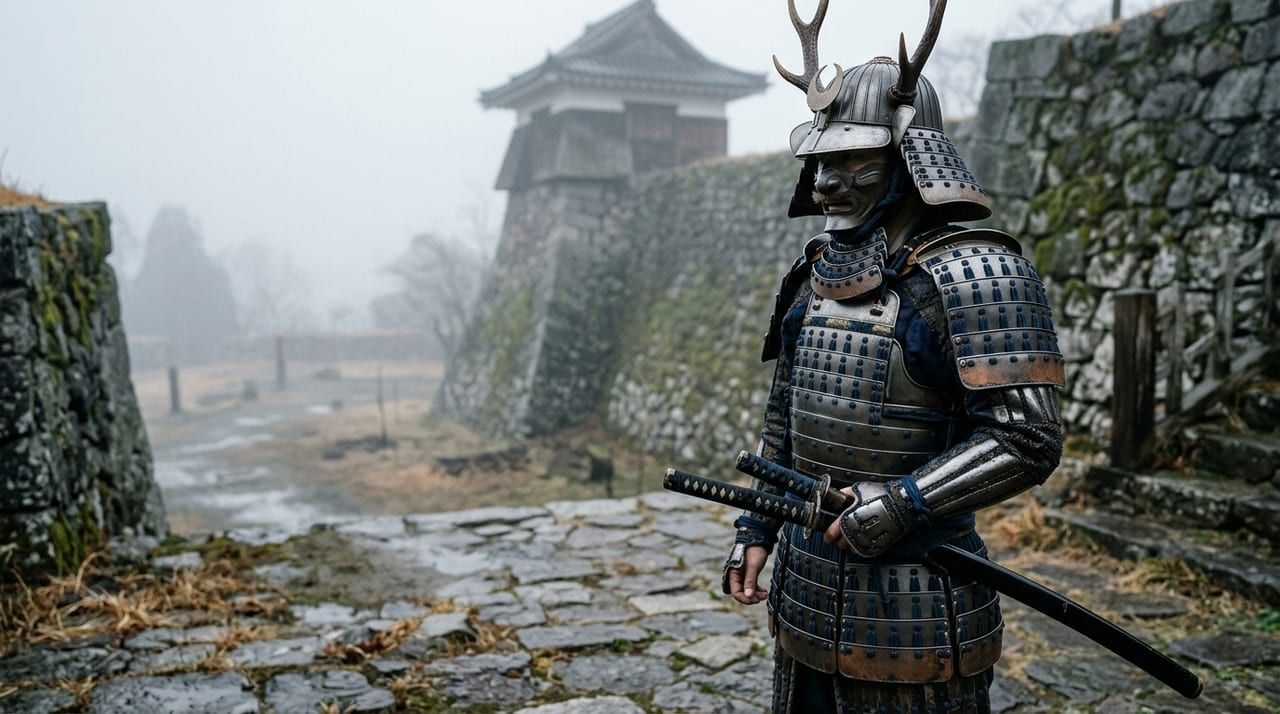
 * Image is for illustrative purposes only.
Hosokawa Tadaoki
細川忠興
Sansai—Gracia's Husband and Owner of Kasen Kanesada, a Warrior-Scholar Daimyō Who Lived Through a Turbulent Age of Tea, Swords, and Love and Hatred
Description
A Daimyō Skilled in Both Letters and Arms
Born in Eiroku 6 (1563) as the eldest son of Hosokawa Fujitaka (Yūsai), Hosokawa Tadaoki was one of the daimyō who most fully embodied the ideal of "bunbu ryōdō" (mastery of both the pen and the sword) in the Sengoku period. Although he studied under Sen no Rikyū as a first-rate tea master under the tea name "Sansai," he was also a warrior who took part in numerous battles. He served three rulers of the realm, Oda Nobunaga, Toyotomi Hideyoshi, and Tokugawa Ieyasu, and after the Battle of Sekigahara became daimyō of Kokura in Buzen with 390,000 koku.
An Intense Love with Gracia
The most famous aspect of Tadaoki's private life is the story of his love for his wife, Akechi Tama (baptismal name Gracia). Tama was the daughter of Akechi Mitsuhide, who bore the stigma of a traitor for the Honnō-ji Incident, and Tadaoki continued to protect her even after Nobunaga's death. Tadaoki's love for Tama also appeared as intense jealousy; so many anecdotes survive that his love was inseparable from an obsessive possessiveness. In Keichō 5 (1600), just before the Battle of Sekigahara, when the Western Army attempted to take Tama hostage, Gracia refused to become a hostage. In keeping with Christian teaching that forbids suicide, she had her chief retainer Ogasawara Hidekiyo (Shōsai) perform the kaishaku and thus met her end. This tragedy left a deep wound on Tadaoki's life.
Devotion to Swords and Armor
Tadaoki showed deep interest in the armor and equipment he used and is known as a warrior who devised original ideas. In the mountings of uchigatana, he established a style called "Higo-koshirae," and in armor, a form known as "Etchū gusoku." Higo-koshirae were designed with shorter blades and hilts to suit the sword techniques of Katayama Hōki-ryū iaijutsu, which Tadaoki had studied, and were intended for one-handed nukiuchi (quick draws). The decoration of the scabbards and fittings reflects the wabi-sabi sensibility of the tea ceremony.
Tadaoki and the Famed Sword Kasen Kanesada
The most famous of Tadaoki's beloved swords is "Kasen Kanesada." It is an uchigatana made by Nosada (Izumi-no-kami Kanesada) of Seki in Mino Province and is preserved at the Eisei Bunko. There is an anecdote that Tadaoki used this sword to summarily execute thirty-six of his son Hosokawa Tadatoshi's aides, deemed disloyal, and because he likened their number to the Thirty-Six Immortals of Poetry, the sword came to be called "Kasen Kanesada." The anecdote is still told as a symbol of a figure in whom extreme action and cultural refinement coexisted.
Master and Disciple with Sen no Rikyū
As one of Rikyū's Seven Disciples (the seven leading disciples of Rikyū), Tadaoki deeply carried on Rikyū's world of tea. When Rikyū was ordered by Hideyoshi to commit seppuku, it is said that only Tadaoki and Furuta Oribe went to visit him. The aesthetic sense of "wabi-sabi" that he learned from Rikyū is also reflected in the design of the Higo-koshirae that Tadaoki devised. Tadaoki's relationship between tea and the sword embodied the inseparable bond between "wabi tea" and the beauty of the martial arts.
A Long Life of Eighty-Three Years and His Legacy
In January 1646 (the 12th month of Shōhō 2), Tadaoki died at the age of eighty-three after a long life. Having served three rulers of the realm while skillfully overcoming political crises, and having laid the foundation for the Hosokawa family of Higo as a daimyō with 390,000 koku, Tadaoki's legacy extends across three fields: politics, military affairs, and culture.
Contributions to Sword Culture
The families of Hayashi Matashichi, Nishigaki Kanshirō, Hirata Hikozō, and Shimizu Jingo, who were employed by Tadaoki and produced sword fittings such as tsuba, continued within Kumamoto Domain until the end of the Edo period as Higo kinkō (Higo metalworkers). Swords and sword fittings handed down in the Hosokawa family, beginning with Kasen Kanesada, are still preserved today at the Eisei Bunko in Bunkyō, Tokyo, among other places.
Notable Swords
- Kasen Kanesada (made by Nosada of Seki in Mino Province. Named after the act of summarily executing thirty-six of his son Hosokawa Tadatoshi's aides as disloyal, likening them to the Thirty-Six Immortals of Poetry. A symbolic famous sword in which Tadaoki's extreme personality and cultural refinement coexisted)