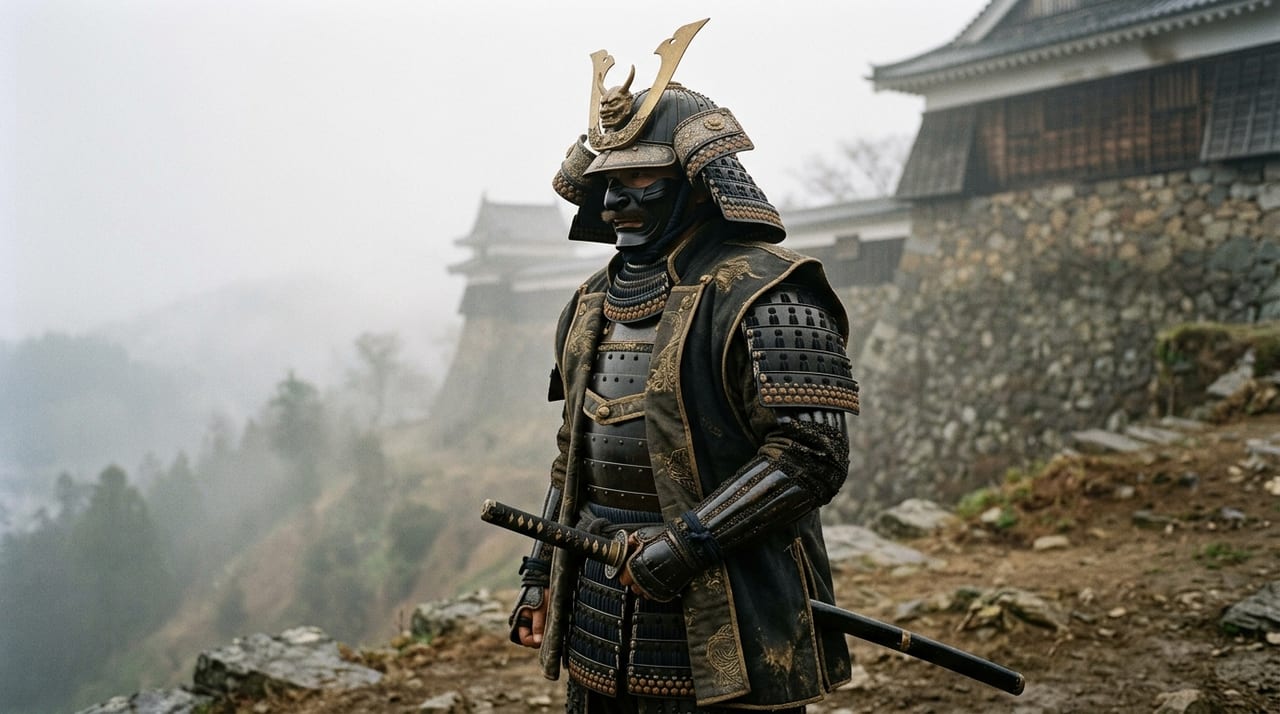
 * Image is for illustrative purposes only.
Senhime
千姫
Daughter of Tokugawa Hidetada and Principal Wife of Toyotomi Hideyori, a Princess of the Shogunal House Who Survived the Fall of Osaka and Sought Happiness in Remarriage
Description
A Princess Born to the Shogunal House
Senhime (1597-1666) was born in Fushimi as the eldest daughter of Tokugawa Hidetada, who would become the second shogun. Her mother was Gō, the third daughter of Asai Nagamasa, and her maternal grandmother was Oichi no Kata—that is, the younger sister of Oda Nobunaga. As a princess who inherited in her single person the principal Sengoku bloodlines of the Tokugawa, Oda, and Asai and who married into the Toyotomi house, her life came to symbolize the turning of the age.
Married to Toyotomi Hideyori at Only Seven
In 1603, Senhime, at only seven years old, married Toyotomi Hideyori and entered Osaka Castle. This was a political marriage aimed at reconciliation between Tokugawa Ieyasu and the Toyotomi house. Yet relations between the two houses gradually worsened, and after the Winter Siege of Osaka in 1614, the Toyotomi house moved toward destruction in the Summer Siege of Osaka the following year, 1615.
Rescue from the Fall of Osaka
When Osaka Castle fell in the Summer Siege, Senhime was rescued from the burning castle by order of her grandfather, Tokugawa Ieyasu. Her husband Hideyori took his own life together with his mother Yodo-dono, and the main Toyotomi house perished. After the fall, when Hideyori's surviving young daughter (Tenshūni) was about to be executed, Senhime is said to have taken her as her own adopted daughter and pleaded for her life, thereby saving her.
Remarriage to Honda Tadatoki and Later Years
In 1616, Senhime remarried Honda Tadatoki, heir of Honda Tadamasa, lord of the Kuwana Domain. When the Honda house moved to Himeji in Harima the following year, Senhime moved to Himeji Castle and was called the 'Princess of Harima.' She had a son and a daughter with Tadatoki and spent peaceful days, but misfortune followed—Tadatoki died of illness in 1626—and she eventually returned to Edo, took the tonsure, and adopted the name 'Tenjuin.' Mourning her two husbands, she closed her seventy-year life in 1666.
Connection to Swords
Reliable sources attesting to a sword carried personally by Senhime are scarce. As a princess of the shogunal house and a woman of a warrior family, she is thought to have lived within the custom of carrying a protective kaiken upon marriage. Senhime's life—surviving the unprecedented upheaval of the fall of Osaka—conveys to us today the meaning of resolve and self-defense carried by the blade (kaiken) worn by women of warrior families as the age shifted from the Sengoku era to the peace of Edo.
Notable Swords
- Kaiken (short blade) of a warrior-class woman—a protective sword carried upon marriage as a princess of the shogunal house and a woman of a warrior family. Although reliable records identifying a sword personally carried by Senhime are scarce, her life—surviving the fall of Osaka—illustrates that for warrior-class women the kaiken was a symbol of resolve and self-defense