New Arrivals — Browse our catalog for the latest authentic Japanese sword arrivals. Browse →
Keichō 2 (1597) – Keichō 3 (1598)
Southern Korean Peninsula (Gyeongsang, Jeolla, and Chungcheong Provinces), Ulsan Castle, Suncheon Castle, Noryang Strait
Forces
Japanese Forces
Korean–Ming Allied Forces
About 9 min read
In Keichō 2 (1597), Toyotomi Hideyoshi again dispatched a large army to Korea. The decision followed the breakdown of peace negotiations that had continued since the Bunroku Campaign (1592–93). The second invasion is known as the Keichō Campaign, and together with the Bunroku Campaign it is recorded in Japanese history as the Bunroku-Keichō Wars.
In Keichō 2 (1597), a total force of about 140,000 men, including Konishi Yukinaga, Katō Kiyomasa, and Kuroda Nagamasa, crossed to Korea in successive waves. Having suffered under the resistance of Korean forces, righteous armies, and Ming reinforcements during the Bunroku Campaign, the Japanese made securing the southern coastline and defending key strongholds the pillars of their strategy this time.
In the early stages, Japanese forces advanced with the upper hand, capturing Namwon Castle in the 8th month of Keichō 2 (1597) and occupying Jeonju. However, popular Korean resistance and the revival of the Korean navy under Yi Sun-sin put pressure on their supply lines. Yi Sun-sin had been arrested on false charges after the Bunroku Campaign. After the crushing defeat of the Korean navy at the Battle of Chilcheollyang in the 7th month of Keichō 2 (1597), he was restored to command and faced his final battles as a renowned commander.
From the 22nd day of the 12th month of Keichō 2 (1597) to the 4th day of the first month of Keichō 3 (early 1598), Ulsan Castle, defended by Katō Kiyomasa, was surrounded by a large Ming-Korean allied force. Food and water inside the castle quickly ran out, and Kiyomasa's troops slaughtered their horses, driven to the limits of endurance.
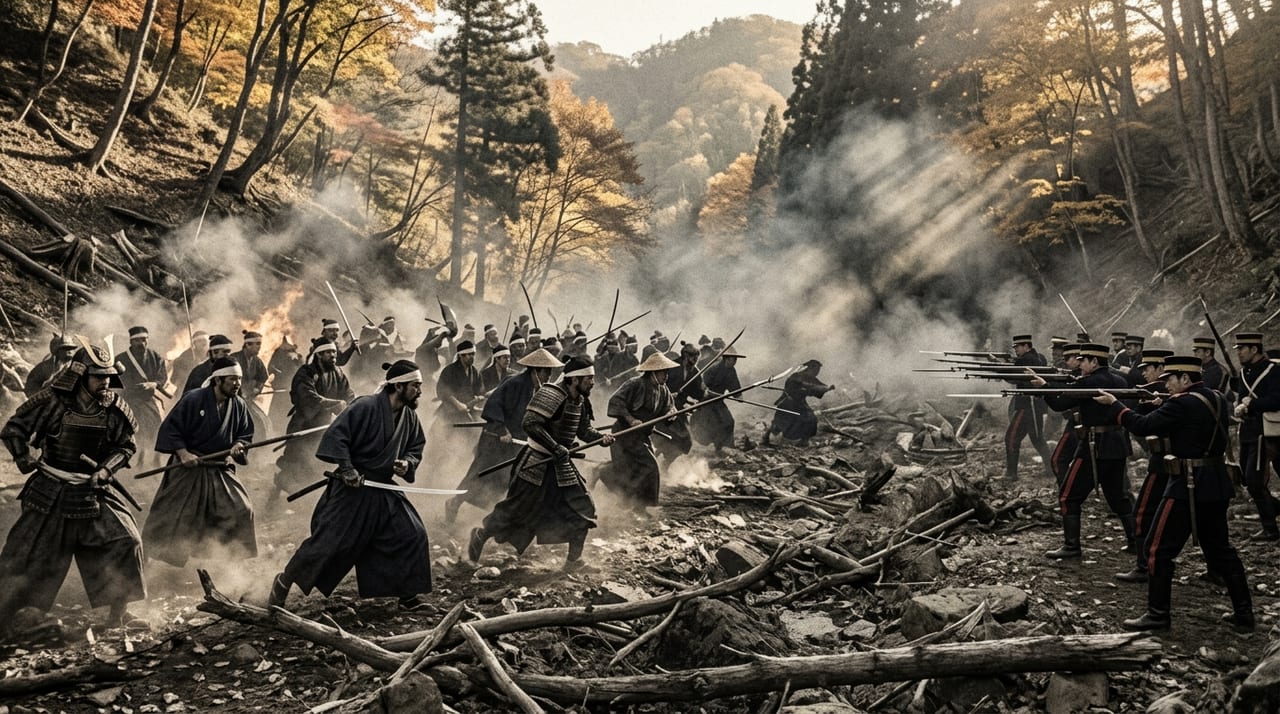
In this siege, the practical value of the Japanese sword was once again brought to light. In the hand-to-hand fighting along the castle walls, the use of blades at close range decided life and death. The single-hooked spear (katakama-yari) that Katō Kiyomasa is said to have favored is well known, but the swords worn by his retainers also crossed blades many times in the close fighting of those days.
Kiyomasa held the castle until the siege by the Ming-Korean allied forces was lifted in the first month of Keichō 3 (early 1598) by relief forces led by Mōri Hidemoto and Kuroda Nagamasa. This siege has been passed down to later generations as an embodiment of the warrior spirit of Japan, and it cemented Katō Kiyomasa's legendary status.
Many sengoku daimyō took part in the invasion of Korea, and each crossed the sea carrying famous blades. Among them, Nabeshima Naoshige of the Hizen Nabeshima clan is famous for bringing back potters of the Yi dynasty and laying the foundations of Hizen ware.
Of particular note is Dōtanuki, a battle-proven sword of Kyushu. Produced in Higo (Kumamoto), Dōtanuki is known as a rugged sword that prioritized practicality above all, and it is said to have been used in practice by the samurai of Katō Kiyomasa's command who took part in the Korean campaign. In the melees and close-quarters fighting on the Korean battlefields, the value of this kind of practical sword stood out.
On the 18th day of the 8th month of Keichō 3 (1598), Toyotomi Hideyoshi died, and the Council of Five Elders and the Five Commissioners decided to withdraw. However, the retreat was not easy. To safely evacuate some 64,000 troops scattered across fortresses in various places, it was necessary to eliminate the obstruction of the Korean and Ming navies.
In the 11th month of Keichō 3 (1598), the last major naval battle broke out at Noryang Strait, near present-day Namhae Island in South Korea. The naval forces of Shimazu Yoshihiro, Tachibana Muneshige, and Sō Yoshitoshi clashed with the combined navy led by Chen Lin and Yi Sun-sin.
In this battle, Yi Sun-sin was killed by a stray bullet. His last words, “Do not let the enemy know of my death” (waga shi o teki ni shirasu na), are still passed down today. The naval forces of Shimazu Yoshihiro and others fought hard, but while the naval blockade was lifted, Konishi Yukinaga and others at Suncheon succeeded in escaping by sea. Both sides suffered immense losses.
After the Keichō Campaign ended, many cultural influences from Korea were brought to Japan. The transfer of ceramic technology, including Satsuma ware, Arita ware, and Hagi ware, is well known.
The combination of matchlocks (hinawajū) and Japanese swords, which the Japanese army brought in large numbers, posed a tactical challenge: how to fuse hand-to-hand combat on the battlefield with long-range firing.
Rendered purposeless by Hideyoshi's death, the war ended and left irreparable scars on the Korean Peninsula. Yet the record of those harsh seven years remains an important subject of research in both sword history and military history, as an example of Japanese swords being deployed in an international war on the scale of East Asia.
Konishi Yukinaga
Vanguard and diplomatic envoy
Katō Kiyomasa
Land force commander (Katō forces)
Kuroda Nagamasa
Northern sector commander
Shimazu Yoshihiro
Victor of the Battle of Sacheon
Fukushima Masanori
Participant commander in the Keichō Campaign
Hosokawa Tadaoki
Participant commander in the Keichō Campaign
Toyotomi Hideyoshi
Commanding authority (supreme commander)