New Arrivals — Browse our catalog for the latest authentic Japanese sword arrivals. Browse →
4th–5th month of Keichō 20 (1615)
Settsu Province, Osaka (present-day Osaka City, Osaka Prefecture)
Forces
Tokugawa Forces
Toyotomi Forces
About 9 min read
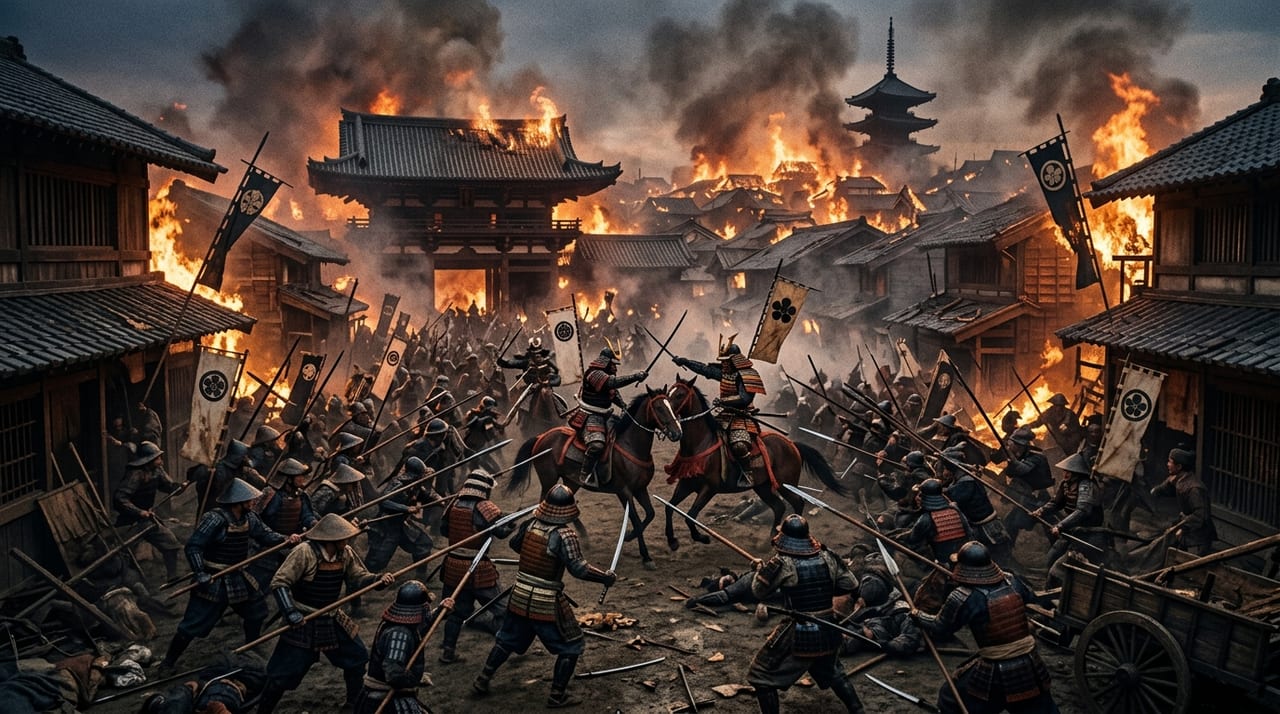
In the summer of Keichō 20 (1615), the final battle between the Toyotomi and Tokugawa houses was fought on the soil of Osaka. After the Winter Campaign of the previous year (Keichō 19) ended in a truce, Tokugawa Ieyasu made the truce's conditions include filling in the moats of Osaka Castle, which stripped away its defensive strength, and then launched a renewed offensive the following year. This is the Osaka Summer Campaign.
Among the rōnin whom Toyotomi Hideyori had taken into his service were leading commanders such as Sanada Yukimura (Nobushige), Chōsokabe Morichika, Mōri Katsunaga, and Akashi Teruzumi. Each of these outstanding Toyotomi commanders wore fine swords as they entered this final battle.
It is not known what sword Sanada Yukimura (Nobushige) favored. The best-known account holds that he wore a daishō of Muramasa blades. The origin of this claim can be traced to the "Tōgen Iji," written in Genroku 14 (1701) by a retainer of Tokugawa Mitsukuni. The book states that Yukimura regarded Ieyasu as a mortal enemy and never let go of his Muramasa blades, which the Tokugawa house considered ominous. However, the legend that Muramasa blades brought a curse upon the Tokugawa house arose only after Ieyasu's death. Rather than whether he actually possessed a Muramasa, it was this combination of "a legendary sword and a last warrior" that carried the tragic memory of the Osaka Summer Campaign down to later generations.
Gotō Matabei (Mototsugu), who fought valiantly in the Summer Campaign, is also renowned as a fierce commander who met a heroic death in the battle of Dōmyōji.
On the 6th day of the 5th month, the Toyotomi commanders who had taken the lead clashed with the Tokugawa forces in the area around Dōmyōji and Konda. Gotō Matabei fell in this battle. Sanada Yukimura, fighting as a separate detachment, also struggled valiantly, but he was gradually pushed into a difficult position by the Tokugawa army, which outnumbered his own.
On the 7th day of the 5th month, in the decisive battle at Tennōji and Okayama, Sanada Yukimura led the elite "Sanada unit" in a charge toward the main encampment of Tokugawa Ieyasu. Three successive fierce charges drove the Tokugawa formation to the brink of collapse, and it is also said that Ieyasu resolved to take his own life. However, the difference in strength could not be overcome, and Yukimura fell in battle after summoning his last strength. He died at the age of 49 by traditional reckoning. The records of the Shimazu clan, who had sided with the Tokugawa, also recorded him as "Sanada, the finest warrior in Japan" (Hinomoto ichi no tsuwamono). His final stand came to shape the samurai ideal of later generations, as a model of the warrior of the Sengoku period.
On the same day, Osaka Castle went up in flames. On the following 8th day of the 5th month, Toyotomi Hideyori and his mother, Yodo-dono, took their own lives, and the Toyotomi house was utterly destroyed. Many of the famous swords Hideyori had kept were consumed by the castle's flames, and some were seized by the Tokugawa side. The fate of the famous swords scattered across the country as "treasures of the Toyotomi house" became a subject of talk among sword enthusiasts throughout the Edo period.
Ichigo Hitofuri (made by Yoshimitsu) is known as a sword connected to Hideyoshi. It was originally a tachi known as Hideyoshi's favorite blade. It was burned (fire-damaged) when Osaka Castle fell and was later re-tempered by Echizen Yasutsugu. It is now held as Gyobutsu (Imperial collection), managed by the Board of Chamberlains, Imperial Household Agency, and its turbulent history is told alongside the memory of the Osaka Summer Campaign.
After the Osaka Summer Campaign, the Edo shogunate drew up the Buke Shohatto (Laws for the Military Houses), restricting the military autonomy of the daimyō. The Buke Shohatto enacted in Genna 1 (1615) prohibited daimyō from repairing castles or forming marriage alliances without permission. This political control also affected sword culture.
Swords of the Sengoku period were valued as practical weapons, but in the Edo period the sword came to be prized as a symbol of rank and beauty. Smiths of the shintō (new swords) period, from Keichō onward, lost the stage on which to test their skill in battle and instead turned toward the pursuit of artistic perfection. As sword-wearing became bound up with the etiquette of the samurai order and the maintenance of order in warrior society, the sword deepened its spiritual meaning as the "soul of the samurai."
The Osaka Summer Campaign was a dazzling curtain falling on the age of the Sengoku period. Through the twin events of the birth of the hero Sanada Yukimura and the fall of the Toyotomi house, this battle symbolizes a turning point in sword culture. From swords of the battlefield to symbols of martial arts and objects of art, that transition began at the moment the flames of Osaka Castle went out.
2026-08-30
戦国時代の戦争経済において、武器の調達コストは大名の財政を直撃した。刀・槍・鉄砲それぞれの相場と入手経路、刀工への報酬体系、大量調達時の価格交渉——戦争の裏側を支えた武器市場の実態を経済史・流通史の視点から解説する。
2026-06-07
1588年の刀狩令は単なる武装解除令ではなく、日本刀の流通・生産・所有権の構造を根底から変えた歴史的な業界再編事件だった。兵農分離の制度化が刀工・刀剣流通業者・武家に与えた影響を、経済史・社会史の視点で分析する。
2026-06-05
天正〜慶長期(1573〜1615年)に花開いた安土桃山文化と刀剣美学の関係を探る。千利休が体現する侘び・さびの精神が刀装具のデザインに及ぼした影響と、秀吉・家康の権力誇示としての豪華刀装の二極を解説し、この時代が後世の刀剣美学に与えた影響を考察する。
2026-05-16