Shima Sakon's Beloved Swords: The Blades of Mitsunari's Strategist and Sengoku Warrior Sword Culture
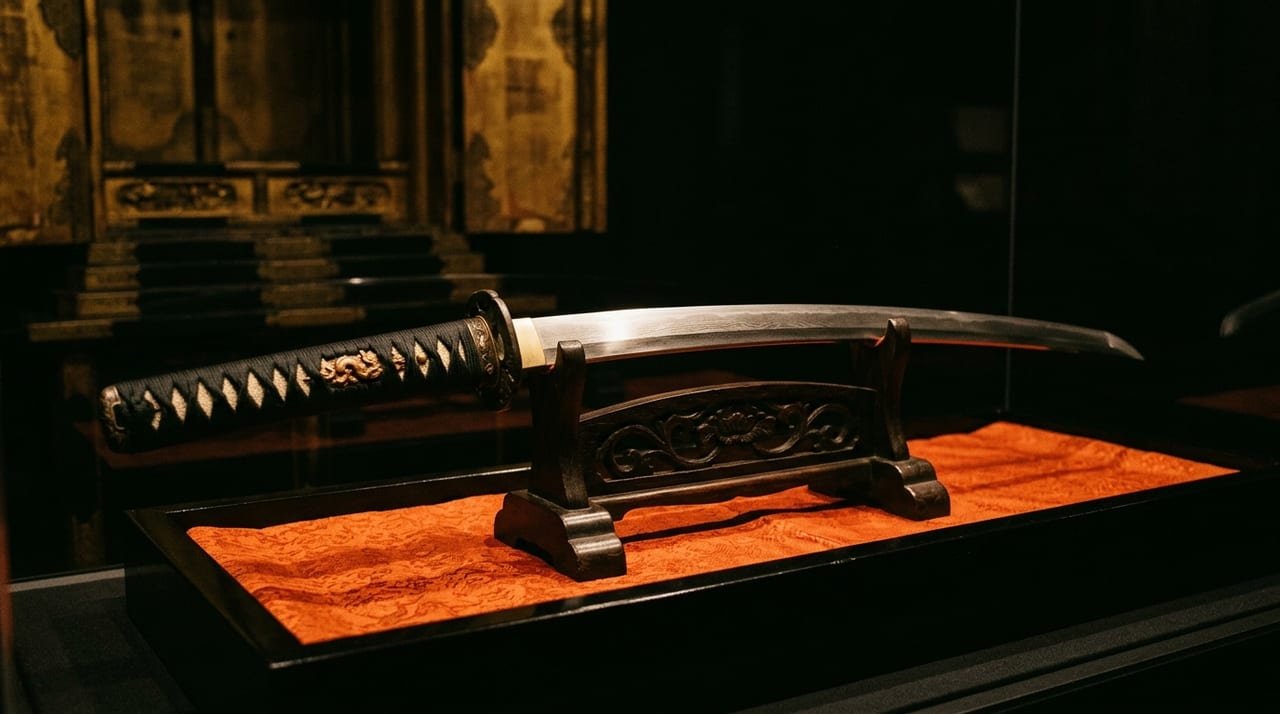 * Image is for illustrative purposes only.
Table of Contents
Who Was Shima Sakon?
Shima Sakon was a military general and strategist who flourished from the late Sengoku period through the Azuchi-Momoyama period. His real name is variously recorded as Shima Kiyooki or Shima Katsutake, with no definitive account. After serving under Tsutsui Junkei, he was recruited by Ishida Mitsunari and was reportedly given half of the Ishida clan's koku as his reward—a famous anecdote. He was so celebrated for his military prowess that the saying went: "Two things surpass Jibu-shōyū (Mitsunari): Sakon of Shima and Sawayama Castle"—his strategic talents were considered unrivaled in his time.
In the 1600 Battle of Sekigahara, Sakon fought on the Ishida side and was killed in action after fierce combat with the Kuroda Nagamasa and Hosokawa Tadaoki forces of the Eastern Army. His final moments were described as spectacular, reportedly continuing to fight while struck by multiple arrows.
The Beloved Blades of Shima Sakon—Records of His Swords
Direct historical records about the actual swords Sakon wielded are scarce. However, based on the sword culture of samurai from that era, several points can be inferred.
First, Ishida Mitsunari, whom Sakon served, took a keen interest in swords. Mitsunari received numerous meibutsu (renowned) swords from Toyotomi Hideyoshi, and as his retainer, Sakon would likely have been presented with swords by his lord as well. In the Sengoku period, the exchange of swords symbolized loyalty and trust between daimyo and vassal.
The region around Yamato Province (modern-day Nara Prefecture), where Sakon was born, was also the homeland of Yamato-den bladesmiths. Works by masters of the Yamato Goha (Five Schools of Yamato), such as Tegai Kanenaga and Hoshō Sadayoshi, were widely favored by samurai of the time. It is quite plausible that Sakon possessed swords of the Yamato-den tradition.
Moreover, during his service under Tsutsui Junkei, Sakon would have had opportunities to acquire swords from bladesmiths associated with the Tsutsui clan or sword merchants of Nara. The Tsutsui clan were a prominent daimyo of Yamato with considerable resources in sword culture.
Sekigahara and Swords—Weapons on the Final Battlefield
The Battle of Sekigahara was fought on the 15th day of the ninth lunar month in 1600. While firearms and bows were becoming the dominant weapons in battles of this era, swords and spears remained crucial in close combat.
On that day, Shima Sakon advanced as a vanguard of the Ishida forces and clashed directly with the Kuroda Nagamasa and Hosokawa Tadaoki contingents of the Eastern Army. Historical records diverge on whether Sakon withdrew from the battlefield after being struck by several bullets, or fell in battle. Either way, this battle marked the effective end of his life as a samurai.
For a Sengoku daimyo, one's sword was not merely a weapon but proof of one's way of life. The sword that Sakon gripped on the battlefield of Sekigahara embodied his loyalty and martial valor.
The Sword Philosophy of Sengoku Daimyo—Sword Culture Among Ishida Retainers
The retainer band of Ishida Mitsunari was composed of bureaucratic samurai of the Toyotomi regime. Mitsunari himself utilized swords as political instruments, and the bestowal of swords upon key retainers was a means of strengthening clan unity.
Under the Toyotomi regime, a system was established whereby Hideyoshi confiscated meibutsu swords from daimyo across the realm and redistributed them to visualize the master-retainer relationship (Toyotomi Hideyoshi and Hideyori: Sword Policy in the Azuchi-Momoyama Period). The renowned blades called "meibutsu" were symbols of authority transcending mere weapons, and samurai who received them accepted them as proof of their absolute loyalty to their lord.
No detailed records remain of what swords Sakon possessed, but considering the esteem in which Ishida Mitsunari held him, it is natural to assume he was given swords befitting his status.
Traditions Concerning Sakon's Swords and Later Assessments
Several traditions exist regarding swords associated with Sakon. Fragmentary records remain indicating that among the armor and swords confiscated from the Ishida faction by the Eastern Army after Sekigahara, some items were attributed to Sakon. However, the possibility that many of these are later embellishments (fukai)—stories attached after the fact—cannot be ruled out.
From the Edo period onward, Shima Sakon was passed down in ballads and oral storytelling as the "loyal retainer" and "shadow of Mitsunari." In these retellings, various legends accrued around his swords, though historical records with documentary support remain scarce.
Interest in Shima Sakon remains high as of 2026. Owing to the influence of sword-themed games such as "Touken Ranbu," younger generations are increasingly interested in the relationship between Sengoku daimyo and swords. This interest has contributed to a rediscovery of the historical and cultural value of the Japanese katana, and many fans enter the world of swords through the beloved blades of famous warlords.
Yamato-den Bladesmiths and Shima Sakon—The Background of Regional Sword Culture
Yamato Province, where Sakon was born and raised, was the heartland of "Yamato-den," one of the five great sword traditions of the Japanese katana. Bladesmiths of the Yamato Goha (Five Schools of Yamato)—Tegai, Hoshō, Senjuin, Taima, and Shikkake—created swords while maintaining deep ties with the shrines and temples of Nara.
Characteristics of Yamato-den:
- Hamon: Predominantly suguha with a refined finish from nioi-style work
- Jihada: Primarily masame grain, demonstrating precise forging
- Overall characteristics: Swords that combined practicality with elegance, designed for samurai use
Sakon grew up immersed in the sword culture of this region and, as a warrior, would have been familiar with swords of this tradition. The elegance and practicality characteristic of Yamato-den blades align well with the temperament of Sakon, who lived as a strategist and warrior.
Conclusion—The Intersection of Shima Sakon and the Sword
Definitive records of Sakon's personal blades have not been confirmed to date. However, considering the Sengoku period context in which he lived, the favor he received as a retainer of Ishida Mitsunari, and his ties to Yamato, it is likely that he possessed swords of the Yamato-den tradition or blades with connections to the Toyotomi clan.
For a Sengoku daimyo, the sword was both proof of martial prowess and a political symbol of the bond between lord and retainer. Shima Sakon too lived within the sword culture of his age, continuing to grip his blade on the final battlefield.