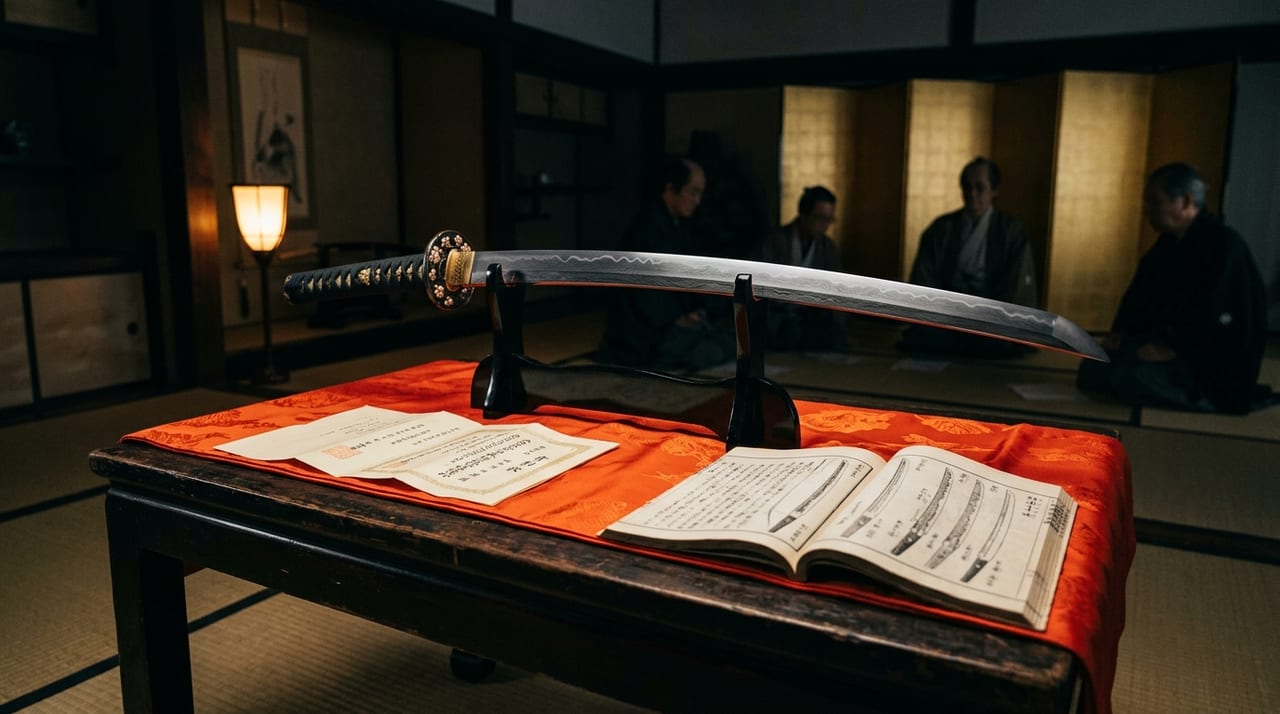
Taira no Masakado and the Sword — Blades Used by the Lord of the Eastern Provinces and the Sword Culture of the Kantō Warrior Clans
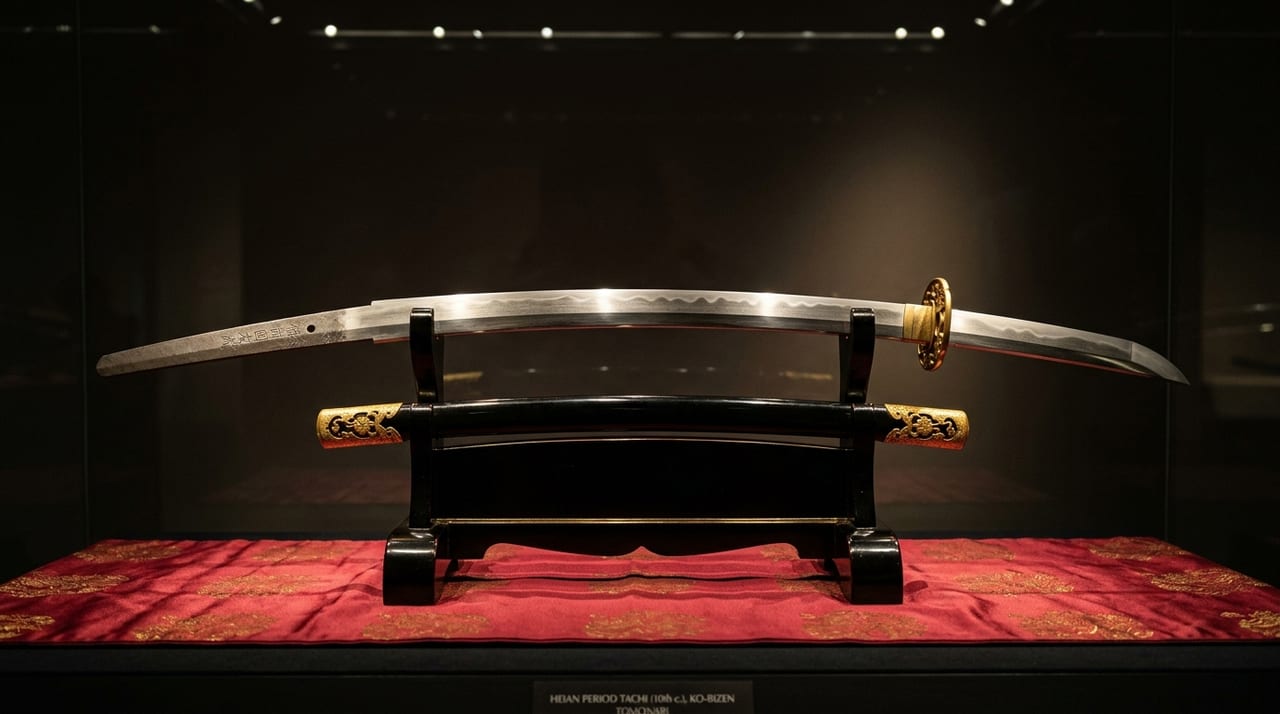 * Image is for illustrative purposes only.
Table of Contents
Taira no Masakado — A Warrior of a Pivotal Age in the History of the Japanese Sword
Taira no Masakado (?–940) was a warrior of the middle Heian period who, using Kantō (the eastern provinces) as his base, raised the banner of revolt against the court in the Jōhei-Tengyō Rebellion (Tengyō no Ran). Masakado, who styled himself "New Emperor" (Shinnō) and sought to establish an independent government, was struck down by Fujiwara no Hidesato, Taira no Sadamori, and others, and his head was sent to Kyoto.
The era of Masakado (the first half of the 10th century) coincides with a historic turning point at which the form of the Japanese sword was transitioning from the straight sword (chokutō) to the curved tachi. As a warrior of this transitional period, Masakado's swords embody the transformation in the history of the Japanese sword.
Sword Forms of the Mid-Heian Period — What Kind of Sword Did Masakado Carry?
In the first half of the 10th century, when Masakado was active, Japanese swords were in the midst of great change.
The transitional period from straight sword (jōkotō) to tachi: From the Nara period through the early Heian period, straight swords (double-edged or single-edged linear blades) influenced by the continent were the mainstream. In the mid-Heian period, however, single-edged curved swords — tachi — possessing sori suited for use on horseback began to appear. The details of how this came about are explained in The Birth of the Tachi — The Formation of the Curved Sword in the Mid-Heian Period.
The era of Masakado (939–940) falls precisely within this transitional period. Judging from historical sources and surviving artifacts, the swords Masakado carried are thought to have been of the following kind.
- A large single-edged blade (a form from the transitional period between straight sword and tachi)
- The nagasa is thought to have been longer than that of today's tachi, approximately 2 shaku 4 sun to 3 shaku (roughly 73–91 cm)
- A length and sori premised on being wielded on horseback
- The mountings (koshirae) are presumed to have been top-grade equipment of the time, close in style to the kenuki-no-tachi form
Masakado and Swords — Records Visible in Historical Sources
The primary historical source concerning Masakado is the Shōmonki (Record of Masakado). This military chronicle records how Masakado fought, but specific descriptions of the swords themselves are limited.
The following can be gathered from sword-related passages in the Shōmonki.
- Masakado, as a mounted warrior, used bow and arrow as his primary weapons, with swords serving a supplementary role in close combat
- The terms "tachi" and "tsurugi" (sword) appear, suggesting that swords of the tachi form were already in use
- The warriors under Masakado also wore swords, and the Shōmonki depicts the Kantō warrior clans as an armed force
The Shōmonki contains many later additions, and caution is needed in treating all of its passages as historical fact, but there is no doubt that it is an important source conveying the reality of armament in 10th-century Kantō.
The Sword Culture of the Kantō Warrior Clans — The Eastern Sword Tradition That Masakado Fostered
One of the reasons Taira no Masakado's rebellion is historically significant is that it was an event symbolizing the rise of the "Kantō warrior clans (Bandō warriors)." Masakado functioned as a paramount chief uniting the local warriors of Kantō, and at the core of that military strength was sword culture.
The Bandō warrior's view of swords: The warriors of Kantō (Bandō) used horse and bow as their primary means of combat, carrying swords as supplementary weapons. Even so, the power of the tachi and its role as a status symbol were greatly valued, and after Masakado's Rebellion, the Kantō warrior clans developed further through the late Heian and Kamakura periods, becoming the foundation of the Kamakura shogunate.
The development of tōkō in the eastern provinces: About 200 years after Masakado's era, Kantō became the political center of Japan with the establishment of the Kamakura shogunate (1185–1192). Alongside this, tōkō gathered around Kamakura and established the technique known as Sōshū-den. How Sōshū-den developed is summarized in Sōshū Yukimitsu and the Establishment of Sōshū-den, but it can also be said that the culture of the Kantō warrior clans that Masakado had fostered became the foundation for the later development of Sōshū-den.
Masakado's Head and the Sword — Traditions of the Masakado Kubizuka in Chiyoda Ward
There is a tradition that after Masakado's head was sent to Kyoto, it returned once more to Kantō. The Masakado Kubizuka (Masakado's Head Mound) still stands today in Otemachi, Chiyoda Ward, Tokyo, and is known for the anecdote that it proved impossible to remove even amid urban development.
The sword-related traditions associated with the kubizuka include the following.
- A tradition that swords were dedicated to pacify the spirit of Masakado
- Stories in which the legend of a curse connected to Masakado became linked to the dedication of swords
- It is said that even in modern times, a "curse" has been spoken of every time construction work is carried out near the kubizuka, and swords and amulets have been dedicated
These traditions are difficult to confirm as historical fact, but they demonstrate the depth of popular religious belief surrounding Masakado.
Swords Said to Have Been Used by Masakado — Later Attributions and Traditions
In later ages, swords described as "blades connected to Masakado" have been handed down in various places. However, it is extremely rare for a 10th-century sword to have been handed down with certainty to the present day, and most of these are considered later attributions.
What can be said with certainty is the following.
- Swords from Masakado's era (the first half of the 10th century) fall within the category of jōkotō, and only a handful of surviving examples exist in museums
- No historical source exists that can definitively identify Masakado's personal swords
- Swords traditionally attributed as "Masakado's sword" hold high cultural and historical value in their tradition, but confirmation as physical evidence is difficult
The Masakado Legend and Modern Sword Culture — Influence on Games and Manga
Taira no Masakado remains a major presence in modern Japanese culture. Games and manga including Touken Ranbu feature sword characters connected to Masakado, kindling interest in history and swords among younger generations.
The image of Masakado as a "rebellious hero" and "lord of the eastern provinces" links naturally to the image of swords as symbols of "strength" and "martial valor," and he has become established as a popular character in works of fiction.
Interest cultivated through such popular culture often becomes a gateway to actual Masakado research and the sword history of the Heian period. If you have become interested in Heian-period swords, it is recommended to search for "jōkotō" or "Heian tachi" at museums or sword auctions.
Summary — The Warrior Culture of the Japanese Sword's Turning Point as Told by Masakado and the Sword
Taira no Masakado was a warrior who lived through the historic turning point at which the Japanese sword changed from a straight blade to a curved tachi. Specific records of the swords he carried are scarce, but there is no doubt that Masakado's era promoted the rise of the Kantō warrior clans (Bandō warriors) and became the starting point of a lineage of Japanese sword culture that connects to the later Kamakura shogunate and Sōshū-den.
By reading Masakado's Rebellion from a "sword history perspective," a new viewpoint emerges that goes beyond a mere rebellion — namely "the relationship between the birth of eastern warrior culture and the sword.