Wakizashi Law and the Warrior-Class System——How the Edo Shogunate Fixed the "One to Two Shaku" Standard, How Daishō Became the Mark of the Samurai, and the Reality of Meibutsu
 * Image is for illustrative purposes only.
Table of Contents
Defining the Wakizashi: The Meaning of "One Shaku or More, Less Than Two Shaku"
Nihontō are classified by nagasa (blade length). The commonly accepted definitions are as follows.
| Type | Approximate Nagasa |
|---|---|
| Tantō | Less than one shaku (approx. 30.3 cm) |
| Wakizashi | One shaku or more, less than two shaku (approx. 60.6 cm) |
| Katana / Tachi | Two shaku or more |
The "one to two shaku" figure became established as the standard when the Edo shogunate legally regulated the carrying of swords. In practice, however, the application was complex, with fine differences depending on the era, social status, and region.
Edo Shogunate Sword Laws: Who Could Carry What
Understanding the sword laws of the Edo period is the key to reading the cultural significance of the wakizashi.
Samurai (shubun): Held both the right and the duty to carry at all times the set of tachi/katana (two shaku or more) and wakizashi (one to two shaku) known as daishō. The daishō combination was the symbol of samurai status.
Farmers, merchants, and craftsmen (sanmin): The constant carrying of a large sword (tachi/uchigatana) was generally prohibited. However, certain exceptions were recognized for tantō and wakizashi. There were cases in which blades equivalent to a wakizashi could be carried for practical purposes only, such as self-defense during travel or as a substitute for a knife during farm work.
Shinto priests and Buddhist monks: Depending on status and region, possession of ceremonial swords was sometimes permitted.
Daimyo and hatamoto (high-ranking warrior houses): There were also cases in which carrying a large wakizashi known as a nagawakizashi, whose nagasa approached two shaku, was permitted.
The "Sword Hunt" and the Wakizashi: Continuity with Hideyoshi's Policy
Indispensable to any discussion of the legal status of the wakizashi is Toyotomi Hideyoshi's "sword-hunt edict (1588)."
The sword-hunt edict ordered the confiscation from farmers and temples of weapons including tachi, wakizashi, bows, spears, and firearms. This is considered one of the earliest instances of the word "wakizashi" appearing in legislation.
However, complete disarmament was never achieved even after the sword hunt, and there are many cases in which swords remained in rural villages. The view among historians that Hideyoshi's intent lay more in "clarifying the separation of warriors from farmers" than in "disarming the peasantry" is now mainstream.
This idea of "separation of warriors and farmers" was inherited by the Edo shogunate, and sword laws came to function as a device for making the status system visible: "samurai = daishō carried" and "commoners = carrying prohibited."
The Culture of Daishō: The "Secondary Meaning" of the Wakizashi
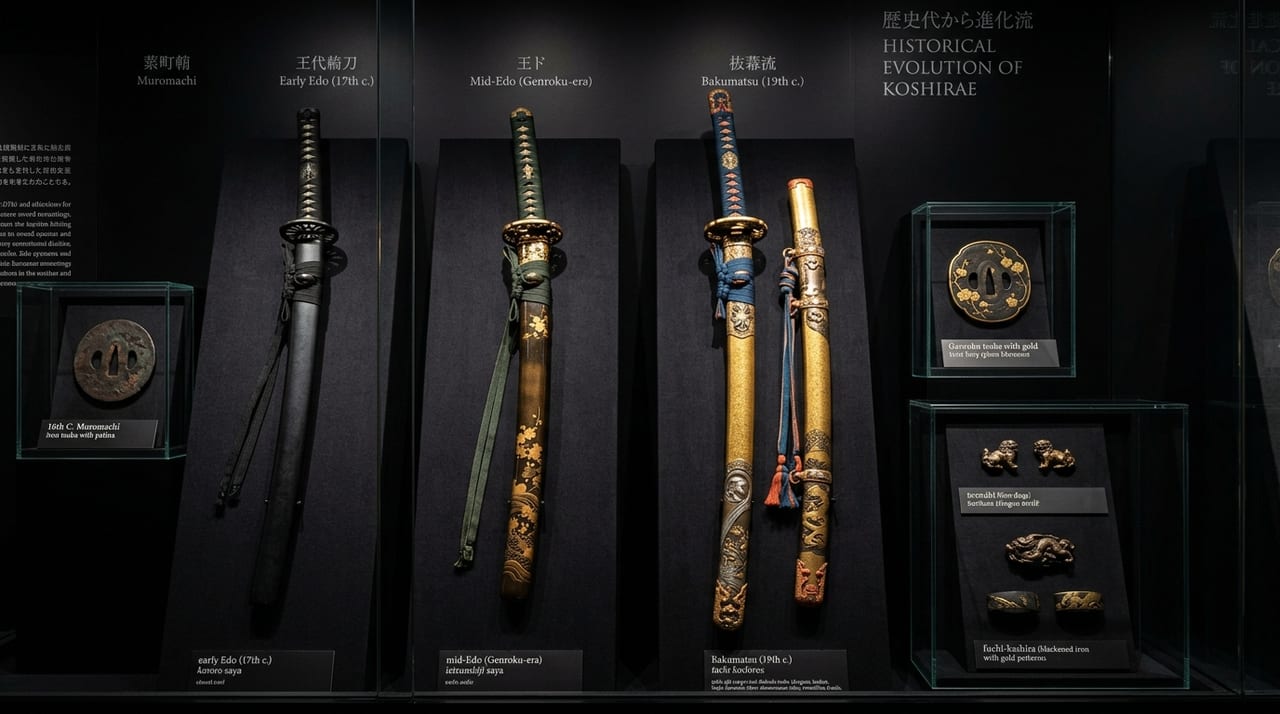
Daishō refers to the set of uchigatana (large sword) and wakizashi (small sword). This combination carried cultural meaning that went beyond the mere carrying of weapons.
Daishō as proof of status: To wear daishō was a declaration that "I am a samurai." Those who saw a person wearing daishō in the streets were obliged to show that person the deference due to a warrior.
Seppuku and the wakizashi: In the ritual of honorable death known as seppuku, the core of the ceremony was placing a wakizashi — or an equivalent tantō — smaller than the kaishakunin's uchigatana against the abdomen. For this reason the wakizashi also carries the spiritual meaning of "the sword of death and pride."
Genpuku and the wakizashi: When the son of a warrior family reached genpuku (the coming-of-age ceremony), he received for the first time the right to carry daishō. The wakizashi gifted on that occasion in particular was treasured as a family heirloom and keepsake.
Famous Wakizashi: Records of Meibutsu That Made Their Mark on History
The following records concern historically renowned swords of wakizashi dimensions. It should be noted that many celebrated swords known as meibutsu (named treasure swords) have a nagasa exceeding the wakizashi range, so confirming the nagasa is important.
Examples of Meibutsu Wakizashi Historically, records of meibutsu swords that fall within wakizashi dimensions (one shaku to less than two shaku, approximately 30.3–60.6 cm) are fewer compared to tantō or tachi/uchigatana. Care is needed because many celebrated swords have a nagasa that exceeds the wakizashi range.
For example, Shokudaikiri Mitsutada (nagasa approx. 66.7 cm), Kikkō Sadamune (nagasa approx. 70.9 cm, kokuhō (National Treasure), held by the Tokyo National Museum), and Juzumaru Tsunetsugu (nagasa approx. 81–83 cm) all have a nagasa exceeding two shaku (approx. 60.6 cm) and are classified as katana (uchigatana) or tachi. These are not wakizashi.
Kikkō Sadamune is a work by Sadamune, said to be the son (or adopted son) of Masamune, and is held by the Tokyo National Museum as a kokuhō transmitting the techniques of the Kamakura-period Sōshū-den. It takes its name from the fact that a pattern resembling a tortoiseshell is said to be visible in its jigane (steel of the blade surface).
Juzumaru Tsunetsugu is a jūyō bunkazai (Important Cultural Property) held by Honkōji (Amagasaki, Hyogo), a work by Aoe Tsunetsugu. There is a tradition that it was owned by Nichiren Shōnin, and in the form of a tachi subjected to suriage (shortening), its religious and historical provenance is the core of its value.
Tsukurikomi of the Wakizashi: Why Wakizashi of the Same Type Look Different
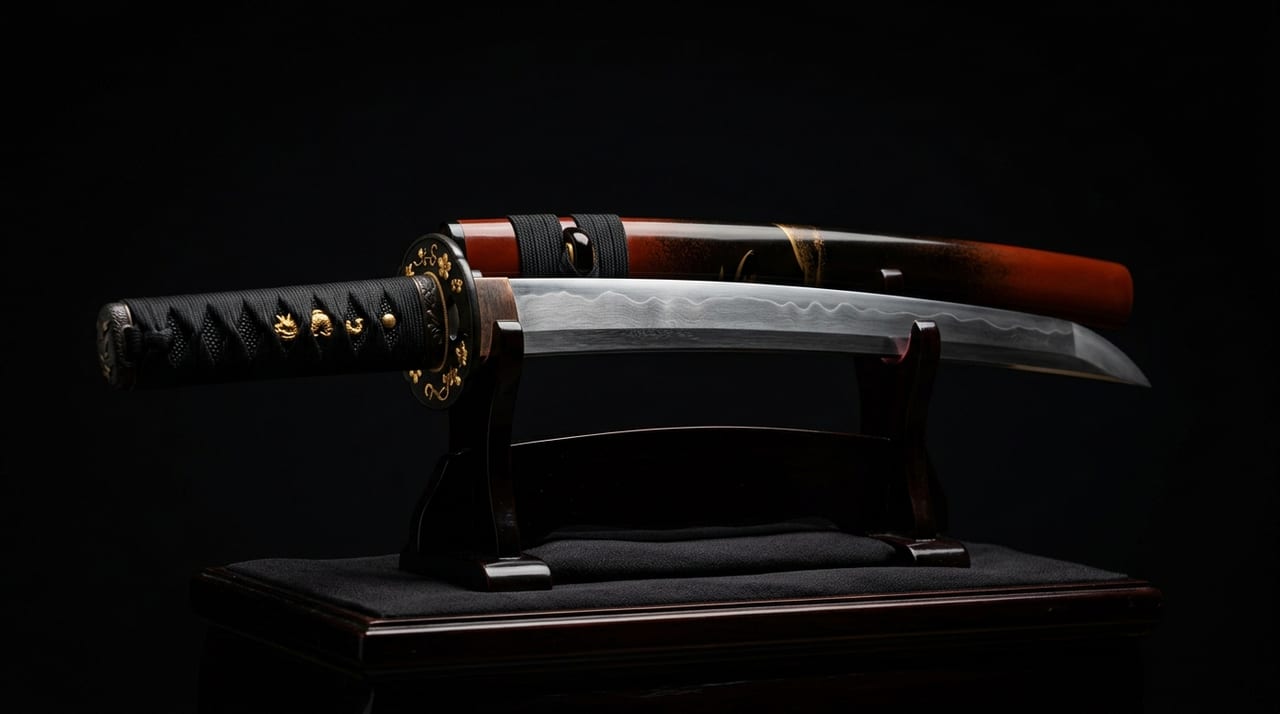
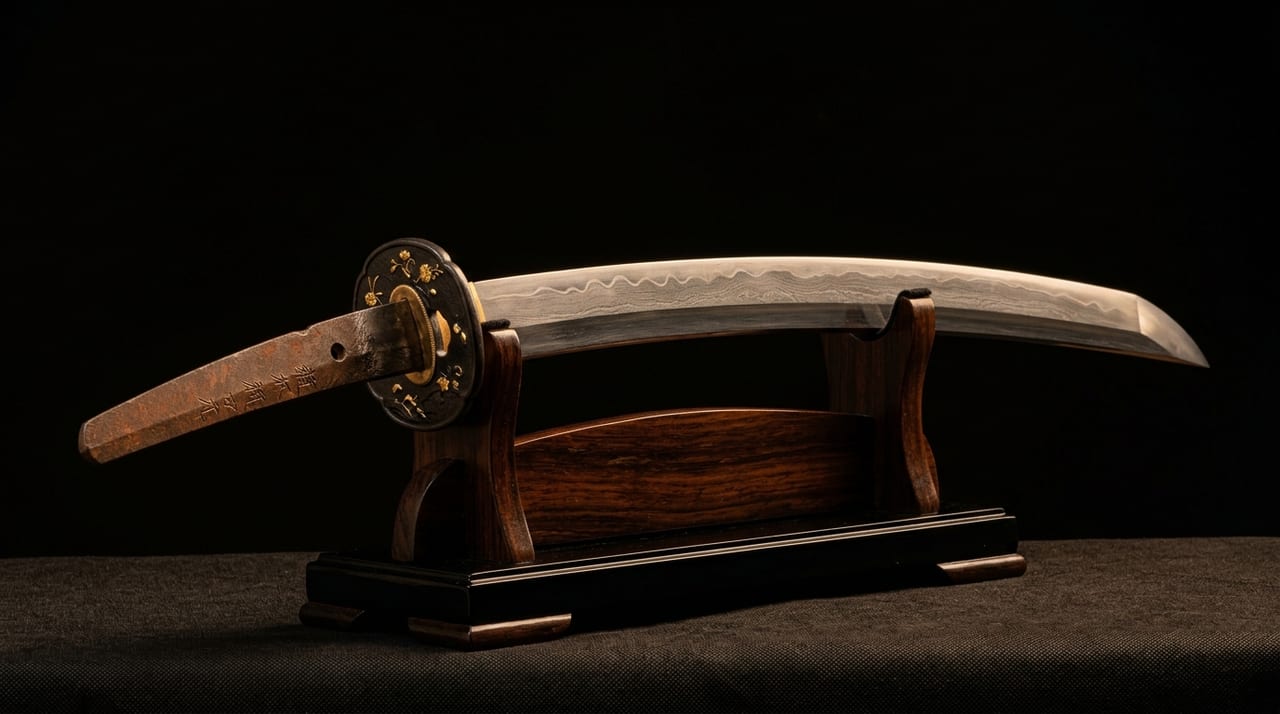
When one looks at wakizashi, their appearance can differ greatly. This is because wakizashi are not made to a single form, but are produced in the following diverse tsukurikomi.
- Hira-zukuri: A flat cross-section with no shinogi (ridge line). Close to the tantō form, excellent for thrusting. Common in Yoshimitsu's tantō.
- Shinogi-zukuri: The same cross-section as a katana (uchigatana). A good balance of cutting ability and rigidity. The most commonly seen form.
- Kiriba-zukuri: A high shinogi with a steep cross-sectional angle. An older form.
- Unokubi-zukuri: A transitional form in which the base section is hira-zukuri and the tip is shinogi-zukuri. Rare.
In addition to its provenance, the production period, place of origin, and intended use of a wakizashi can be judged from these tsukurikomi forms.
The Contemporary Value of Wakizashi: Law, Collecting, and Appreciation
Japan's current Firearms and Swords Control Act (Jūtōhō) classifies swords with a blade length of 15 cm or more as "swords and other such weapons" and prohibits their possession except for those that have been registered. Wakizashi fall under this category, so a registration certificate is required for possession (Articles 2, 3, and 14; Act for Controlling the Possession of Firearms or Swords and Other Such Weapons (Jūtōhō) (e-Gov Legal Search)). Wakizashi registered as works of art may be owned and bought or sold through the proper procedures.
From a collector's perspective:
- Tantō class (less than one shaku) swords are relatively fewer; the wakizashi class is more numerous and easier to acquire.
- Wakizashi by famous tōkō (swordsmiths) may be priced lower than tachi or uchigatana, making them a potential opportunity to acquire the work of a master craftsman on a limited budget.
- Well-preserved wakizashi are an appropriate size for display and appreciation, and are suited to private collections.
Conclusion: The Wakizashi as the "Small Great Significance" of Warrior Culture
The wakizashi, defined by the figures "one to two shaku," is a cultural presence that transcends a mere size classification. Proof of samurai status, instrument of seppuku, keepsake of genpuku, weapon of self-defense — there is no parallel in the world for a culture in which a single sword bears so many meanings.
To trace the provenance of meibutsu wakizashi is the equivalent of walking the intersection of Japan's warrior society, political history, and sword culture. The next time you see a wakizashi in a museum, try imagining from its nagasa and tsukurikomi who carried it, when, and for what purpose.