New Arrivals — Browse our catalog for the latest authentic Japanese sword arrivals. Browse →
10th–12th month of Keichō 19 (1614)
Osaka, Settsu Province (present-day Osaka City, Osaka Prefecture)
Forces
Tokugawa Forces
Toyotomi Forces
About 10 min read
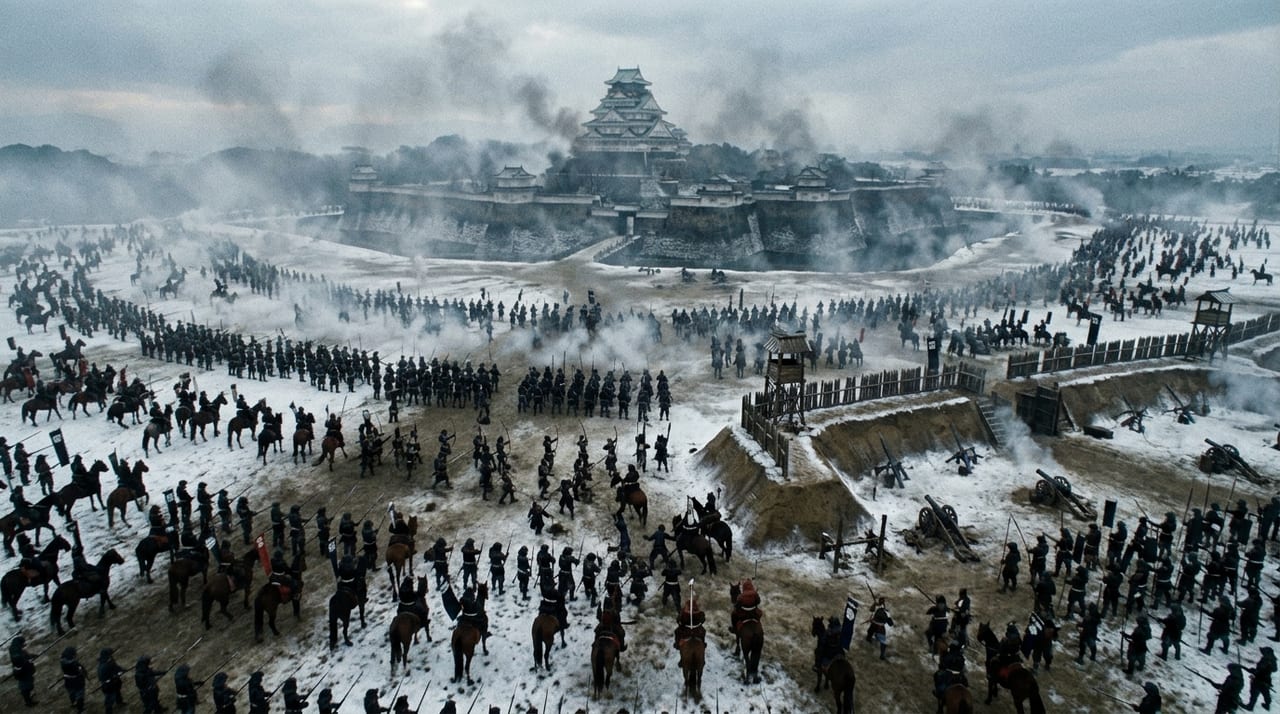
In the autumn of Keichō 19 (1614), Tokugawa Ieyasu raised an army to attack Toyotomi Hideyori, using the Hōkō-ji bell inscription incident as a pretext. The campaign, in which some 200,000 troops from east and west surrounded Osaka Castle, is known as the Osaka Winter Campaign and is recorded as one of the largest castle sieges in Japanese history.
In Keichō 19 (1614), an inscription on a great bell that the Toyotomi house had cast to commemorate the rebuilding of the Great Buddha Hall at Hōkō-ji in Kyoto bore the characters "kokka ankō" and "kunshin hōraku." The Tokugawa side objected, reading this as a curse that splits Ieyasu's name (ie plus yasu) and wishes for the Toyotomi lord and retainers to rejoice. The reading was a stretch, but for Ieyasu it was sufficient as a political excuse for destroying the Toyotomi house.
In the 10th month of that year, Ieyasu's forces, mobilized from many daimyō, numbered about 200,000. In opposition, gathered under Hideyori were Sanada Yukimura, Gotō Matabei, Chōsokabe Morichika, and Akashi Teruzumi, along with daimyō and rōnin who had been defeated at Sekigahara. Together they formed an army of about 90,000.
The most famous episode of the Osaka Winter Campaign is the construction and defense of the outer fortification Sanada-maru by Sanada Yukimura (Nobushige).
South of Osaka Castle, in front of the Hirano-guchi gate, Yukimura set up the detached fortress Sanada-maru, ringed with moats, walls, and palisades. On the 4th day of the 12th month, the vanguard of the Tokugawa forces led by Maeda Toshitsune and Ii Naotaka attacked Sanada-maru. Yukimura repulsed them through effective use of matchlock guns and bows and arrows. In this battle he inflicted heavy losses on the Tokugawa forces, and his name instantly resounded throughout the land.
The battle of Sanada-maru well illustrates the mixed style of warfare of the late Sengoku period, in which swords, spears, and firearms were all employed. Swords and spears were used at close quarters, while matchlock guns and bows and arrows were used at long range, skillfully combined under Sanada Yukimura's command. Swords of this era were still active weapons of battle, while at the same time carrying symbolic meaning as marks of a warrior's status and pride.
Ieyasu, struggling against the solid defenses of Osaka Castle, resorted to the shocking measure of firing culverins (long-range guns) imported from England at the main keep. The shells struck the keep as well. It is said that the living quarters of Yodo-dono, mother of Hideyori, collapsed, and seven or eight attendant women were crushed beneath them and died. This bombardment dealt a major blow to the morale of the Toyotomi side.
In the middle of the 12th month, both sides entered into peace negotiations. On the 19th day of the 12th month the terms of peace were agreed upon, and on the 22nd day sworn written pledges were exchanged, establishing the peace. The terms of the settlement were that the ni-no-maru and san-no-maru would be torn down, leaving the honmaru (inner citadel) intact, and that the moat of the sōgamae (outer perimeter) would be filled in. The Tokugawa side hurriedly filled in the outer moat and then went on to fill in the moat of the ni-no-maru (second enclosure). It was once said that Ieyasu stretched the terms of the agreement to have even the inner moat filled in, but this account appears only in later writings. The filling in of the ni-no-maru and san-no-maru is thought to have been based on an agreement from the outset. This had the serious consequence, in the Summer Campaign of the following year (Keichō 20), of making a general assault on the stripped-bare Osaka Castle easier.
Most of the Toyotomi commanders in the Osaka Winter Campaign were men who had been defeated at Sekigahara and become rōnin. The swords they carried had a wide variety of origins across the land.
Gotō Matabei (Mototsugu) is known as a fierce warrior who, after fleeing the Kuroda clan, took refuge under Toyotomi Hideyori.
Chōsokabe Morichika came from a former daimyō house of Tosa (present-day Kōchi Prefecture). After being stripped of his domain following Sekigahara, he entered Osaka as a rōnin.
The Osaka Winter Campaign was the first stage in the process by which Tokugawa Ieyasu ultimately brought down the Toyotomi house. On the surface it ended in a negotiated peace, but the condition of filling in the moats meant a fatal military loss for the Toyotomi house.
In the Osaka Summer Campaign of the following year, the defensive strength of Osaka Castle had dropped sharply, so the Tokugawa forces were able to approach the castle more easily. Toyotomi Hideyori and Yodo-dono took their own lives within the castle, and the Toyotomi house was destroyed.
From the perspective of sword history, the Osaka Winter Campaign was the prelude to the stage where "the swords of the Sengoku period shone for the last time." The swords worn by Toyotomi's brave commanders, Sanada Yukimura and Gotō Matabei among them, became, together with those of the following Summer Campaign, blades that adorned the closing chapter of "the age of the sword on the battlefield."
Sanada Yukimura
Hero of the Toyotomi cause who built the Sanada-maru and repulsed Tokugawa attacks
Tokugawa Ieyasu
Tokugawa supreme commander who led the siege of Osaka Castle
Tokugawa Hidetada
Co-commander of the Tokugawa forces alongside Ieyasu
Gotō Matabē
Renowned ronin commander who joined the Toyotomi cause at Osaka
Chōsokabe Motochika
Former Tosa daimyo (Morichika's father), exemplifying the Toyotomi coalition's origins
Sanada Masayuki
Sanada Yukimura's father, whose strategic genius shaped Yukimura's defense
Ii Naomasa
Ii Naomasa's legacy; his son Naotaka participated in the Winter Campaign