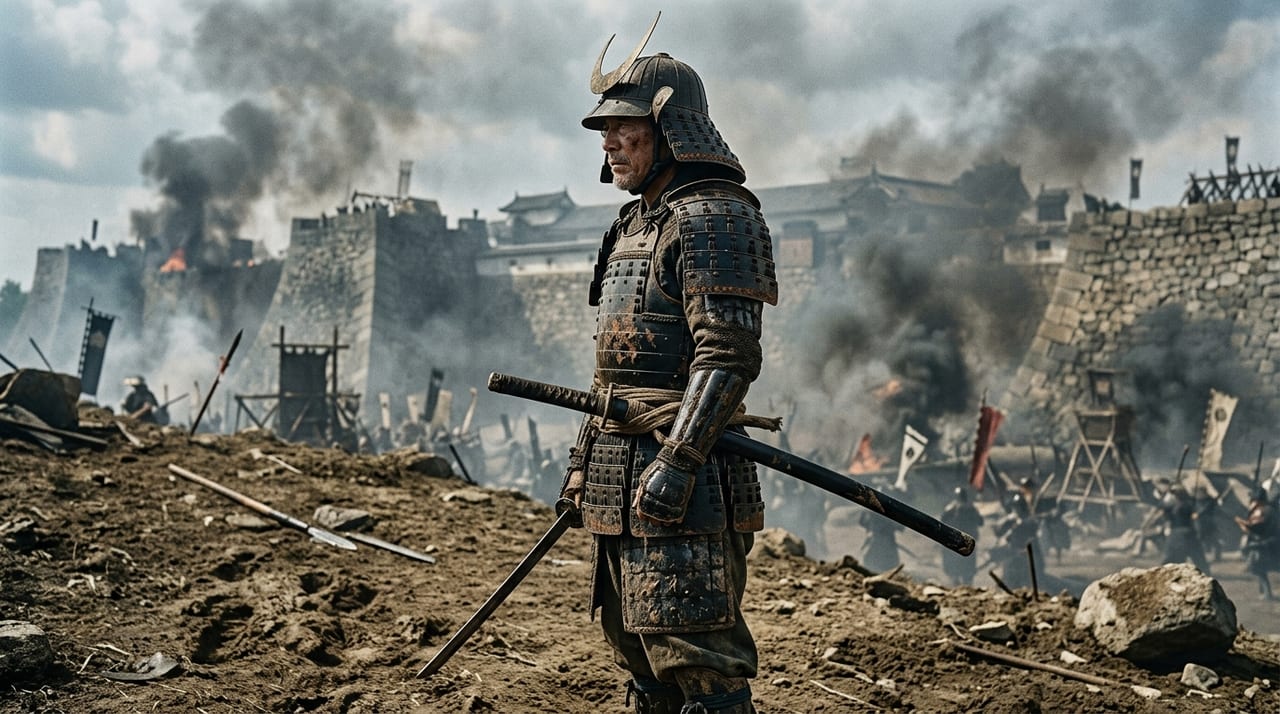
 * Image is for illustrative purposes only.
Gotō Matabē
後藤又兵衛
One of the Five Warriors of Osaka Castle—The Last Hero of the Militarist Faction Who Left the Kuroda Clan and Fell at Osaka Castle
Description
Feud with Kuroda Nagamasa
Gotō Matabē (Mototsugu), born in Harima Province in Eiroku 3 (1560), is known as a valiant warrior who served the father-and-son pair Kuroda Yoshitaka (Kanbei) and Kuroda Nagamasa. At the Battle of Sekigahara he won distinction by defeating Ōhashi Kamon, a retainer of Ishida Mitsunari, in single combat. However, in Keichō 11 (1606), two years after the death of Kuroda Jōsui, Matabē left the Kuroda household. Various theories exist about the reason for this “departure,” but it is said to have been caused by his frequent exchange of letters with men of other houses, such as the Hosokawa and Ikeda clans. The fact that Nagamasa took “hōkō-kamae” measures, which prevented Matabē from entering the service of other houses, shows the serious feud between the two men.
As One of the Five Warriors of Ōsaka Castle
After leaving the Kuroda house, Matabē wandered from place to place as a rōnin, and then entered Ōsaka Castle on the Toyotomi side at the time of the Ōsaka campaigns (1614 and 1615). Among the rōnin gathered at Ōsaka Castle, Matabē was the most battle-hardened fierce warrior, and together with Sanada Nobushige (Yukimura), Chōsokabe Morichika, Mōri Katsunaga, and Akashi Zentō, he was called one of the “Five Warriors of Ōsaka Castle.” Throughout both the winter and summer campaigns, Matabē fought valiantly in various places, fully displaying the fierce reputation captured in the phrase “Gotō Matabē is here!”
The Battle of Dōmyō-ji and His Death
At the Battle of Dōmyō-ji on the 6th day of the 5th month of Keichō 20 (1615), Matabē mounted fierce resistance against the Tokugawa army despite being outnumbered. He fought against the forces of Mizuno Katsunari and the musketeers of Katakura Shigenaga of the Date side, and was killed in the chaotic melee. He died at the age of fifty-six, but his manner of death has been praised by later generations as embodying the essence of the warrior’s way (bushidō).
Ronin's Swords — Weapons of a Defeated Age
The problem of the mass of ronin after Sekigahara brought harsh realities even to high-stipend warriors such as Matabē. For the many ronin gathered on the Toyotomi side at Ōsaka Castle, the sword was a symbol of “another chance to fight as a samurai,” and Matabē was the purest embodiment of that spirit.