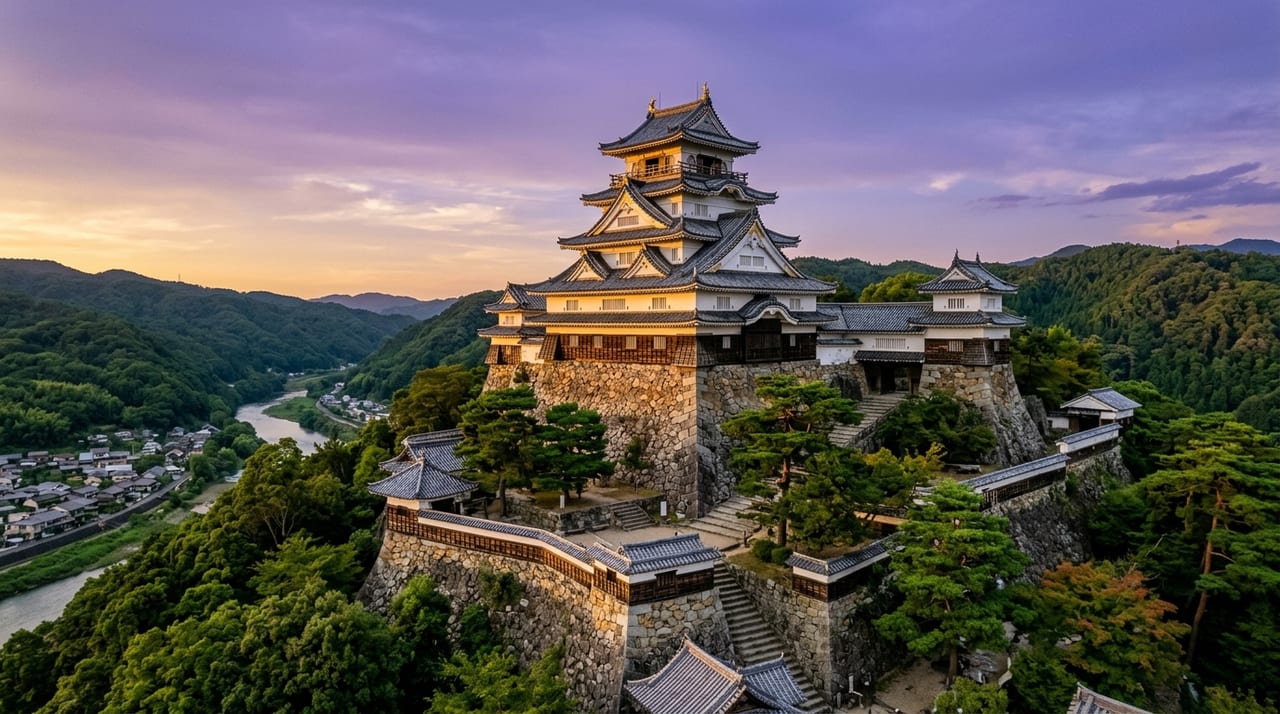
 * Image is for illustrative purposes only.
Tokushima Castle
徳島城
Tokushima Castle is a historic castle in the Shikoku region (Built in 1586 (Tensho 14)). Its lord was Hachisuka Iemasa.
Overview
About the Castle
Tokushima Castle was built in Tensho 14 (1586) in Awa Province by Hachisuka Iemasa, a senior retainer of Toyotomi Hideyoshi. It is an early modern castle that combines a hill castle using Inoyama (present-day Shiroyama), an isolated hill on a sandbar near the mouth of the Yoshino River, with residential palace complexes (Omote Goten and Nishi-no-Maru Goten) on the plain at its foot, forming a mountain-foot residence type. The Hachisuka family were warriors from Owari Province, and Hachisuka Koroku (Masakatsu) is known for serving as one of Hideyoshi's first close confidants. Iemasa was granted over 180,000 koku in Awa and built Tokushima Castle; from then on the Hachisuka family ruled Awa until the Meiji Restoration.
Awa Odori and the Castle Town
Tokushima is famous for the Awa Odori, which is held every year in August and is known nationwide as Japan's largest Bon dance. Its origins are also said to lie in Hachisuka Iemasa permitting the local residents to dance when he built the castle, which shows the deep connection between the castle and the festival. The castle town developed by making use of water transport on the Yoshino River, and distinctive cultural industries flourished, including indigo dyeing (Awa indigo), Awa washi paper, and Awa ningyō jōruri puppet theatre. Awa indigo in particular was an important industry, supporting the finances of the Hachisuka family while also promoting the growth of merchants.
Sword Culture of the Hachisuka Family
The Hachisuka family was a daimyo with a close relationship to Toyotomi Hideyoshi, and the sword known as Junkei Samonji (Important Art Object), which the Kyōhō Meibutsuchō records as bestowed on Iemasa as a reward for his service in the Osaka Campaigns, also came down to the family. Awa Province has records of swordsmith activity from the medieval period, and swordsmiths of the 'Awa-mono' school met the demand of local samurai. Tokushima is also a place facing a strait known for the Naruto whirlpools, and it had its own distinctive weapon culture linked to naval activity.
Swordsmanship and Martial Arts
The Hachisuka family's retainers included practitioners of a wide variety of martial arts, and education in both literary and military subjects was provided at the domain school Chōkyūkan. Many schools of swordsmanship were transmitted, and samurai in Tokushima's castle town refined practical sword techniques. The Tokushima Castle Museum today displays armor, swords, and sword fittings handed down by the Hachisuka family, where visitors can experience the finest of Awa's samurai culture.
The Castle Site and the Present Day
The present Tokushima Castle site has been developed as Tokushima Central Park, and the stone walls of the Honmaru and the former Omote Goten Garden of Tokushima Castle (National Place of Scenic Beauty) remain. The Omote Goten Garden is highly regarded as a Momoyama-style garden said to have been created by Ueda Sōko, and it offers the most impressive historical landscape within the castle site. The Tokushima Castle Museum introduces a broad range of the history of the Hachisuka family and the culture of Awa.
Connection to Swords
The connection between Tokushima Castle and the sword culture of the Hachisuka family begins with their deep relationship with Toyotomi Hideyoshi. Hachisuka Koroku (Masakatsu) was Hideyoshi's first close confidant, serving him from the time Hideyoshi was known as Kinoshita Tōkichirō, and their relationship was based on deep trust that went beyond a simple lord-vassal bond. Hideyoshi is known for collecting famous swords from daimyo across the country in the course of gaining control of the realm, and the collection of famous swords held by the Toyotomi family was among the largest in Japan. Iemasa took part in Hideyoshi's subjugation of Kyushu, the Odawara campaign, and the Korean invasions alike. In Awa Province, local swordsmiths of the 'Kaifu school' have been active since the medieval period, centered on the Kaifu River basin, and under the encouragement of the Kaifu clan, their independent sword-making has been recorded from the Kamakura period through the late Edo period. In the Edo period, members of the Ujiyoshi lineage of Kaifu swordsmiths moved to Tokushima's castle town as the Hachisuka family's retained smiths and forged swords there until the late Edo period. Tokushima Castle Museum holds swords, sword fittings, and armor handed down by the Hachisuka family. The vivid indigo blue seen in Awa Odori costumes both reflects the prosperity of the indigo dyeing industry known as Awa indigo and a distinctive aesthetic sense that spread through the domain from samurai to farmers.
Highlights
- Former Omote Goten Garden of Tokushima Castle (National Place of Scenic Beauty) — a Momoyama-style garden said to have been created by Ueda Sōko
- Tokushima Castle Museum — displays armor, swords, sword fittings, and historical materials of the Hachisuka family
- Honmaru stone walls — stone walls built of Awa blue stone (greenschist), giving a distinctive landscape
- Awa Odori Kaikan — annual exhibits and hands-on programs on the Awa Odori, Japan's largest Bon dance
- Naruto whirlpools — about 30 minutes by car from the castle. Among the largest whirlpools in the world, they are one of the finest views in Shikoku
* Opening hours and admission fees are subject to change. Please check the official website before visiting.