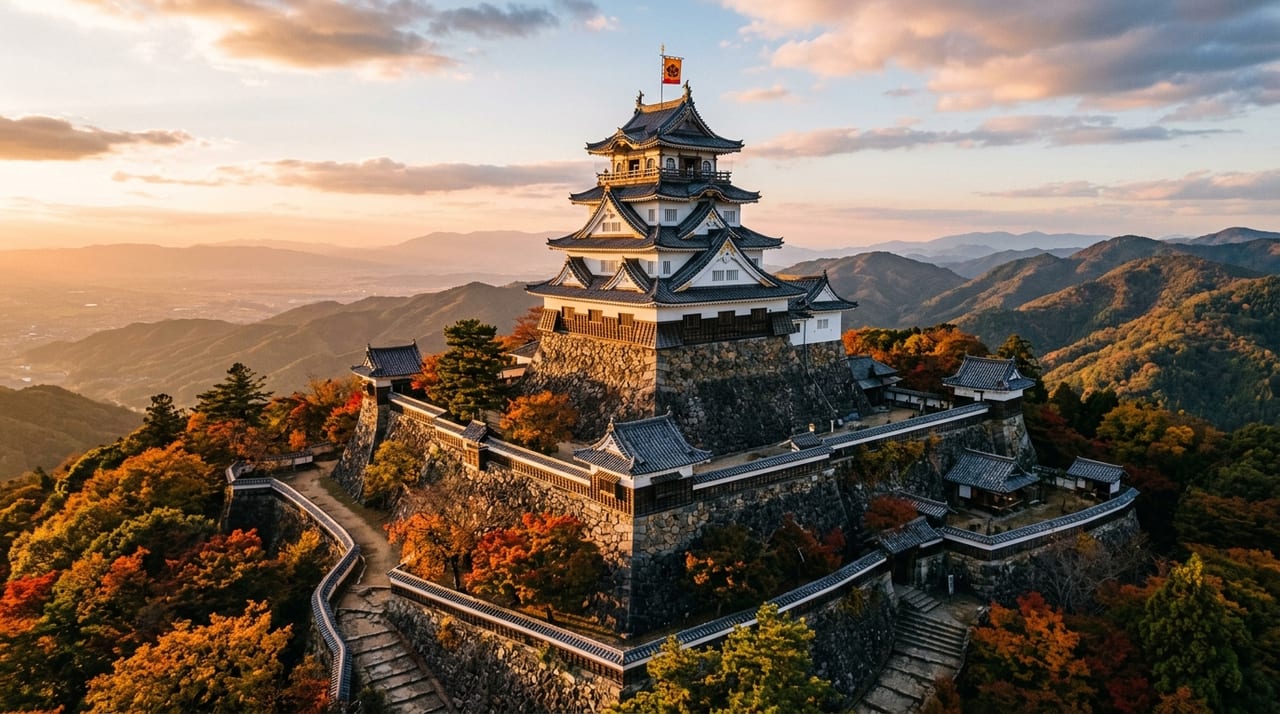
 * Image is for illustrative purposes only.
Shōzui Castle
勝瑞城
Shōzui Castle is a historic castle in the Shikoku region (Muromachi period, fell in 1582 (Tensho 10)). Its lord was Hosokawa clan (Awa shugo) and Miyoshi clan.
Overview
Overview
Shōzui Castle was a castle residence located in Aizumi Town, Itano District, Tokushima Prefecture. From the Muromachi through the Sengoku periods, it flourished as the political, economic, and cultural center of Awa Province (present-day Tokushima Prefecture). The castle site and the adjoining residence site were designated a national Historic Site as the "Shōzui Castle and Residence Site" on January 29, 2001 (Heisei 13).
From Shugo Seat to the Miyoshi Clan's Base
The Hosokawa clan, who were the shugo of Awa, initially set their provincial seat in Akizuki, Awa City, but later moved it to Shōzui. The Sengoku-period Miyoshi clan, who held real power in Awa, also made Shōzui their base. Miyoshi Jikkyū took control of Shōzui from his lord, Hosokawa Mochitaka, and it then became the base for the Miyoshi clan's rule over Awa. The Miyoshi clan extended its power by advancing into the Kinai region, and Shōzui flourished as the political and cultural center of the Awa Miyoshi clan.
Structure
The residence site occupies a slight rise surrounded by the former Yoshino River, the Yoshino River, and the Nakatomi River. Excavations conducted from 1997 (Heisei 9) to 2000 (Heisei 12) revealed that the residence was enclosed by a moat about 12 meters wide and measured roughly 120 meters east to west and 150 meters north to south. Further surveys from 2004 (Heisei 16) to 2005 (Heisei 17) uncovered a pond site south of the residence measuring more than 40 meters east to west and 30 meters north to south. As an excavated garden site, it is one of the largest of its kind in Japan. Remains such as moats and buildings on stone foundations, along with numerous high-quality artifacts, have been confirmed, and the site is regarded as an important medieval castle and residence site of national significance.
Connections with Warlords
Shōzui was the successive base of the Awa Miyoshi clan and also the home base in Awa of the family that swept through the Kinai region, including Miyoshi Nagayoshi. Kenshō-ji, which stands on the site of the Honmaru, is the family temple of the Miyoshi clan. The graves of family members, including Miyoshi Yukinaga, Miyoshi Motonaga, Miyoshi Yoshikata, and Miyoshi Nagaharu, are said to be there, conveying the rise and fall of Sengoku warlords to the present day.
Present Condition
In Tenshō 10 (1582), Shōzui fell after defeat by the forces of the Chōsokabe clan, who invaded from Tosa, and the era of the Awa Miyoshi clan came to an end. Excavation research continues today, and together with the residence site, the castle conveys the appearance of medieval Awa's center.
Connection to Swords
As the base of the Awa Miyoshi, it was the stronghold of a Sengoku warrior house that produced the Miyoshi warlords who dominated the capital region.
Highlights
- Base of the Awa Miyoshi clan
- National Historic Site "Shōzui Castle and Residence"
- Kensho-ji, the Miyoshi clan temple, and clan graves
- Castle taken by the Chosokabe clan
- Medieval castle-residence site under ongoing excavation
* Opening hours and admission fees are subject to change. Please check the official website before visiting.