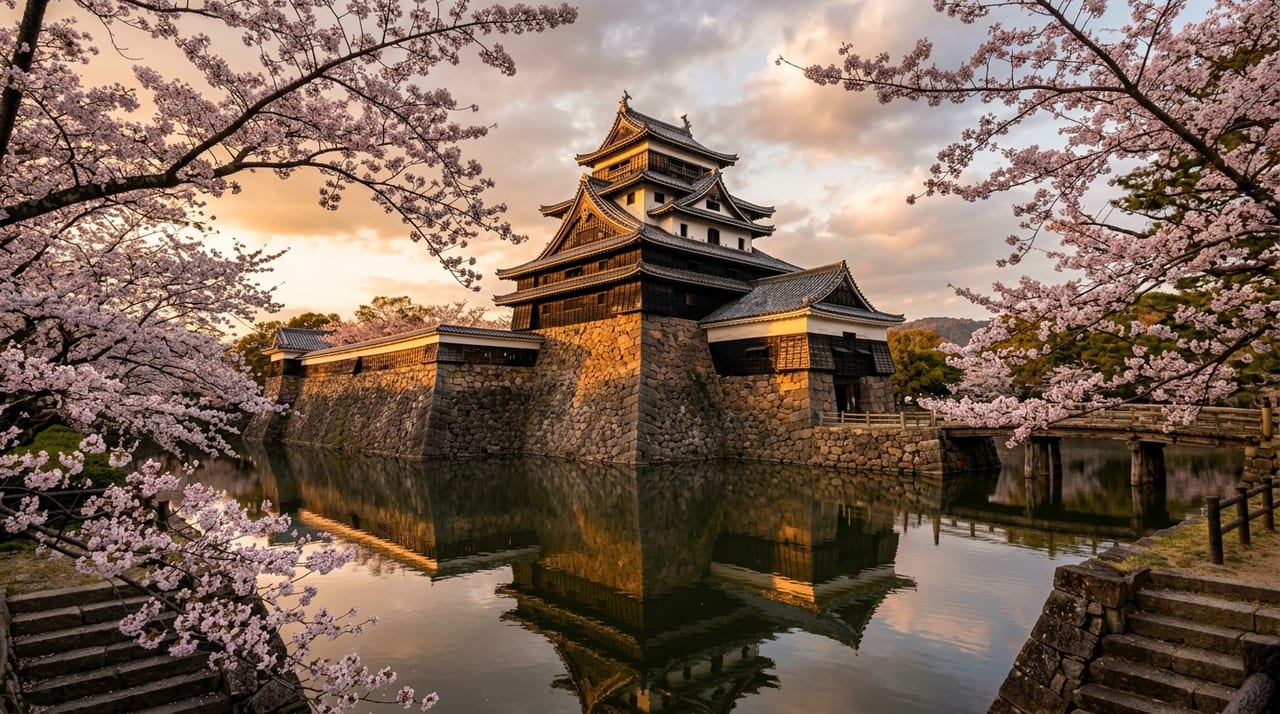
 * Image is for illustrative purposes only.
Ichinomiya Castle
一宮城
Ichinomiya Castle is a historic castle in the Shikoku region (Built in 1338 (Engen 3 / Ryakuō 1); abandoned in 1638 (Kan'ei 15)). Its lord was The Ichinomiya clan (originally the Ogasawara clan); the Miyoshi clan; the Chōsokabe clan (Tani Tadazumi, Emura Chikatoshi); Hachisuka Iemasa.
Overview
Overview
Ichinomiya Castle was a mountain castle located in Ichinomiya-chō, Tokushima City, Tokushima Prefecture. Its main bailey, at an elevation of 144.3 meters, was the center of baileys spread across an area roughly 800 meters east-west and 500 meters north-south, making it one of the largest mountain castles in Tokushima Prefecture. It was built during the Nanboku-chō period and became one of the main battlegrounds in Toyotomi Hideyoshi's conquest of Shikoku in the late Sengoku period. It is a Tokushima Prefecture designated historic site and was selected as one of the Continuation of the 100 Fine Castles of Japan.
Construction and the Ichinomiya Clan
In 1338 (Engen 3 / Ryakuō 1), Ogasawara Nagamune, the fourth son of Awa shugo Ogasawara Nagafusa, destroyed Ichinomiya Munenari, built a castle on this site, and took the name Ichinomiya. The Ichinomiya clan thereafter held it as their main stronghold.
From Miyoshi Rule to the Chōsokabe Invasion
During the Sengoku period, the Ichinomiya clan was incorporated into the Miyoshi retainer band, and Ichinomiya Narisuke (also known as Ichinomiya Naruyoshi) became a powerful figure within the Miyoshi house. In 1577 (Tenshō 5), as the power of Miyoshi Nagaharu declined, Narisuke raised an army in response to Hosokawa Sadayuki and drove Nagaharu to suicide on April 6, 1577 (Tenshō 5, 3rd month, 18th day). However, as Chōsokabe Motochika's invasion of Awa advanced, Narisuke was invited to Iyayama Castle on December 2, 1582 (Tenshō 10, 11th month, 7th day) under the pretext of discussing rewards. On the way there, he was attacked by forces of the Chōsokabe retainer Hata Yasuke and killed himself.
Toyotomi Hideyoshi's Conquest of Shikoku
In the 5th month of Tenshō 13 (1585), Ichinomiya Castle was attacked by an army of 40,000 led by Hashiba Hidenaga. The defenders, about 10,000 men, held out bravely, and the struggle over the water source is recorded in several sources, including the Taikōki. The castle surrendered late in the 7th month of that year.
Renovation Under the Hachisuka Clan and Abandonment
In the 9th month of that year, Hachisuka Iemasa, who had been granted the whole of Awa Province by Hashiba Hideyoshi, made Ichinomiya Castle his residence. Most of the stone walls remaining today are said to date from the major renovation carried out in this period. After Iemasa built Tokushima Castle in 1586 (Tenshō 14) and moved there, Masuda Mochimasa served as castellan. In 1638 (Kan'ei 15), the castle was abandoned under the One Castle per Province edict, and it is said that some of its stone was reused in repairs to Tokushima Castle.
Structure and Surviving Remains
The main bailey at the summit is enclosed by nozura-zumi stone walls of crystalline schist, and is said to have had a yagura-mon gate on its east side. Although there is no tenshu-dai (tenshu platform), foundation stones remaining on the south side suggest that a building equivalent to a tenshu may have stood there. Other baileys include Myōjin-maru, the second bailey, and Saizō-maru, the third bailey, as well as Ogura-maru, Shii-maru, and Mizunote-maru. Defenses using tatebori (vertical moats), yokobori (horizontal moats), and horikiri (dry moats) for yokoyagake flanking fire are seen throughout.
Present State and Access
It was designated a Tokushima Prefecture historic site on August 6, 1954, and on April 6, 2017, it was selected as No. 176 in the Continuation of the 100 Fine Castles of Japan. In the spring of 1986, the stone walls of the main bailey were restored by Tokushima City. From the parking lot of Ichinomiya Shrine, it takes about 30 minutes to climb the mountain trail to the main bailey ruins.
Highlights
- One of the largest mountain castles in Tokushima Prefecture, centered on a main bailey at 144.3 meters elevation
- In 1577, Ichinomiya Narisuke raised arms in support of Hosokawa Sadayuki and drove Miyoshi Nagaharu to suicide
- In 1585, during Hideyoshi's conquest of Shikoku, it withstood an attack by Hashiba Hidenaga's 40,000 troops before surrendering after a struggle over its water supply
- Major renovations under Hachisuka Iemasa produced nozura-zumi stone walls of crystalline schist, second in scale in Tokushima Prefecture only to Tokushima Castle
- A Tokushima Prefecture Designated Historic Site and No. 176 in the Continuation of the 100 Fine Castles of Japan
* Opening hours and admission fees are subject to change. Please check the official website before visiting.