Nouveautés — Découvrez les dernières arrivées dans notre catalogue. Voir →
Aperçus sur les connaissances et la culture du sabre japonais
Latest market analysis — popular smiths, trending categories, and future outlook.
A comprehensive guide to Japan's custom swordsmith order market: costs, lead times, specification decisions, domestic and overseas commission examples, and how digitalization is transforming the intermediary landscape.
Explores how modern Japanese swordsmiths leverage Instagram, YouTube, and social media to build personal brands, attract international collectors, and transition toward direct sales without intermediaries.
An exploration of how the turbulent Bunkyu, Genji, and Keio years (1861–1868) intertwined the sonnō jōi movement with sword culture, shaping the sword-carrying customs of patriots, rōnin, and samurai, and directing the activities of swordsmiths.
An increasing number of modern swordsmiths are establishing forges in depopulating rural areas. This article traces the circumstances and challenges of opening workshops in such regions, the ripple effects on local revitalization, and the current state of municipal support.
Warfare during the Nanbok period (1336-1392) spurred rapid expansion of sword-smithing. War demand drove industry growth, specialized forge operations, new hamon (刃文, blade patterns) including the Soshu style (相州伝), and improved swordsmith compensation and status. The technical innovations and organizational methods from this era became foundational to Japanese sword-making.
Long-term preservation of Japanese swords depends on integrated rust prevention combining environmental control and materials science. This article details uchiko (打粉) polishing powder—traditionally composed of finely-ground whetstone powder sealed in silk—and modern alternatives using polyethylene glycol and silicone-based formulations. The protective mechanism centers on periodic camellia oil application, which physically blocks oxygen contact while fatty acids chemically bond to the iron surface. Maintaining relative humidity at 40-50% is critical; humidity exceeding 60% risks white rust formation within weeks. The article covers seasonal maintenance strategies including spring pollution mitigation, summer humidity management, autumn's optimal drying conditions, and winter condensation prevention, plus specialized care techniques for protecting metal fittings including the habaki (鎺) guard and mekugi (目釘) pins.
The Kyotoku Uprising (1455-1483), a 28-year civil war in Kanto, disrupted sword supplies from major production centers, forcing northern Kanto sword craftsmen (toukou 刀工) to achieve independence and establish local production. As the onban kaji (御番鍛冶) court-appointed smiths system ceased functioning, regional lords directly employed local smiths to produce mass-made swords (kazuuchi gatana 数打ち刀). This transition from reliance on central workshops to autonomous local manufacturing marked the beginning of geographic diversification in sword-making traditions that would characterize the Sengoku period.
An overview of Japanese sword enthusiast organizations in Europe—particularly Germany, France, and the UK—and how appraisal and trade are conducted locally.
An exploration of the Hizen sword lineage beginning with Hashimoto Shinzaemon Tadayoshi, covering their techniques, clan succession, and connections to the Tokugawa shogunate.
An analysis of how the Kyotoku War reshaped the sword-making landscape in the Kanto region, focusing on mass-production demand, the rise of local smiths, and the transition to the Sengoku era.
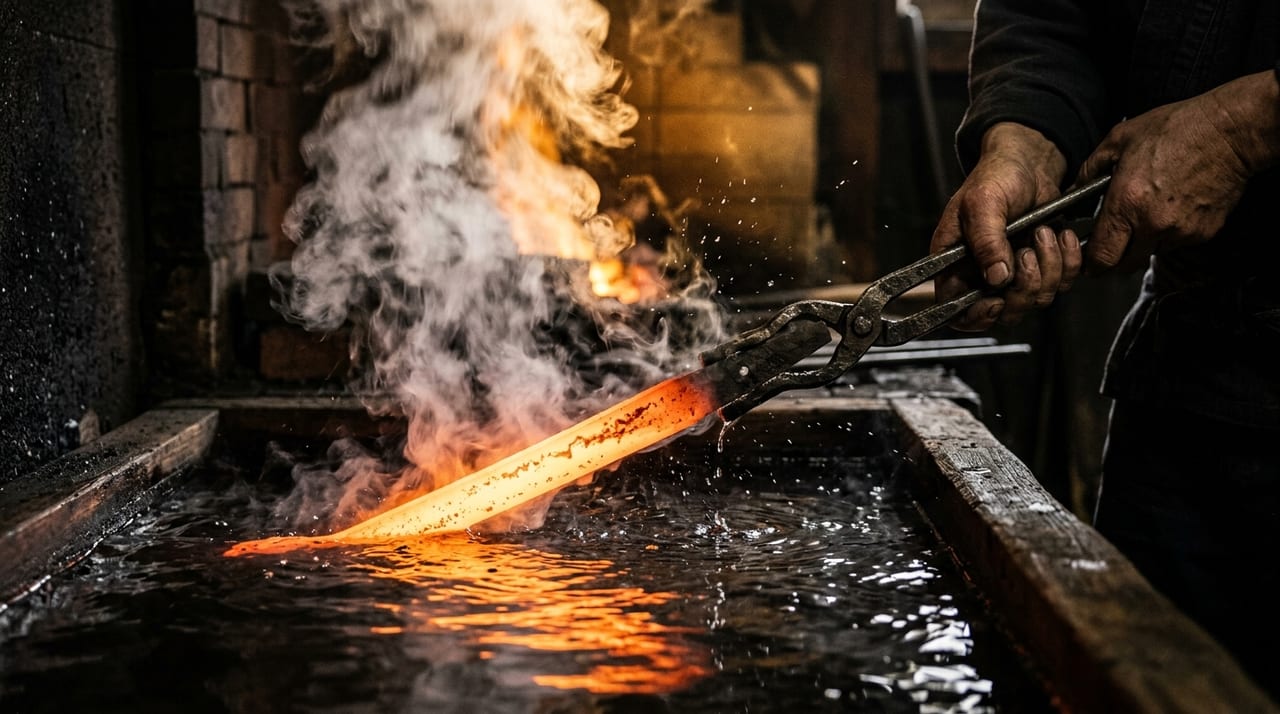
An explanation of the mechanisms behind yakiware (quench cracking) and hiwari (fire cracking) caused by phase transformation during quenching, along with prevention techniques and remediation practiced by swordsmiths.