New Arrivals — Browse our catalog for the latest authentic Japanese sword arrivals. Browse →
Eiroku 11 (1568), 9th month 7th day to 10th month 18th day (old calendar)
From Gifu in Mino Province through Omi, Yamashiro and Settsu provinces (Kyoto and the area of Akutagawayama Castle)
Forces
Oda Nobunaga and Ashikaga Yoshiaki
Rokkaku and Miyoshi Triumvirate side
About 14 min read
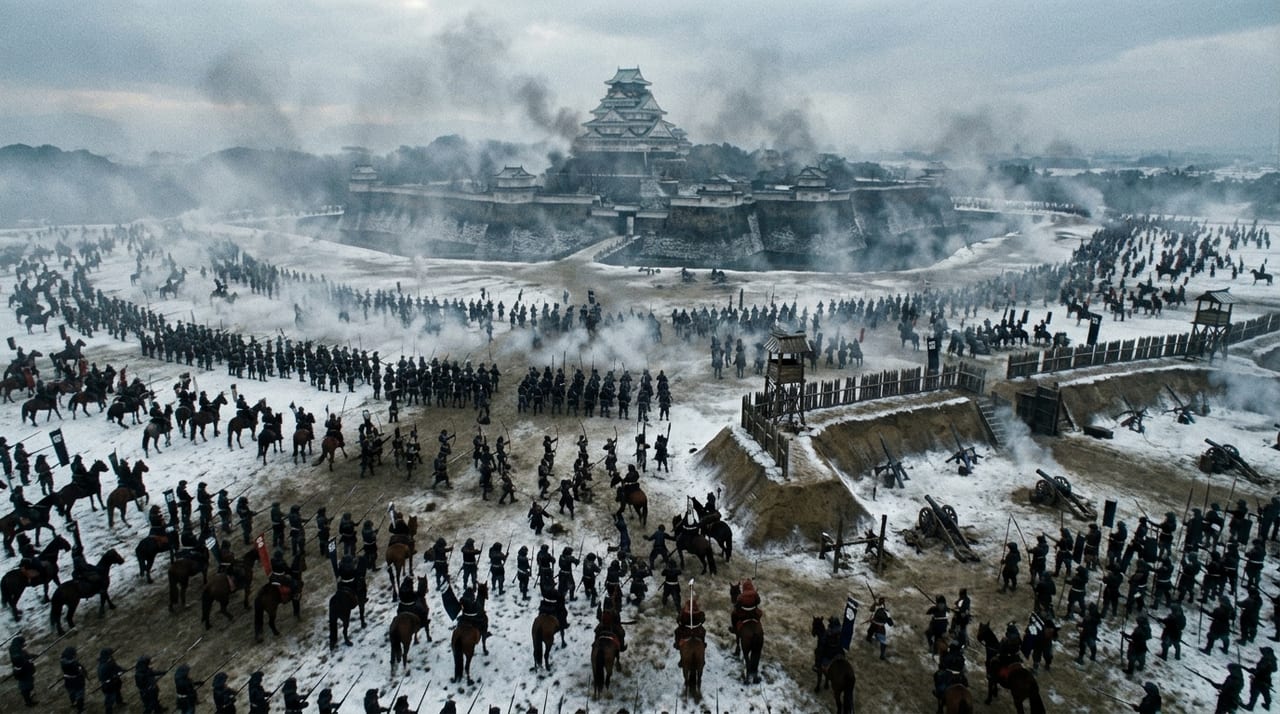
In Eiroku 11 (1568), Oda Nobunaga set out from Gifu in Mino with Ashikaga Yoshiaki in his train, drove the Rokkaku out of Omi, and entered Kyoto as Miyoshi strongholds opened one after another. On the 18th day of the 10th month Yoshiaki received the shogunal appointment and became the 15th shogun of the Muromachi shogunate. The episode, generally called "Nobunaga's march on Kyoto," marked the point at which Nobunaga stepped into the home provinces and began to take a deep part in what followed.
All dates below are by the old calendar.
Ashikaga Yoshiaki had begun as a monk, Kakukei, in the Ichijō-in of Kōfuku-ji. On the 19th day of the 5th month of Eiroku 8 (1565) his elder brother, the 13th shogun Ashikaga Yoshiteru, was killed in the Eiroku Incident, and Kakukei was confined at Kōfuku-ji by Matsunaga Hisahide and others, though he is said to have had some freedom of movement. On the night of the 28th day of the 7th month he escaped with the help of Hosokawa Fujitaka, Isshiki Fujinaga and others, and by way of Iga reached Wada in Kōka District, Omi, the next day, taking shelter in Wada Koremasa's Wada Castle. From there he sent letters to daimyo in many regions asking for support.
On the 21st day of the 11th month he moved, through the goodwill of Rokkaku Yoshikata, to the Yajima residence in Yasu District, and on the 17th day of the 2nd month of Eiroku 9 (1566) he returned to lay life and took the name Yoshiaki (then written with the characters 義秋). On the 21st of the 4th month he was granted the Junior Fifth Rank, Lower Grade, and the post of Sama no kami. But on the 29th of the 8th month, after the Rokkaku turned away from him, he left Yajima and turned to Takeda Yoshimune in Wakasa, and on the 8th of the 9th month moved to Tsuruga in Echizen, later being received at Ichijōdani, the base of Asakura Yoshikage.
Asakura Yoshikage, however, showed no active intention of escorting him to the capital. He is said to have also kept Ashikaga Tsugutomo (the Kuratani Palace) in his care, and Yoshiaki's stay dragged on. He also turned to Uesugi Terutora (Kenshin), but Terutora, too, could not march on the capital because of his conflict with Takeda Shingen and other matters. Meanwhile, on the 8th day of the 2nd month of Eiroku 11, Ashikaga Yoshihide in Settsu received the shogunal appointment, so Yoshiaki had a rival. He had his coming-of-age rite at Ichijōdani on the 15th of the 4th month and changed his name to Yoshiaki (written 義昭).
Nobunaga, for his part, took Inabayama Castle from the Saitō in the 8th month of Eiroku 10 (1567), gaining control of Mino, and was preparing for a march on the capital, including by allying with Matsunaga Hisahide. Yoshiaki resumed negotiations with Nobunaga through Akechi Mitsuhide, then a retainer of the Asakura, and Nobunaga sent Murai Sadakatsu, Fuwa Mitsuharu, Shimada Hidemitsu and others to Echizen, joined by Wada Koremasa. That led to the departure from Ichijōdani in the 7th month.
In 1568 Ashikaga Yoshiaki was staying with Asakura Yoshikage in Echizen. In the 7th month Nobunaga sent Wada Koremasa and others to Echizen to bring him. Yoshiaki left Ichijōdani in Echizen on the 13th day of the 7th month for Mino, and on the 25th he met Nobunaga at Risshō-ji below Gifu Castle.
The plan of escorting Yoshiaki to the capital thus took concrete shape at that July meeting. For Yoshiaki it meant a patron who could make him shogun; for Nobunaga it meant a man to hold up as the legitimate reason for advancing into the home provinces.
Nobunaga set out for the capital on the 7th day of the 9th month with Yoshiaki. The first obstacle was Rokkaku Yoshikata (Jōtei) and his son Yoshiharu, who held southern Omi. Attacked by Oda forces, the Rokkaku abandoned their base at Kannonji Castle on the 12th and fell back to Kōka District. From then on the clan carried on guerrilla-style resistance from the hills.
The course of events at Kannonji is treated in more detail in this site's entry on the battle of Kannonji Castle. What matters here is that passage through Omi was the gate that decided whether the march would succeed, and that when the Rokkaku gave up their castle the road to Kyoto opened before the Oda army.
On the 14th Nobunaga reported the pacification of Omi to Yoshiaki, and on the 21st Yoshiaki's journey to the capital began under Oda escort. On the 25th Nobunaga advanced as far as Ōtsu.
At the time the Miyoshi side, including the Miyoshi Triumvirate (Miyoshi Nagayuki, Miyoshi Masayasu and Iwanari Tomomichi), still held power in and around Kyoto. But when Nobunaga reached Ōtsu on the 25th, the Triumvirate's army, then campaigning in Yamato, is said to have collapsed.
The events that followed were these.
- 9th month, 26th day: Yoshiaki entered Kiyomizu-dera, completing his entry into the capital. - 29th: Iwanari Tomomichi withdrew from Shōryūji Castle and surrendered. - 30th: Hosokawa Akimoto and Miyoshi Nagayuki abandoned Akutagawayama Castle. On the same day Yoshiaki entered the castle and moved on to the subjugation of the home provinces. - 10th month, 2nd day: Shinohara Nagafusa abandoned Koshimizu Castle and fled to Awa. - Ikeda Katsumasa also surrendered to Nobunaga.
In roughly three weeks from the start of Nobunaga's march, many of the Rokkaku and Miyoshi strongholds had opened before the Oda army, and the initiative in and around Kyoto changed hands. Miyoshi Yoshitsugu, Matsunaga Hisahide and others are said to have sided with Yoshiaki's entry and to have moved to hold anti-Yoshiaki forces in check.
Yoshiaki entered Honkoku-ji on the 14th day of the 10th month and on the 18th received the shogunal appointment from the court, becoming the 15th Muromachi shogun. Ashikaga Yoshihide in Settsu had received his own shogunal appointment on the 8th of the 2nd month of Eiroku 11, so this came eight months later. Yoshiaki's accession to the shogunate thus followed a period in which a rival had already received the appointment first.
On the 24th Yoshiaki praised Nobunaga as "first in martial valor under heaven" and permitted him to use the paulownia crest and the two-lines crest, both associated with the Ashikaga shogunal house, a measure of the honor bestowed. Nobunaga also received the title "Father of the Muromachi lord." At the same time, Nobunaga is said to have declined most of the high honors offered, such as deputy shogun and kanrei, and to have preferred practical gain.
On the 26th Nobunaga returned to Mino, leaving veteran commanders in Kyoto. The military action of the march itself was thus concluded in a little over a month.
On the 5th day of the 1st month of Eiroku 12 (1569), shortly after Nobunaga's departure, the Miyoshi Triumvirate attacked Yoshiaki's residence at Honkoku-ji (the Honkoku-ji Incident). It was beaten back the next day, but it showed how fragile stability in the home provinces still was. Nobunaga went up to Kyoto again on the 10th and on the 14th had Yoshiaki approve the nine articles of the Denchū Okite. On the 14th day of the 4th month the Nijō residence was completed and Yoshiaki moved into it.
The relationship between Yoshiaki and Nobunaga grew steadily more strained afterward, through additions to the Denchū Okite and the seventeen articles of admonition of the 9th month of Genki 3 (1572). Its outcome is treated in this site's entry on the battle of Makishima Castle.
For Nobunaga the march of Eiroku 11 was the turning point at which he moved from being a regional daimyo to a power with influence in the home provinces. For Yoshiaki, who hoped to restore the Muromachi shogunate, it was the chance to actually take the shogunal seat, and it was also the starting point of the rivalry that later opened between the two.
Ashikaga Yoshiaki
Ashikaga Yoshiaki, who entered the capital under Nobunaga's escort and received the shogunal appointment on the 18th day of the 10th month
Akechi Mitsuhide
Akechi Mitsuhide, then an Asakura retainer, who mediated between Yoshiaki and Nobunaga
Asakura Yoshikage
Asakura Yoshikage, who hosted Yoshiaki at Ichijōdani but did not move toward the capital
Hosokawa Yūsai
Hosokawa Fujitaka (Yūsai), who helped Yoshiaki escape from Kōfuku-ji
Matsunaga Hisahide
Matsunaga Hisahide, on the side that cooperated with Yoshiaki's entry into the capital
Miyoshi Yoshitsugu
Miyoshi Yoshitsugu, on the side that cooperated with Yoshiaki's entry into the capital
Oda Nobunaga
Oda daimyo who set out from Gifu escorting Yoshiaki and brought the home provinces under control
Rokkaku Yoshikata
Rokkaku Yoshikata of Kannonji Castle in southern Omi, who abandoned his castle in the face of the Oda advance