New Arrivals — Browse our catalog for the latest authentic Japanese sword arrivals. Browse →
January 15, 1455 – 1482 CE
Entire Kantō region (Musashi, Sagami, Kōzuke, Shimotsuke, Kazusa, Shimōsa, Hitachi provinces)
Forces
Furukawa Kubō Forces (Ashikaga Shigeuji)
Kantō Kanrei Uesugi Forces and Shogunate
About 7 min read
The Kyōtoku War (享徳の乱, 1454–1482) is one of the least-known of Japan's major medieval conflicts outside specialist circles, but its consequences were as significant as the more famous Ōnin War that began thirteen years later: where Ōnin transformed the political landscape of western Japan and the capital region, the Kyōtoku War did the same for the Kantō, ushering in the Sengoku period in eastern Japan nearly a decade before historians traditionally mark its beginning.
The war began on December 27, 1454, when Ashikaga Shigeuji — the fifth Kamakura kubō, the shogunate's representative authority in the east — summoned Kantō Kanrei Uesugi Noritada to his residence and had him killed. The killing was the culmination of long-standing tensions between the Kamakura kubō office and the Uesugi family that served as its kanrei (deputy); it triggered an immediate military response from the shogunate in Kyoto, which ordered Shigeuji's punishment and dispatched forces to Kamakura.
Shigeuji fled Kamakura — abandoning the traditional seat of eastern authority — and established himself at Furukawa in Shimotsuke Province (present-day Ibaraki Prefecture), where he became known as the Furukawa Kubō. From this new base he rallied eastern warrior clans — the Chiba, the Yūki, and others with long roots in the Kantō — against the Uesugi-shogunate alliance. The shogunate attempted to create a counter-authority by installing Ashikaga Masatomo as the Horikoshi Kubō in Izu Province, but this rival figure never accumulated real power; the real contest was between Shigeuji at Furukawa and the Uesugi kanrei.
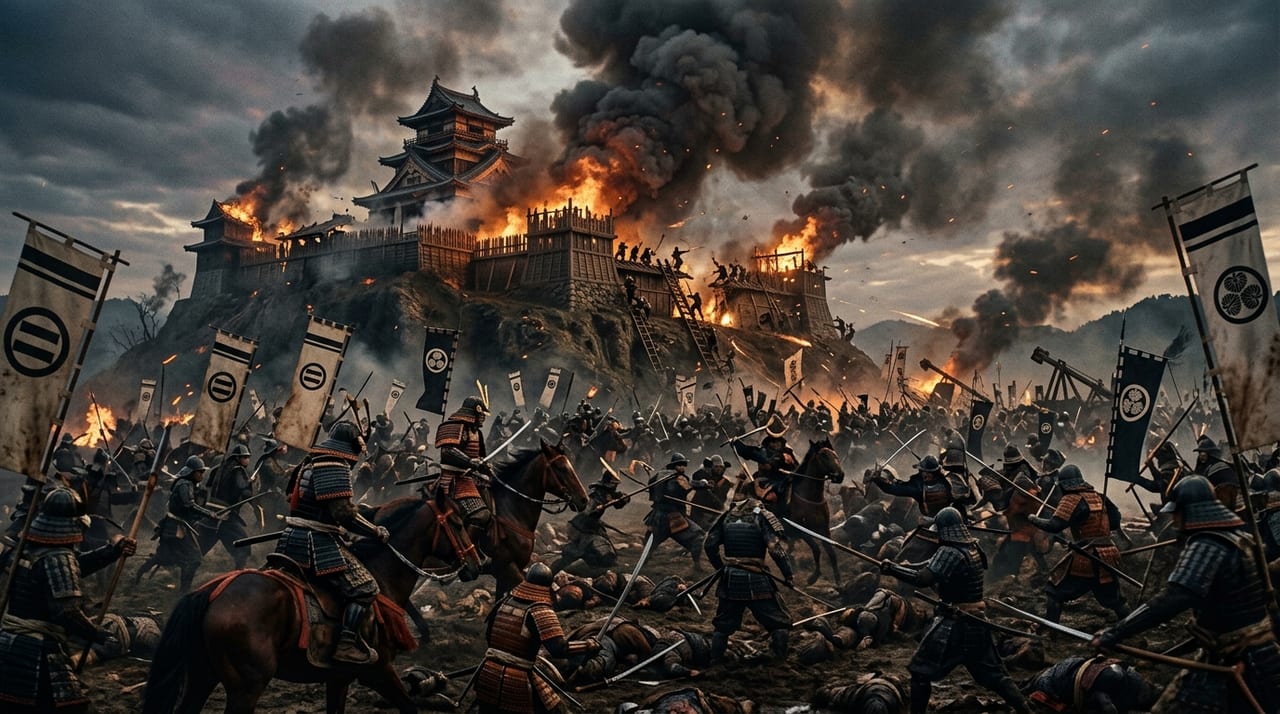
The war that followed was not a series of set-piece battles but a grinding, twenty-eight-year conflict of raids, sieges, political maneuvering, and attrition across the entire Kantō plain. Neither side could deliver a decisive blow; the Uesugi were strong enough to prevent Shigeuji from returning to Kamakura, but Shigeuji commanded enough loyalty among the eastern warrior leagues to resist elimination. The war ended not with a military decision but with the Tohi Gattai reconciliation of 1482, in which both sides accepted a formal peace that left the underlying power questions unresolved.
For the history of the Japanese sword, the Kyōtoku War's importance lies in what it did to the sword-making culture of eastern Japan. The Sagami (Sōshū) tradition, centered on Kamakura and representing one of the great medieval sword schools alongside Bizen and Yamashiro, depended on the cultural and economic infrastructure of Kamakura — the patronage of the Kamakura kubō office, the settled warrior society of the Kantō, the transmission of smith families across generations. Shigeuji's flight from Kamakura and the subsequent decades of warfare disrupted this infrastructure severely. Some Sōshū-tradition smiths relocated; the coherent school tradition that had produced the great Masamune and Sadamune works of the fourteenth century could not survive three decades of regional collapse.
At the same time, the war increased demand for functional swords across the entire Kantō region. Both sides' warrior leagues needed weapons; the character of this demand was for serviceable blades in quantity, not for the refined masterworks of the great traditions. This shift — from great schools producing artistic masterpieces to dispersed smiths producing reliable battle tools — is a recurring pattern in Japanese sword history during periods of prolonged regional warfare. The Kyōtoku War is an early example of this dynamic in the east.
The war's most important long-term consequence was the power vacuum it created. The Later Hōjō clan (後北条氏), founded by Hōjō Sōun (Ise Shinkurō) beginning around 1491, rose precisely because the Kantō's political order had been destroyed by the Kyōtoku War and its aftermath. The Hōjō established their base at Odawara, and the Odawara sword-smithing tradition (小田原鍛冶) that developed under their patronage became one of the regional schools that fed into the Edo-period new sword tradition. The line from the Kyōtoku War's destruction of the old Kantō order to the Hōjō's rise to the Odawara smiths to the Edo new sword culture is long, but it is there.
Fudō Masamune
Masterwork of the Sōshū tradition, whose school was disrupted by the Kyōtoku War's destruction of Kamakura
Ishida Masamune
Named Masamune blade symbolizing the Kamakura sword tradition disrupted by the war
Daihannya Nagamitsu
Great Bizen blade representing the sword culture of the warring Kantō warrior leagues