What Is the Un-rui — The Working Style and Dated Mei of Unshō, Unji, and Unjū, Based in Ukai Township, Bizen Province
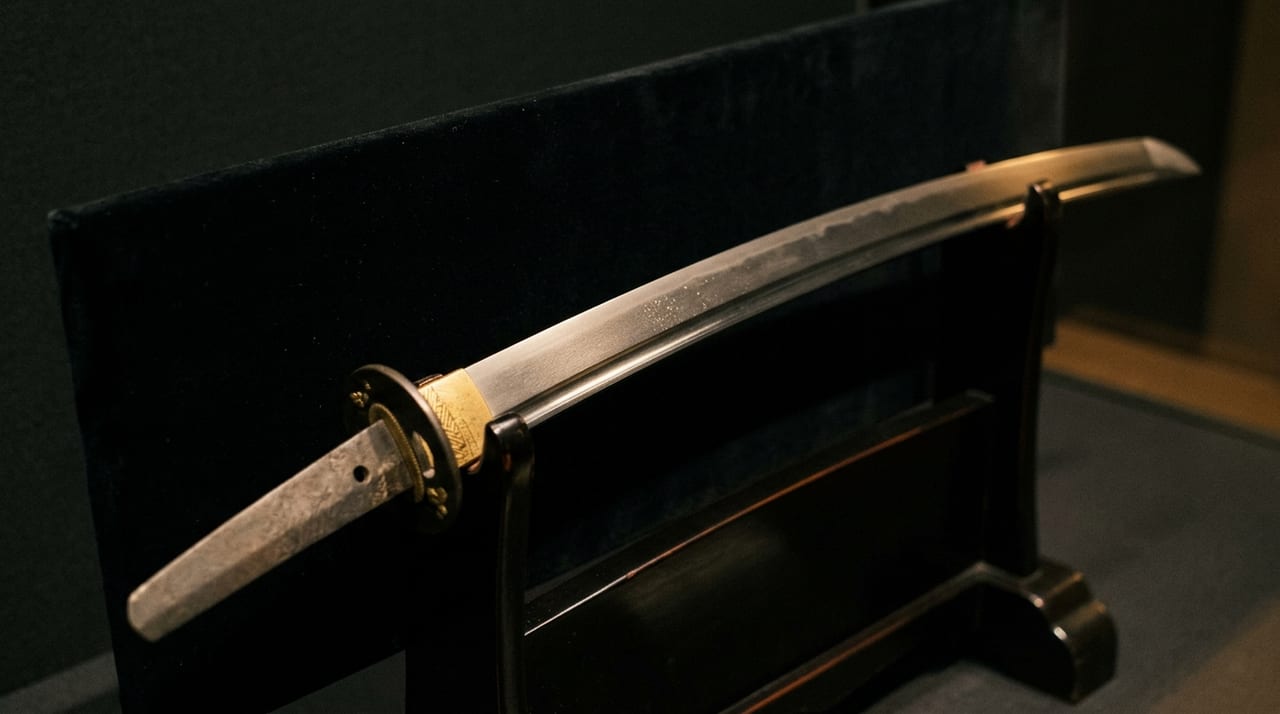 * Image is for illustrative purposes only.
Table of Contents
When people think of tōkō from Bizen Province, most will picture the Osafune school. Yet within the same Bizen Province there was a group of tōkō whose working style differed markedly from Osafune. They are the Un-rui, who shared the character "un" (cloud) as their common character. Comprising the successive names Unshō, Unji, and Unjū, they were based in Ukai Township and are therefore also known as the Ukai school. This article surveys the Un-rui's area of activity, working style, dated mei, and designated works to the extent that can be confirmed.
What Is the Un-rui — A Bizen School Using "Un" as Their Common Character
The Un-rui were a group of tōkō active in Ukai Township, Bizen Province (near present-day Ukai, Mitsu, Kita Ward, Okayama City) from the late Kamakura period through the Nanbokuchō period. They are collectively called the Un-rui because each name — Unshō, Unji, and Unjū — carried on the character "un" (cloud).
Their origins are unclear. The tradition that they were invited from Kyoto by the Matsuda clan is sometimes cited, but it is not a claim backed by reliable historical sources. It is safest to treat this as no more than a legend.
How Does It Differ from the Osafune School
Even within the same Bizen Province, the Un-rui are markedly different in character from the Osafune school. Commentaries by the National Institutes for Cultural Heritage describe their shape and jigane as having affinities with the Rai School of Yamashiro, and because their forging grounds lay close to Bicchū Province, their jigane and hamon are also said to resemble those of the Aoe school.
While the heartland of Bizen lay at Osafune and Fukuoka, the Un-rui were a school that cultivated their own working style in a different township. Those who understand Bizen-den only through "the flamboyant chōji of Osafune" may find themselves somewhat puzzled by the Un-rui's calm, suguha-style hamon.
Highlights of the Working Style
The following features can be confirmed from the available sources.
- Jigane: fine itame mixed with mokume, occasionally including masame. Ji-nie is present and the surface grain is pronounced.
- Hamon: primarily suguha, mixed with small chōji, ko-gunome, and small midare. The nioi is deep, ko-nie is heavy, and sunagashi and fraying are visible.
- Utsuri: a midare-utsuri or ji-fu utsuri appears. It is said to be especially prominent in suguha works.
- Yakidome above the machi: Unshō has works in which the quenching stops just above the machi.
Exhibition notes sometimes describe the steel as having "a transparent quality" or the hamon as "calm and bright." The intensity of the utsuri varies from piece to piece; in Unjū's later works a tendency for the utsuri to weaken while nie becomes stronger has been noted. Bear in mind that this is not a rule that applies to every work.
For more on how to read jigane, How to Read and Appreciate Jigane is also a useful reference.
The Period of Activity as Seen through Dated Mei across Three Generations
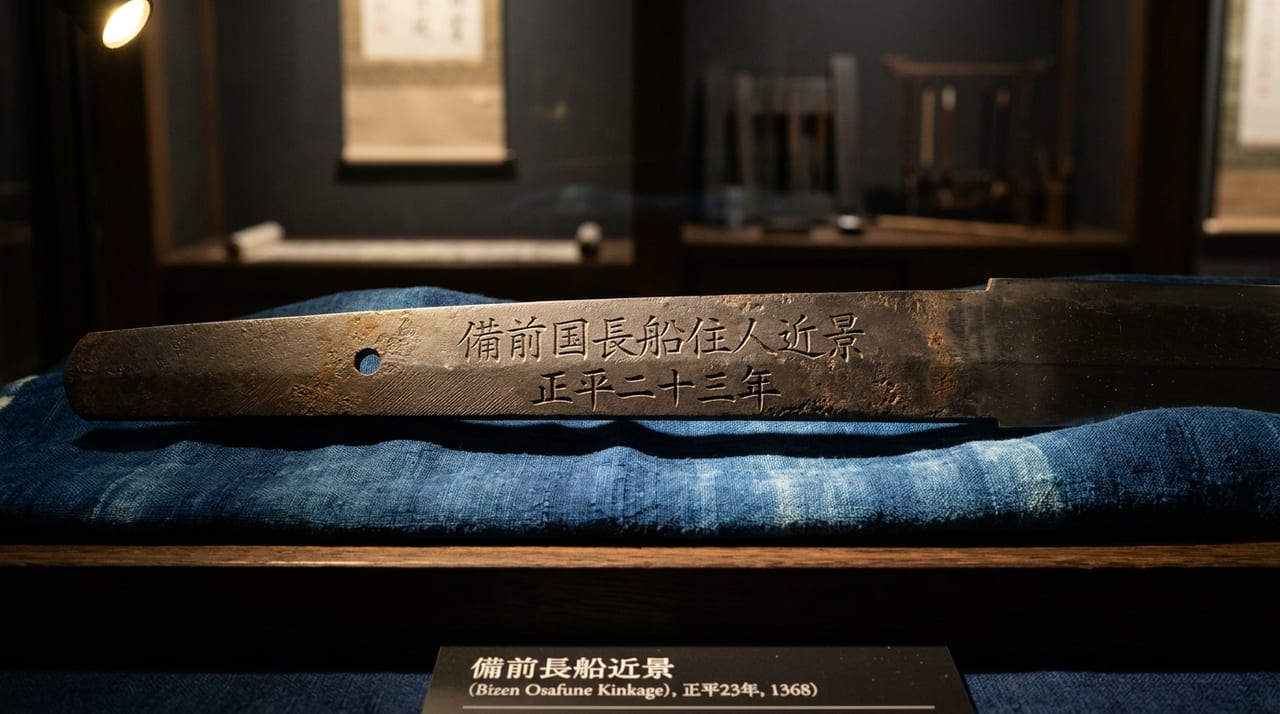
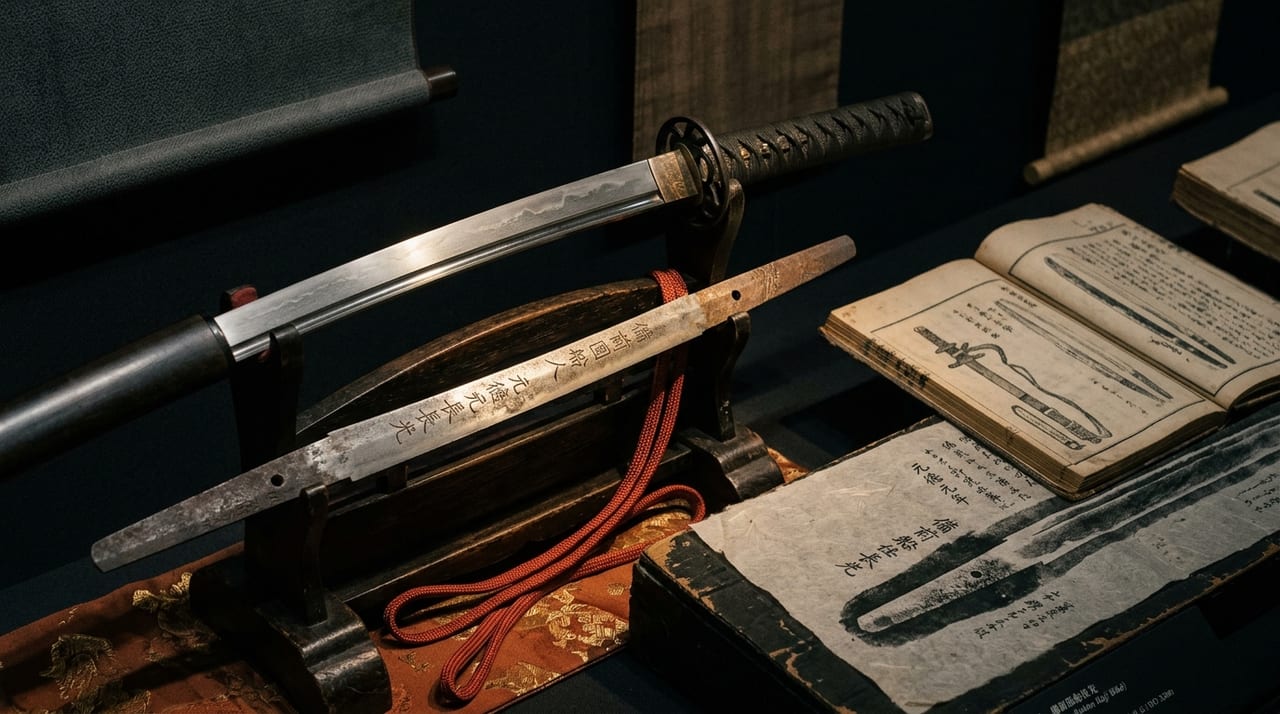
Works in which a dated mei was cut into the nakago provide clues for determining when they were made.
- Unshō: no dated works are known.
- Unji: dated works from Shōwa 4 (1315), Bunpō 2 (1318), and Kenmu 2 (1335) are known.
- Unjū: dated works from Bunna (1352–1355), Enbun (1356–1360), and Ōan (1368–1374) are recorded. However, some sources give Bunna and Jōji (1362–1368) instead, and the matter is not settled.
From Unji's dated mei we can see activity from the late Kamakura period through the early Nanbokuchō period, and from Unjū's dated mei through the middle Nanbokuchō period and beyond — showing that the school continued making swords for well over half a century. The reading of dated mei is treated in detail in What Is a Dated Mei?.
Designated Works
Within the scope of what can be confirmed through searches on the Cultural Heritage Online database, the following works have been designated as jūyō bunkazai (Important Cultural Property).
- Tachi, signed "Bizen-koku-jū Unji / the 11th month of Kenmu 2, cyclical year Kinoto-i" (Nanbokuchō period): jūyō bunkazai (Important Cultural Property), held at the Kyoto National Museum
- Tachi Signed Unshō, with variegated-lacquer long-chain tachi koshirae (mounting): jūyō bunkazai (Important Cultural Property), held at the Tokyo National Museum
In addition, tachi signed by Unshō and Unji have been registered as having received jūyō bunkazai designation, but the details of their quantity and holding institutions could not be confirmed. It could also not be confirmed in this investigation whether any work by the Un-rui has been designated as a kokuhō (National Treasure). When citing numbers or official designation titles, please verify with the latest version of Cultural Heritage Online.
As an Entry Point to Studying Bizen
Bizen-den tends to be discussed as a grand lineage flowing from Ko-Bizen through the Osafune school, Fukuoka Ichimonji, and on to Sue-Bizen. Knowing that there were groups like the Un-rui — closer in character to the Aoe school — on the outer edges of this tradition reveals the depth of the kaji tradition in Bizen Province.
Here are related articles worth reading alongside this one.
- The Ko-Bizen School — The Dawn of Bizen Swords Built by Tomonari and Masatsune
- The Complete History of the Aoe School — The Pinnacle of Kamakura Kotō, the Tradition and Tōkō Lineage of Bicchū Aoe
- Rai Kunimitsu — The Crowning Achievement of the Late Kamakura Rai School of Yamashiro
Points to Note When Appreciating Un-rui Works
When viewing a sword by the Un-rui, checking in the following order will help you organize your observations.
- Is the hamon not a flamboyant chōji-midare but a calm composition of suguha style mixed with small chōji and ko-gunome?
- Is the nioi deep, and can the activity of ko-nie, sunagashi, and fraying be seen?
- Does a faint midare-utsuri or ji-fu utsuri appear in the jigane?
- Is the mei in a format that includes a place name, such as "Bizen-koku-jū" or "Ukai-gō"?
These are introductory guidelines and should not be used as definitive criteria. Actual judgments must be made carefully after comparing the actual objects in person.
To browse and purchase swords, visit the Sword Catalog; for any inquiries, please contact us via the Inquiry Form.