Complete History of the Aoe School — The Pinnacle of Kamakura Kotō, the Traditions and Tōkō Lineage of Bichū Aoe
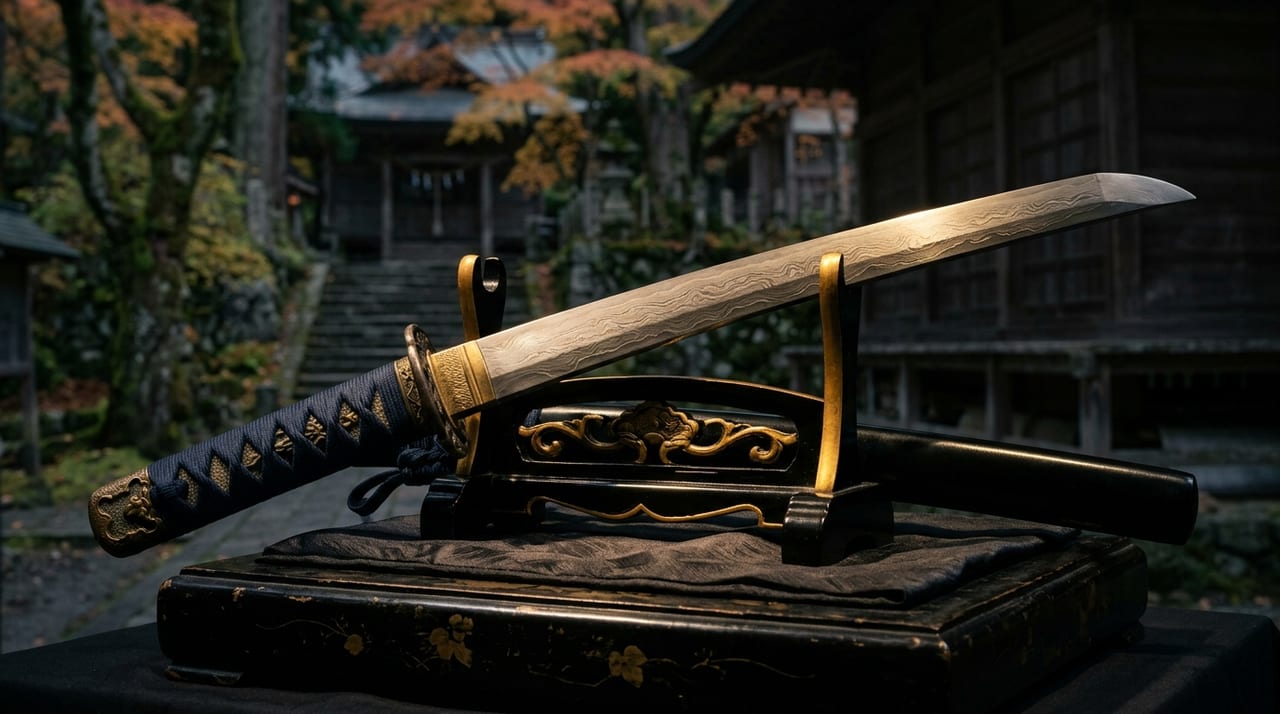
 * Image is for illustrative purposes only.
Table of Contents
The Aoe School — The Finest Swordsmith Group of Bichū
The Aoe school is a group of tōkō that flourished in the land of Aoe in Bichū Province (present-day Okayama Prefecture), and is regarded as one of the supreme peaks of nihontō history during the kotō period. Its origins trace back to the late Heian period, and it reached its height from the mid-Kamakura period through the Nanbokuchō period.
Bichū Province, where the Aoe school was active, was known as a source of high-quality iron sand. The distinctive kaji techniques that made use of the local iron sand and water gave rise to the beauty of jigane uniquely characteristic of the Aoe school.
In the ranking of nihontō, the Aoe school is counted among the schools that receive the highest evaluations. Even today, centuries later, its works attract great interest from sword enthusiasts and museums both in Japan and abroad, and it is positioned as a representative school of the kotō period.
Technical Characteristics of the Aoe School — The Aesthetics of Sumihada
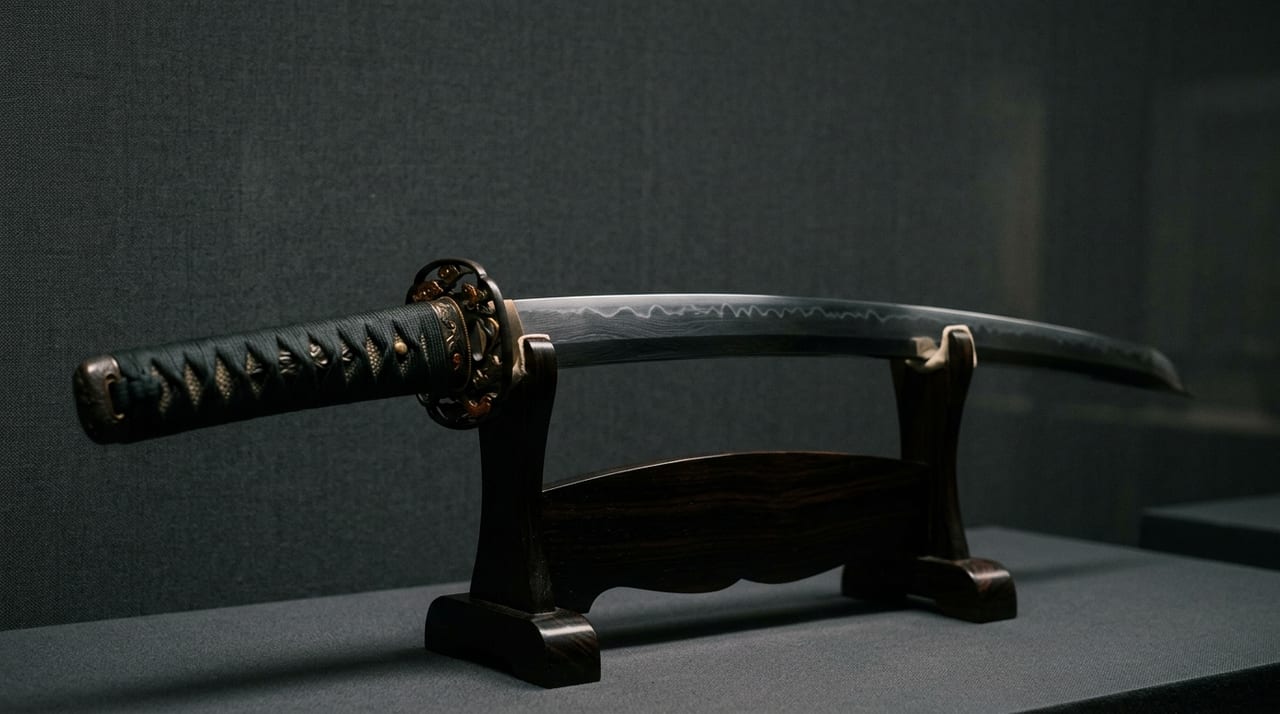
The greatest characteristic that clearly distinguishes Aoe school blades from those of other schools lies in a distinctive jigane known as "sumihada." Sumihada refers to a jigane that has a distinctive dark, blackish tone together with a clarity of surface texture reminiscent of clear, transparent water.
Characteristics of the jigane: The jigane displays a complex surface texture based on itame interspersed with flowing mokume. The jigane has an overall dark, blackish tone, producing a distinctive aesthetic effect of "clear black." Ji-nie is fine and tends to be distributed uniformly across the entire surface.
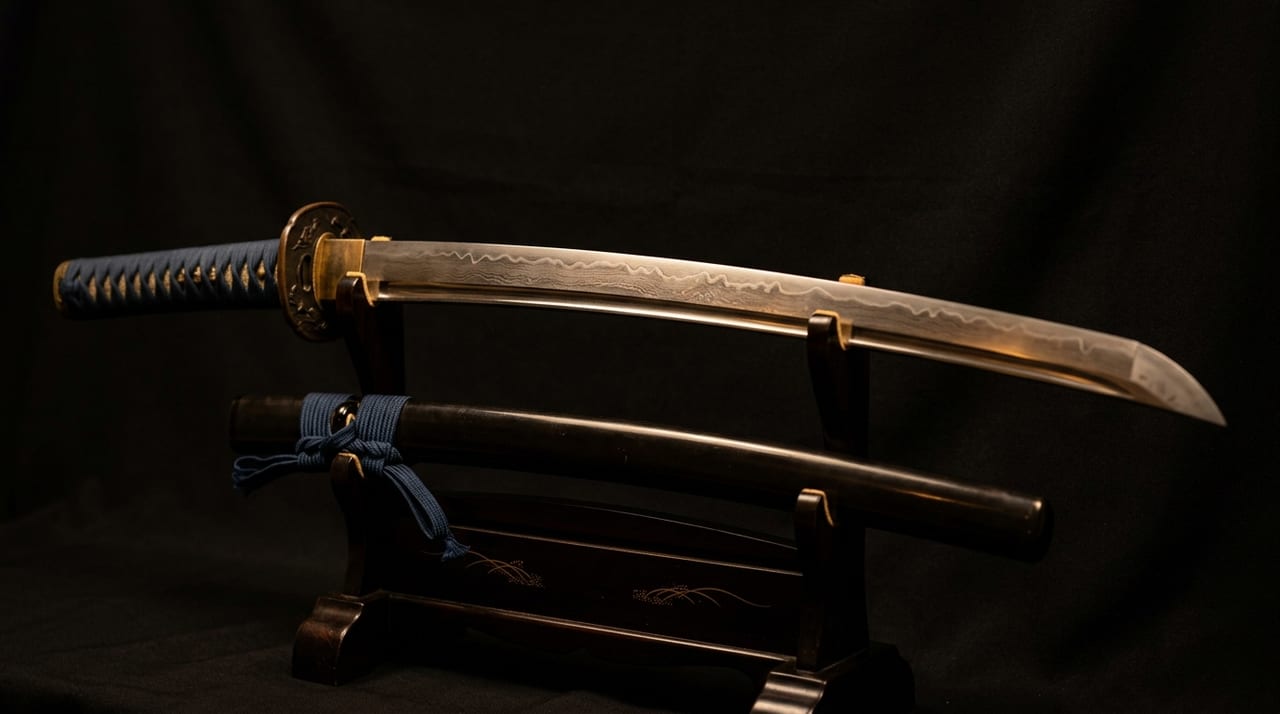
Characteristics of the hamon: The hamon is often based on a gentle suguha or a quietly undulating ko-midare. Those in the suguha of the sonnō uchigatana style with jikei are particularly highly regarded.
Points to note in appraisal: Sumihada changes its appearance greatly depending on how light falls on it, so it is considered important to observe the actual blade carefully from various angles. It is necessary to assess multiple elements comprehensively — such as the distribution of ji-nie, the entry of jikei, and the working of the bōshi, which forms the boundary between the hamon and the jigane — and judgment from photographs alone is said to be difficult. It is because of this difficulty in identification that the authentication of Aoe school works demands a high level of experience and knowledge.
Principal Swordsmiths of the Aoe School and Their Lineage
Ko-Aoe period (late Heian to early Kamakura): The details of the tōkō regarded as the founder of the Aoe school are unclear, but works from this period are collectively called "Ko-Aoe." Very few survive, and they possess the unpretentious character of the kotō period.
The height of the mid-Kamakura period (mid to late 13th century): The Aoe school shone most brilliantly in the mid-Kamakura period. Tsugunao is the most highly regarded tōkō of the Aoe school, with many works showing the most typical expression of sumihada, and can be called the very embodiment of the school. Many surviving works have been designated as jūyō bunkazai.
Tsugiyoshi is also a highly regarded tōkō on a par with Tsugunao, characterized by gentle suguha and beautiful sumihada. It is said that Tsugiyoshi's style is somewhat softer.
Sadatsugu was a master smith active from the mid- to late Kamakura period, embodying the technical maturity of the Aoe school. Among Sadatsugu's tachi there are kokuhō works, demonstrating the highest standard of the Aoe school.
Late Kamakura to Nanbokuchō period (14th century): During the Nanbokuchō period, many master smiths were active, including Aoe Tsunetsugu and Aoe Yoshitsugu, but as the Muromachi period began the activity of the Aoe school contracted rapidly.
Notes on reading mei: The mei inscribed on the nakago (tang) of a blade is an important clue for identifying the tōkō, but over time it may have worn away, or a spurious mei may have been added in a later era. For this reason, it is considered essential for accurate appraisal not to rely solely on the presence or reading of the mei, but to judge from the overall style, including the jigane and hamon.
Surviving Important Works and Their Legacy to the Present Day
Among the surviving works of the Aoe school, particularly important are the pieces held in museums and art galleries across the country. Nikkari Aoe is a sword of a warrior legendary for having cut off the head of a sorcerer, and is held in the Marugame City Museum (Kagawa Prefecture).
In modern nihontō appraisal, the sumihada of the Aoe school is known as "one of the most difficult jigane to identify," and few appraisers are capable of accurately authenticating genuine Aoe school works. This demonstrates that the techniques of the Aoe school had reached a distinctive level clearly different from those of other schools.
Due to their rarity, surviving works of the Aoe school are made accessible to many people through exhibitions at museums and resource centers. The opportunity to actually handle a work, or to observe one up close through glass, is a valuable experience for understanding the texture of sumihada.
The name of the Aoe school became widely known among younger generations through the appearance of multiple characters in Touken Ranbu. The fact that the school's name and the place name Bichū became recognized by many people through characters such as Nikkari Aoe and Aoe Tsunetsugu is noteworthy from the perspective of the modern spread of classical tōkō schools.
Points to Check When Selecting an Aoe School Blade
There are several points to keep in mind when actually handling or considering the purchase of an Aoe school blade.
- Presence of a kanteisho: Precisely because the Aoe school's sumihada is said to be difficult to identify even for specialists, whether a kanteisho issued by a reputable appraisal body is included is an important item to verify.
- Condition: Check for changes in condition due to age, including the presence of rust, the state of togi, and whether there are any chips in the edge.
- Provenance: When records of who has owned the blade and how remain, the provenance itself becomes material that supports the value of the work.
- Condition of accompanying items: Whether accessories other than the blade itself — such as the koshirae, sword bag, and box inscription — are complete is also a factor in the overall evaluation.
Carefully checking each of these points one by one leads to a satisfying encounter with a blade.
Basics of Storage and Maintenance for Nihontō
For passing nihontō on to future generations in good condition — not only works of the Aoe school — regular storage and maintenance are indispensable.
Since blade steel rusts easily on contact with moisture in the air, it is considered desirable to choose a storage location with minimal humidity fluctuation. Periodically wiping away old oil with uchiko (polishing powder) and applying a thin coat of fresh chōji-yu (clove oil) protects the blade from rust. The basic practice during maintenance is not to touch the blade directly with bare hands, but to use a clean cloth or Japanese paper.
Furthermore, if maintenance has not been performed for a long time, or if a worrying condition such as rust or edge chipping is observed, it is recommended not to carry out polishing on one's own judgment, but to consult a specialist togishi or a reliable appraiser. Since jigane with sumihada like that of the Aoe school is also affected in its appearance by polishing, handling by an experienced specialist is especially important.