Neuheiten — Aktuelle Neuzugänge finden Sie in unserem Katalog. Ansehen →
Einblicke in das Wissen über japanische Schwerter und die Kultur
Awatagunchi Yoshimitsu (Yoshimitsu) was a sword maker of the Yamashiro tradition who flourished in the mid-Kamakura period and is counted alongside Masamune and Gono Yoshihiro as one of the "Heaven's Three Greatest Works" (Tenka Sanchi). Known as a master of tantō (short swords) characterized by nashiji (pear-skin) grain and straight blades, he left behind numerous renowned pieces including "Ichigo Hitofuri," "Namazu'o Tōshirō," and "Honekami Tōshirō." This article provides detailed explanation of Yoshimitsu's life, techniques, and representative works.
The role of bellows and charcoal selection in Japanese swordsmithing temperature and carbon control.
Fujishima Tomoshige was a sword smith who flourished in Echizen Province (present-day Fukui Prefecture) during the Nanboku-chō period and is regarded as the founder of the Fujishima School of Echizen. While influenced by the Soshu tradition, he established a unique Echizen jigane (blade steel texture) and laid the foundation for the sword culture of the Hokuriku region. This article explains in detail Tomoshige's forging style, historical context, and positioning in the history of Echizen swords.
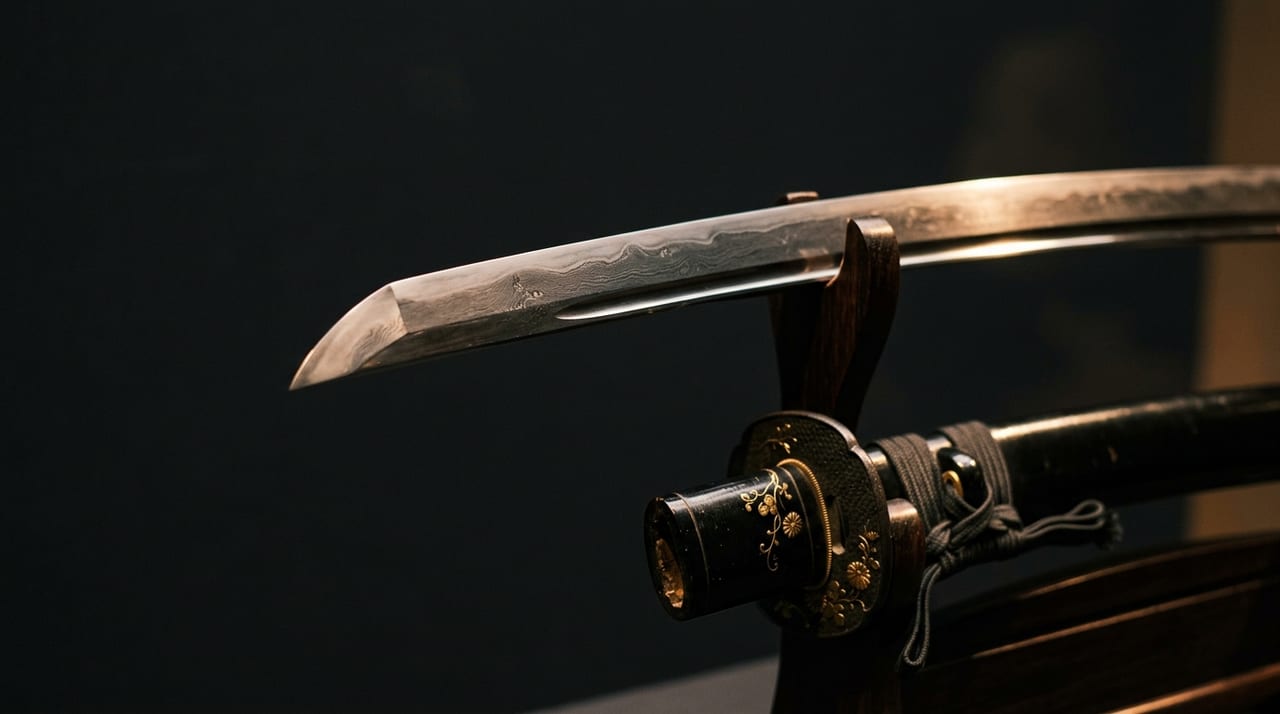
Hamon typology explained through metallurgical science and clay-coating techniques.
Horikawa Kunihiro, active from the Momoyama through early Edo period, is revered as the 'Father of Shintō' swordsmanship. Transitioning from samurai service to sword-making, he established his forge in the Horikawa district of Kyoto and revived ancient blade aesthetics in the new era.
A comprehensive explanation of the four historical periods from Joukotou to Shinshintou from the perspectives of morphological comparison, technical history, and connoisseurship practice. Learn how to interpret different eras through variations in steel grain, blade patterns, and tang characteristics.
Detailed analysis of how different jihada steel textures emerge from folding and forging techniques.
The Jokyu War of 1221 was also a turning point in Japanese sword history. This article covers Retired Emperor Gotoba's passionate sword patronage, his personal forging practice, the postwar confiscation of famous blades, and the impact on Bizen swordsmiths.
The Kamakura shogunate founded by Minamoto no Yoritomo placed swords at the center of warrior ritual. This article examines the political and spiritual roles of swords in dedication, bestowal, and oath ceremonies, drawing on primary sources.
Koyama Muneratsu, who flourished during the Shinshinto period in the late Edo era, was a swordsmith who studied and revived ancient techniques as a student of Suishinshi Masahide. This article explains in detail his blade patterns and steel characteristics, representative works, and modern evaluation.
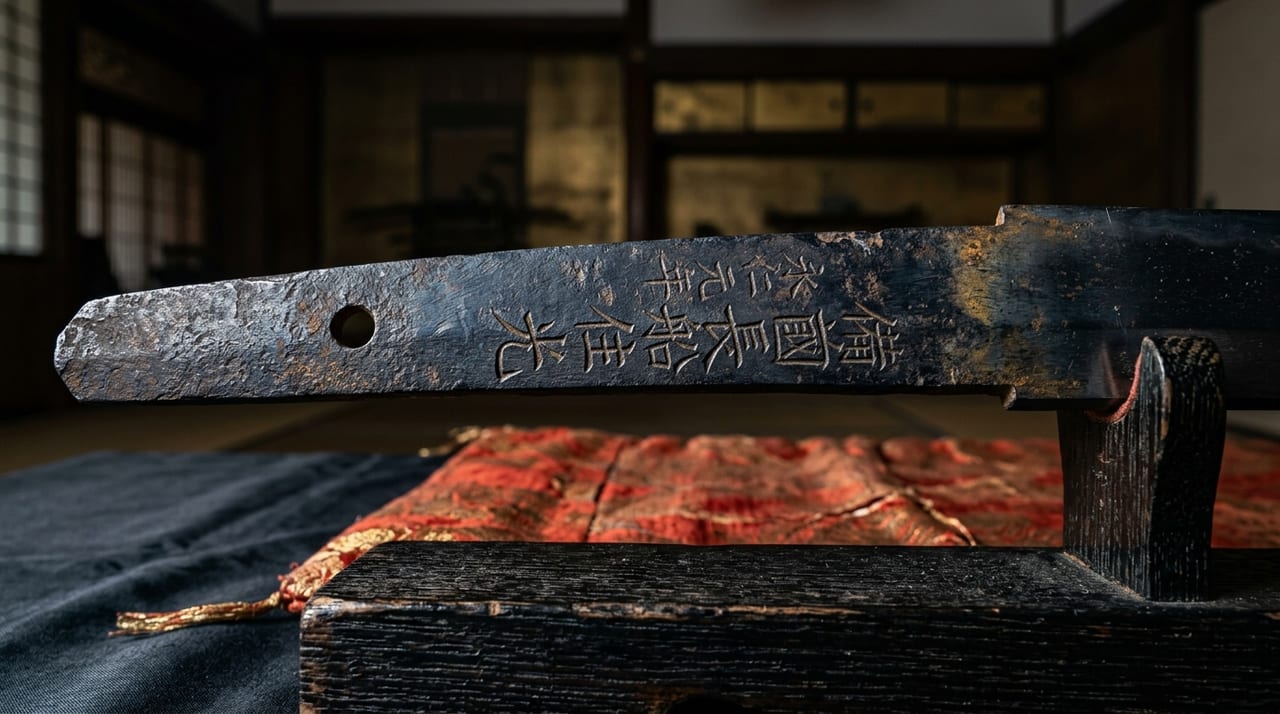
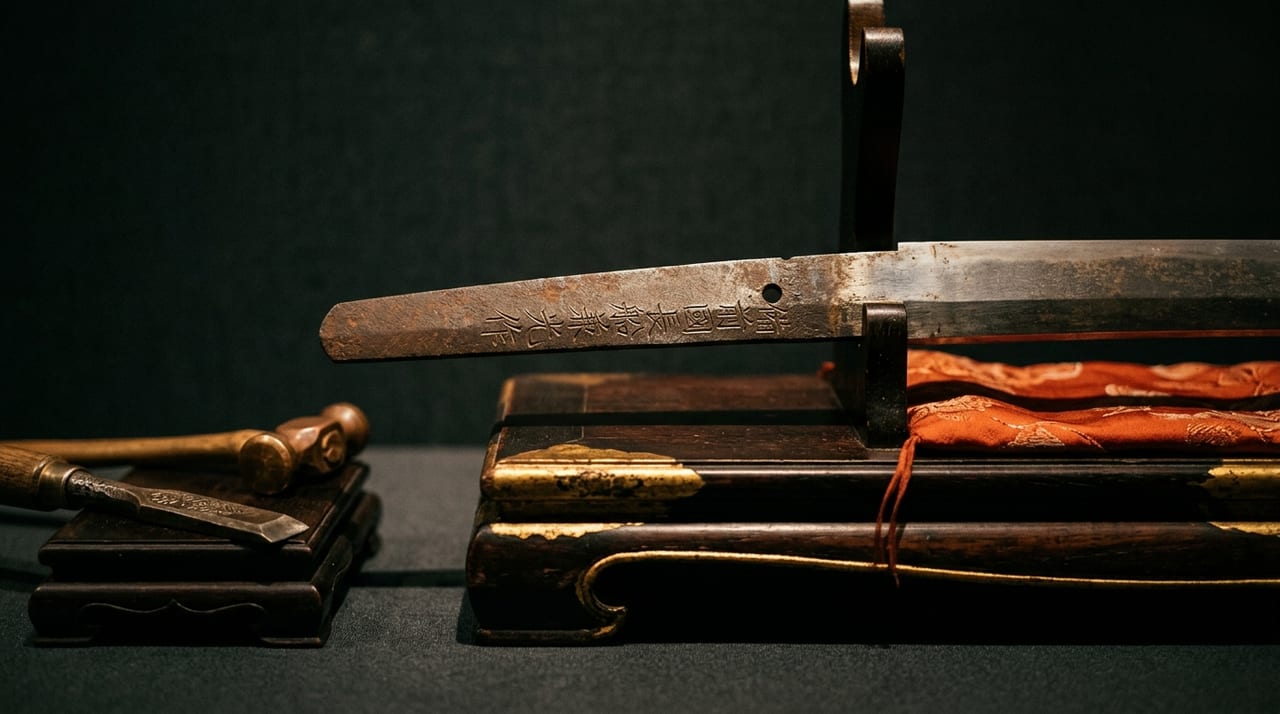
The craft of carving sword signatures: tools, chiseling techniques, and how school calligraphy styles appear in mei.
Minamoto Kiyomaro, active in the late Edo period (1830s–1840s), is considered the greatest genius of the Shinsintō era. After deeply studying sōshū-den traditions, he produced blades with extraordinary hamon that remain among the most valuable Japanese swords today, before dying tragically young.