Neuheiten — Aktuelle Neuzugänge finden Sie in unserem Katalog. Ansehen →
Einblicke in das Wissen über japanische Schwerter und die Kultur
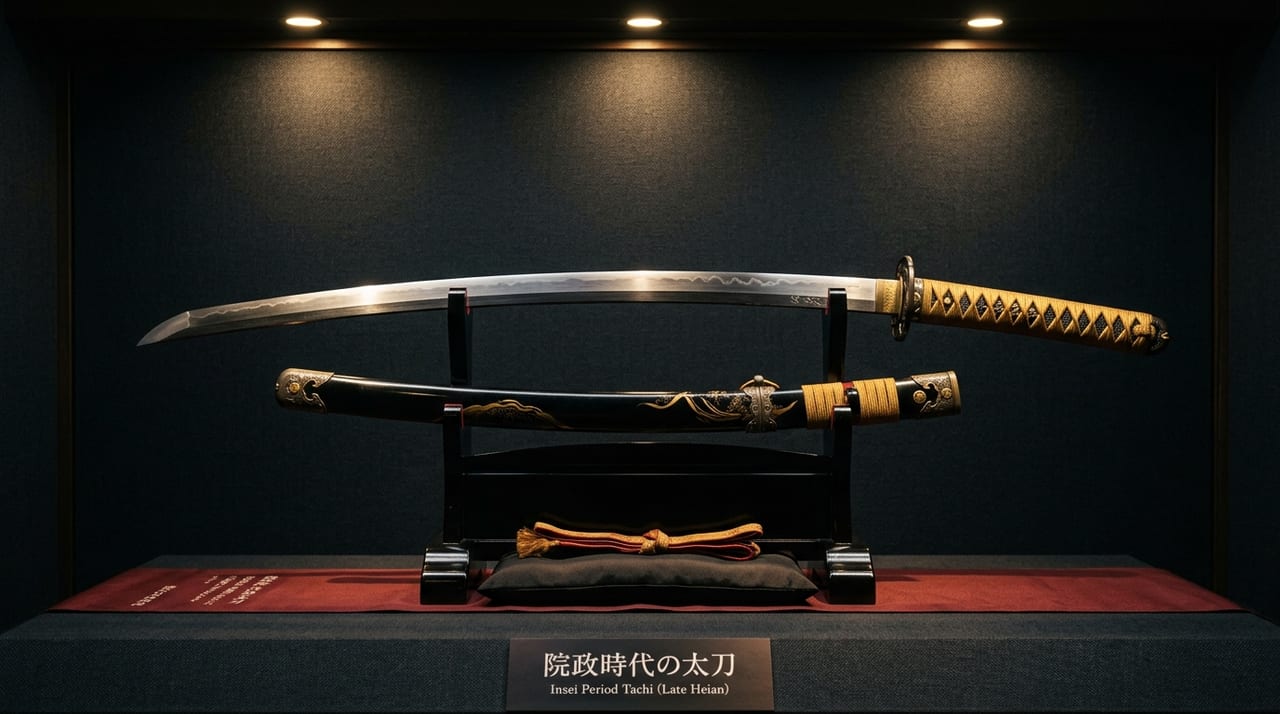
An exploration of sword culture during Japan's insei (cloistered rule) period from 1086 to 1185, examining how retired emperors institutionalized sword collection and dedication, how the Genpei Wars transformed demand, and the distinctive blade morphology of the era.
A detailed examination of the kirihazukuri blade cross-section, covering its relationship to armor-piercing tanto and converted naginata, historical origins in the Nanbokucho period, technical characteristics including thickness and edge angle, and connoisseurship guidance for surviving examples.
The naginata features a curved blade mounted on a long shaft. This article explains its historical evolution, modern budo specifications, measurement standards, and appreciation points for sword collectors.
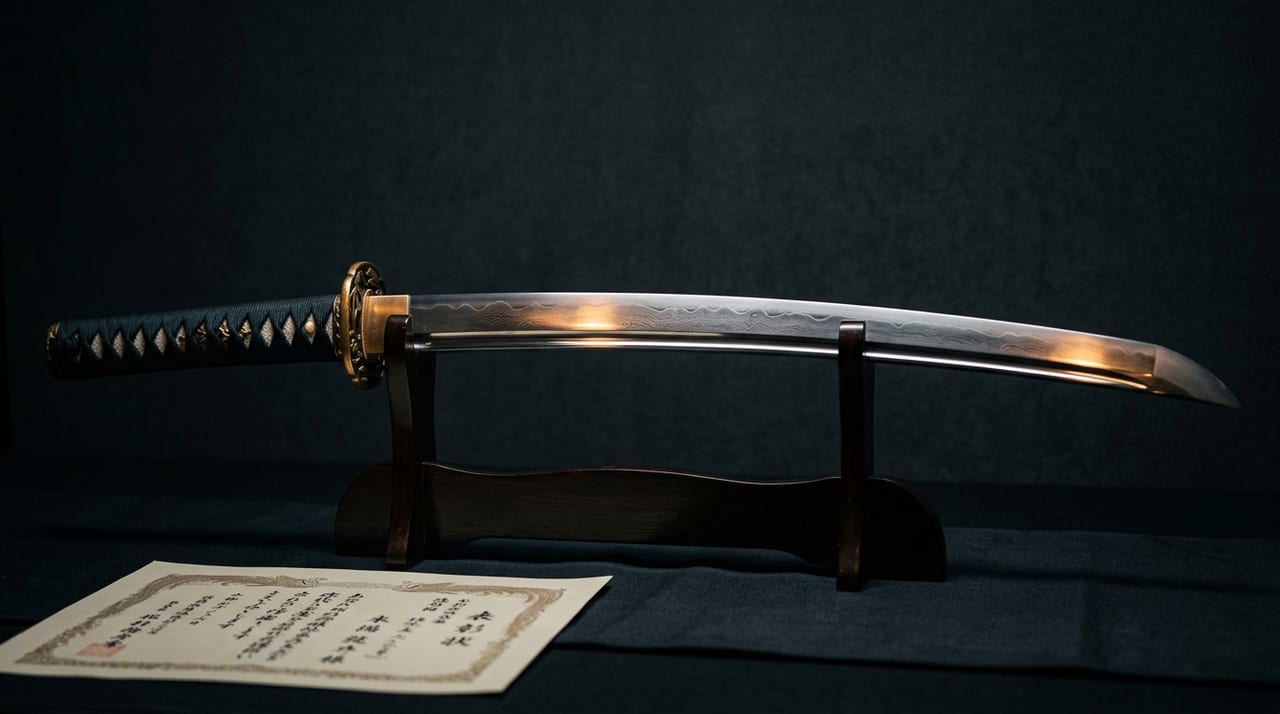
Two major organizations issue Japanese sword authentication certificates: the NBTHK and Nihonto Hozon Foundation. This guide explains their grading systems, examination criteria, costs, and when each certificate matters for buyers and sellers.
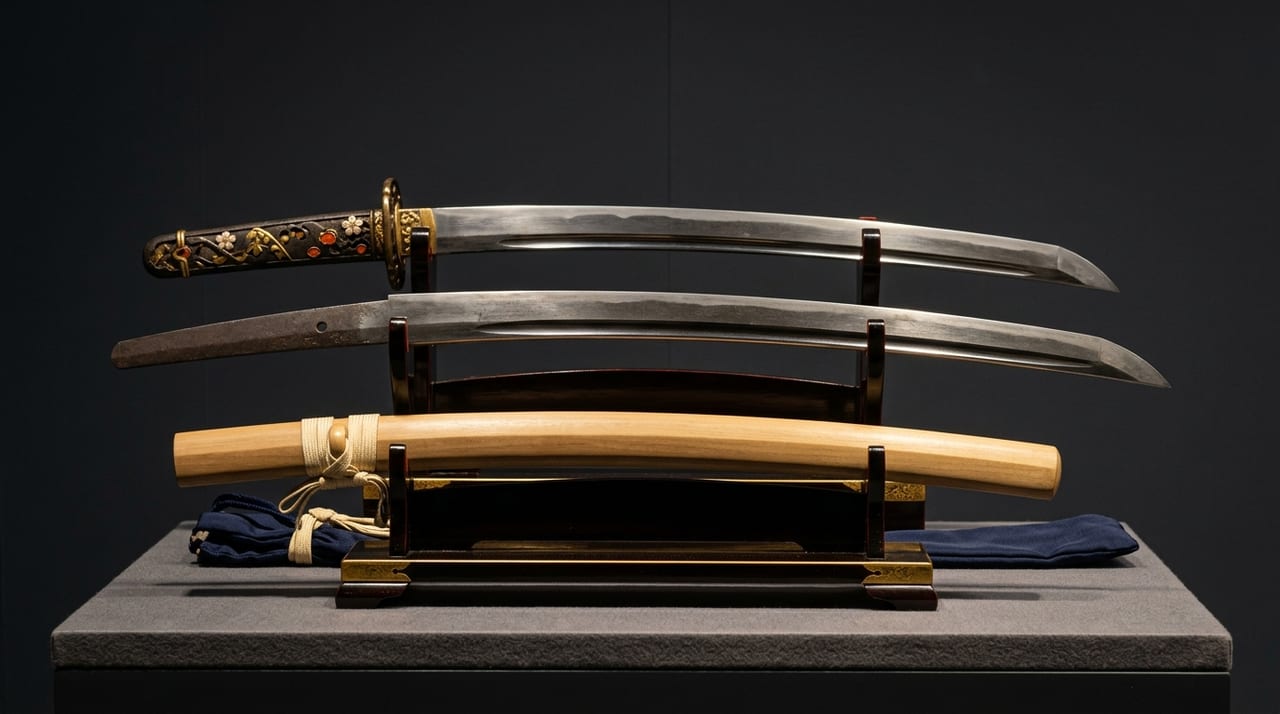
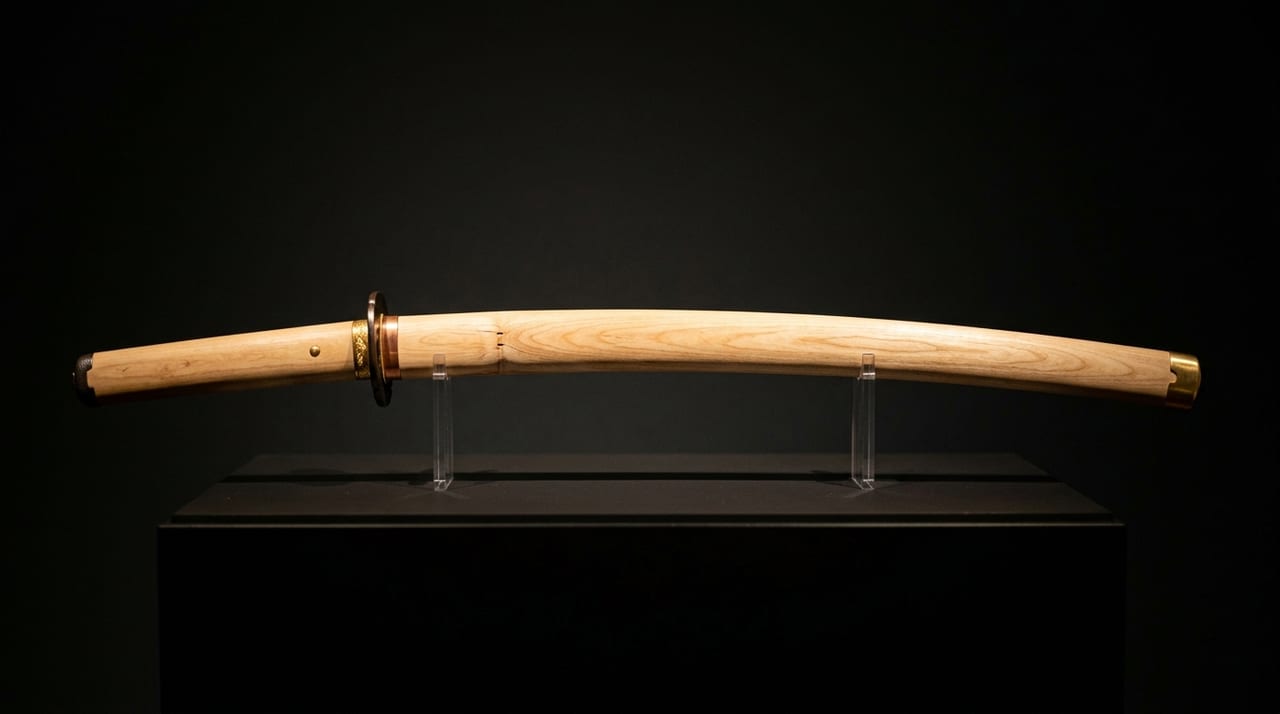
A detailed explanation of the techniques used by shirasaya craftsmen who specialize in making plain wood storage scabbards for Japanese swords, covering why honoki (magnolia) wood is preferred, the complete production process from wood selection to finishing, and the current shortage of successor craftsmen.
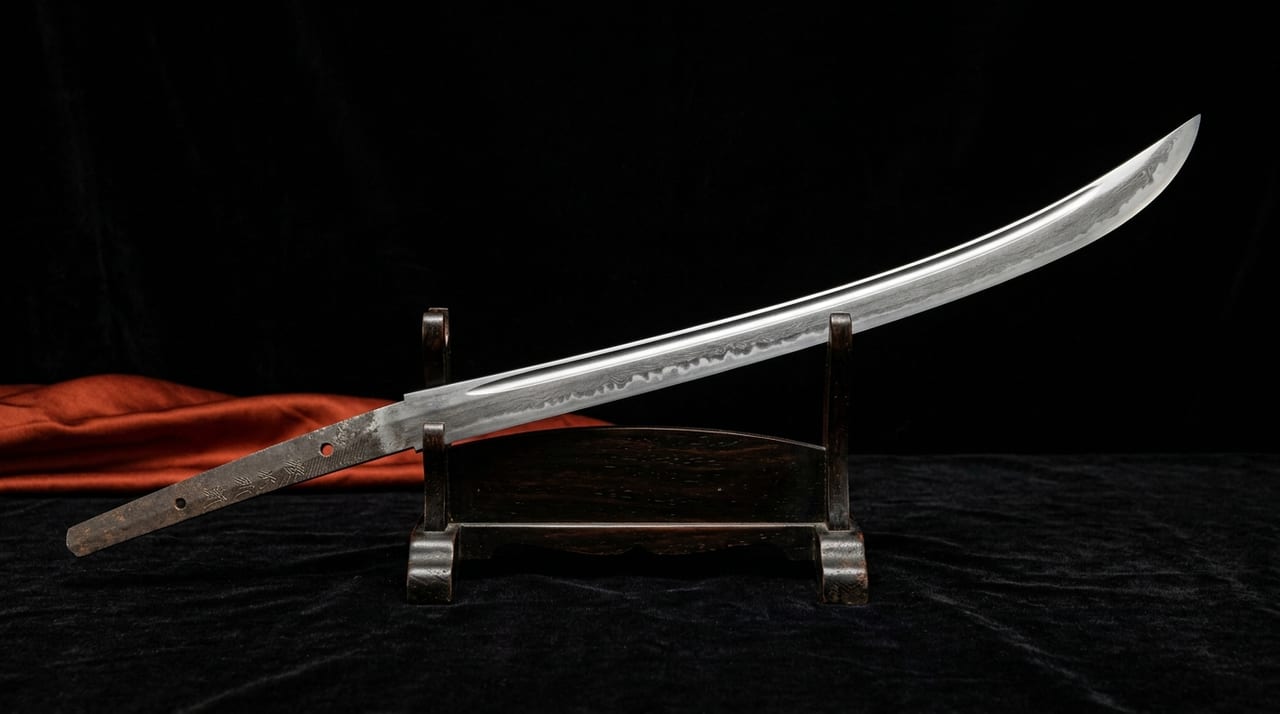
A scientific explanation of how Japanese sword curvature (sori) is formed during the quenching process, covering martensite transformation-induced volume changes, thermal stress, clay coating pattern effects, post-quench correction techniques, and how curvature shape affects practical performance.
An overview of the history and functions of Japanese sword dealer guilds, from the Edo-period kabunakama system to the modern National Japanese Sword Dealers Cooperative Association, covering ties to the Honami family, Tempo Reform disruptions, and contemporary challenges.
The togishi (sword polisher) is the craftsman who determines the final beauty of a Japanese sword, drawing out the hamon, utsuri, and jihada through precise control of whetstone types, stages, and angles.
A metallurgical primer for understanding nihonto: ferrite, pearlite, and martensite microstructures explained in the context of swordmaking, quenching, and folding techniques.
An examination of sword culture during the Horeki-Tenmei period in mid-Edo Japan, focusing on the Tanuma era influence on samurai sword etiquette and tosogu arts.
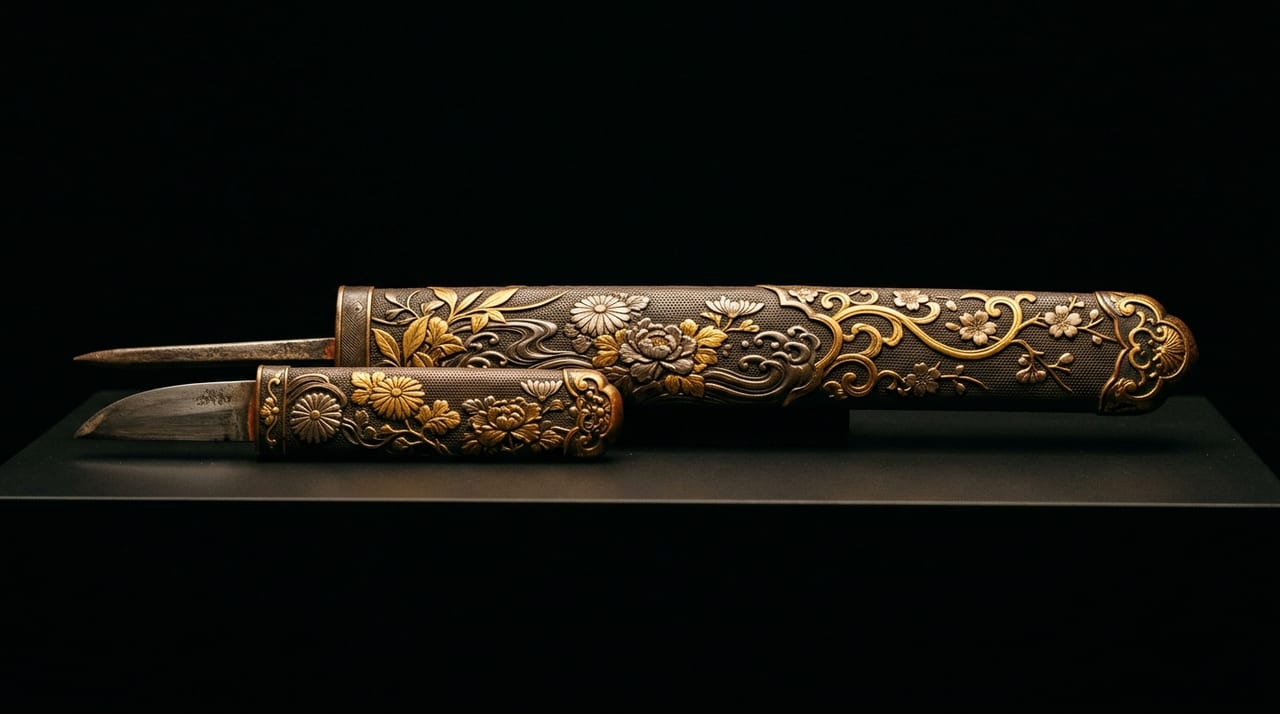
A detailed examination of the kogai hair pick as a sword fitting: its historical origins, aesthetic development by Edo metalworkers, relationship with kozuka, and surviving masterworks.
An examination of the two-stage division of Japanese swordmaking labor between okaji (steel refinement) and kokaji (blade forging), its historical roots, technical significance, and modern changes.