Neuheiten — Aktuelle Neuzugänge finden Sie in unserem Katalog. Ansehen →
Einblicke in das Wissen über japanische Schwerter und die Kultur
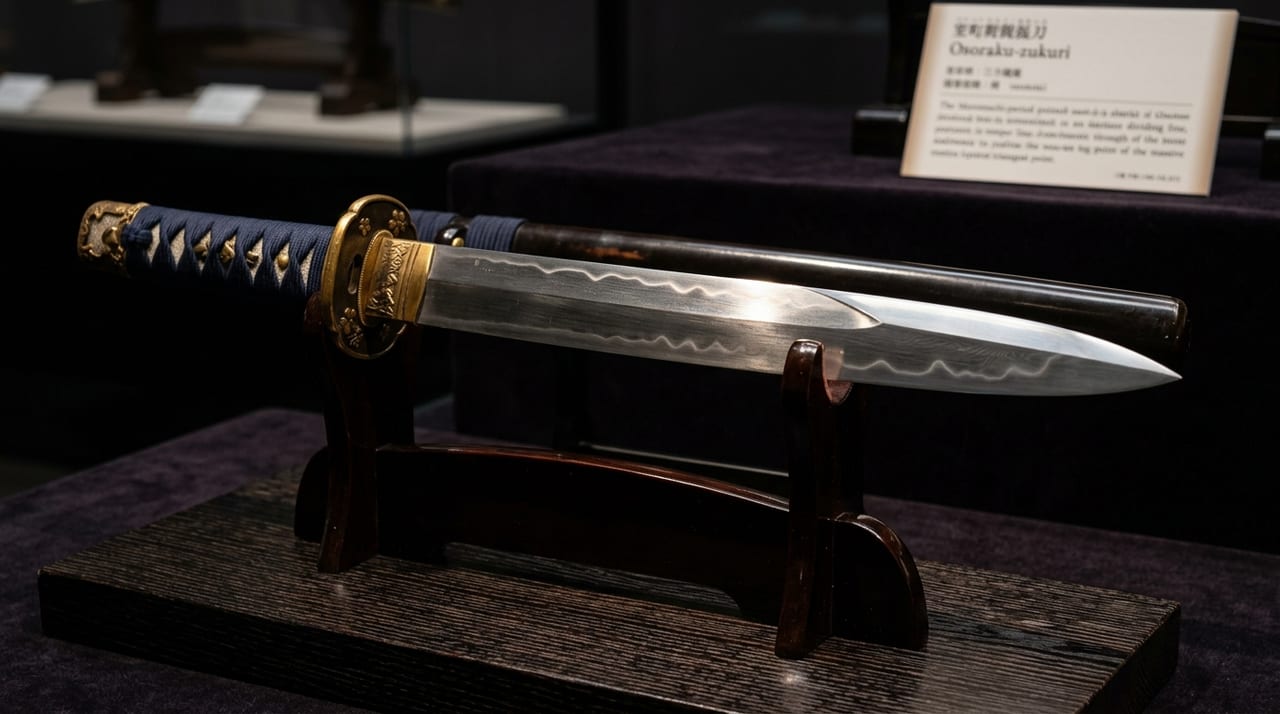
Exploring the Osoraku-zukuri (おそらく造り) form—where the yokote-suji (横手筋) descends near the blade's center and the kissaki (鋒) extends greatly—tracing the name's origin to Suruga Sukemune and highlighting key observations in tanto (短刀) and wakizashi (脇差).
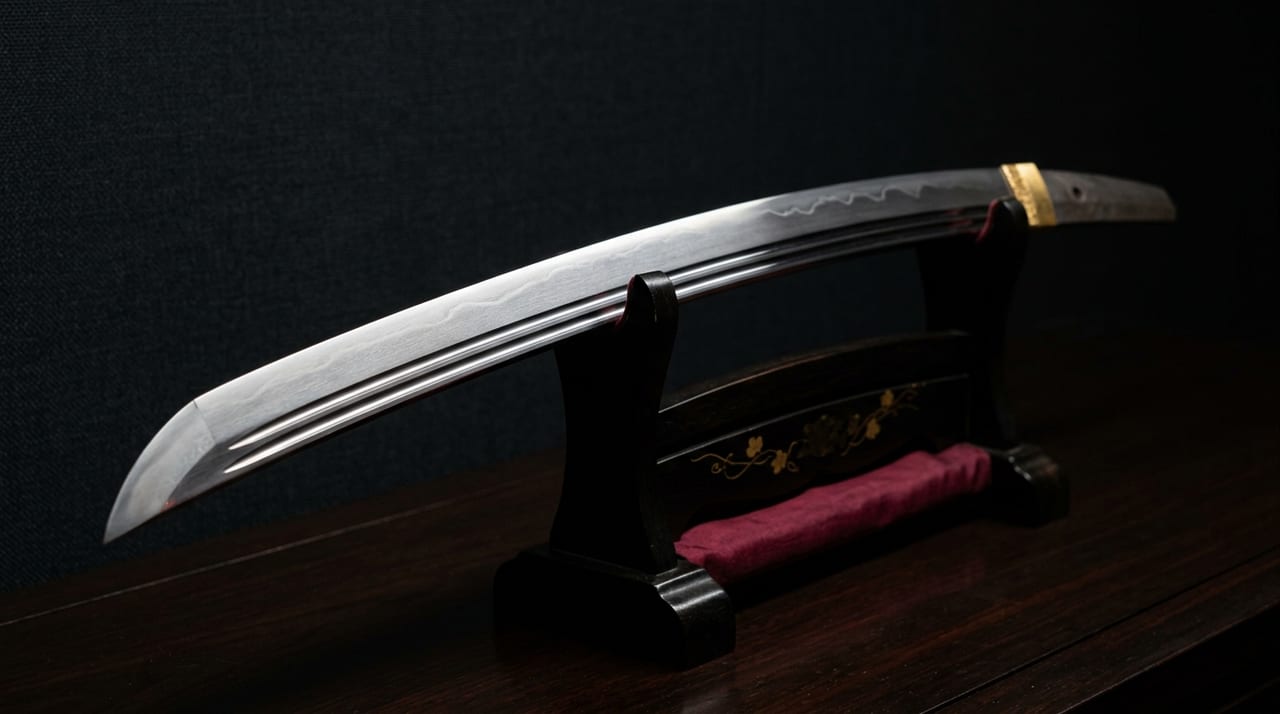
Classification of the grooves carved into sword blades, called hi (樋), organized by their types—such as bo-hi, futasuji-hi, koshi-hi, and tsure-hi—and by the processing methods of the hi-jiri (樋尻), including kaki-nagashi and kaki-toshi.
Explains the form of u-no-kubi-zukuri (鵜の首造り), a construction technique where the spine-side material is stripped to create a constriction resembling a cormorant's neck, why it appears frequently in short swords and side swords of the Kamakura and Nanbokucho periods, and the points that distinguish it from kamuriottoshi-zukuri (冠落造り).
Organizes the structure of katakiriha-zukuri (片切刃造り), an asymmetric construction where one side is hirazukuri (平造り) or shinogi-zukuri (鎬造り) and the other side is kiriha-zukuri (切刃造り), the meaning of different cross-sections on each side, and key observation points.
An explanation of kanmuri-otoshi-zukuri (冠落造り), a tsukurikomi (造込み) where the mune (棟) meat of the upper half is chiseled away, the reasons it is common in tantō (短刀), tendencies seen in Yamato-den (大和伝) smiths of the Koto period, presented with comparisons to unokubi-zukuri (鵜の首造り).
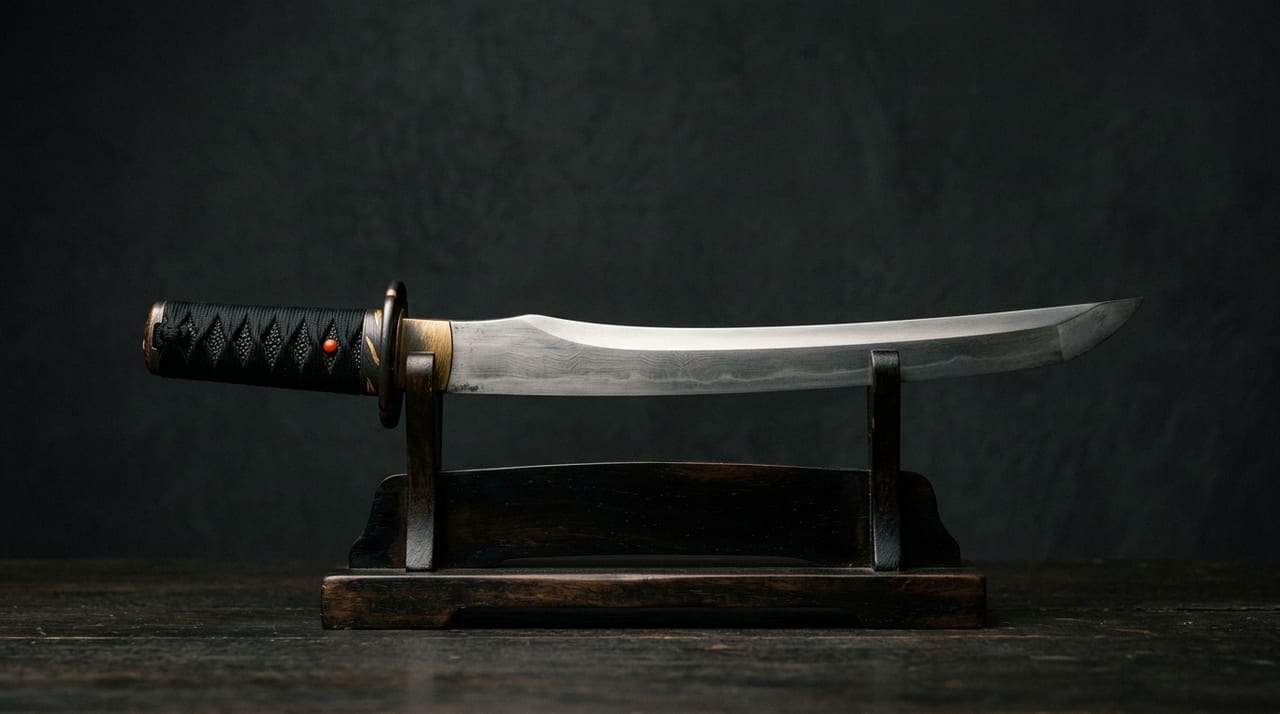
Morphological characteristics of shobu zukuri (菖蒲造り)—a construction resembling iris leaves—distinctions from shinogi zukuri (鎬造り) and u-no-kubi zukuri (鵜の首造り), and stylistic trends in Bizen (備前) and Mino (美濃) blades from the Muromachi (室町) period, organized through observation points of the sword's form.
The Taima school is a group of swordsmiths counted among the Yamato five schools. Connected with Taima-dera, it is known for its refined, no-nonsense style characteristic of the Yamato tradition, based on masame grain and straight blade. We trace its distinguishing features and lineage.
The Ishidō school was a group of swordsmiths active during the shintō period of the Edo era, known for copying the brilliant chōji (丁子) hamon of the ancient Bizen and Ichimonji (一文字) schools. This account traces the genealogies of the school as it spread to various regions and explores its distinctive style of Bizen copying.
The Mihara school was a group of swordsmiths based in Mihara in Bingo Province (present-day eastern Hiroshima Prefecture), known for their style influenced by the Yamato tradition. We trace their authentic character through their masame (柾目)-grained jigane (地鉄) and their chokuba (直刃)-style hamon (刃文).
Miyoshi Nagamichi was a swordsmith who flourished in Aizu, Mutsu Province during the Edo period's shinshinto (new sword) era and was praised as "Aizu Kotetsu" for his sharp cutting ability. This article traces the lineage of the school that prospered under the Aizu domain's patronage and his powerful forging style.
The Enjū school was a group of swordsmiths active in Higo Province (present-day Kumamoto Prefecture), said to have descended from the Rai school of Kyoto. We trace the Yamashiro tradition transmitted to Kyushu and its distinguished craftsmanship.
The Senjuin school is considered the oldest lineage among the five Yamato schools of sword-makers. According to tradition, it takes its name from Senjuin Valley at the foot of Wakakusa Mountain in Nara, and follows the distinguished aesthetic of the Yamato tradition, characterized by masame grain and straight blade edges.