Nouveautés — Découvrez les dernières arrivées dans notre catalogue. Voir →
Aperçus sur les connaissances et la culture du sabre japonais
Detailed explanation of the devastating impact the 1876 (Meiji 9) Haitou-rei (sword-bearing prohibition) had on the Japanese sword industry and the subsequent transformation of the sword world. Examines the career transitions of unemployed sword smiths, survival strategies as art objects, and the inheritance of the Gassan and Suishinshi schools.
A detailed explanation of the "Mishina school" (みしなは), a group of swordsmiths active in Kyoto during the Edo period. This article covers the lineage from the founder through successive generations, the inheritance and unique development of Yamashiro tradition, technical characteristics of representative works, and modern market valuations.
The "spine" (mune) of the Japanese sword—the ridge shape opposite the blade's edge—is thoroughly explained. This guide systematically covers the cross-sectional structures of each type (iori-mune, maru-mune, kaku-mune, mitsu-mune, katakiriha-mune), their historical usage patterns across eras, and the criteria used in authentication.
This article provides a detailed explanation of the 'fire-control' (hikagenl) technique for uniform heat treatment of long swords exceeding 70-90 cm in blade length. It covers the temperature distribution issues in hardening furnaces, methods for controlling distortion and warping unique to long swords, and the fusion of veteran bladesmiths' empirical knowledge with modern technology.
Complete explanation of Japanese sword classification standards based on blade length (hachō). Covers boundary values for tachi, katana, wakizashi, and tantō; conversion methods for traditional Japanese units of measurement (shaku, sun, bu); and actual measurement techniques—essential foundational knowledge for appreciating Japanese swords, systematically organized.
Explains the aesthetic pinnacle of "Chōji Midare" (丁子乱れ) that flourished during the Nanboku-chō period (1336-1392). Details the blade-forging techniques of master craftsmen such as Fukuoka Ichimonji and Osafune Kanemitsu, the relationship between historical context and blade pattern development, and its influence on later periods.
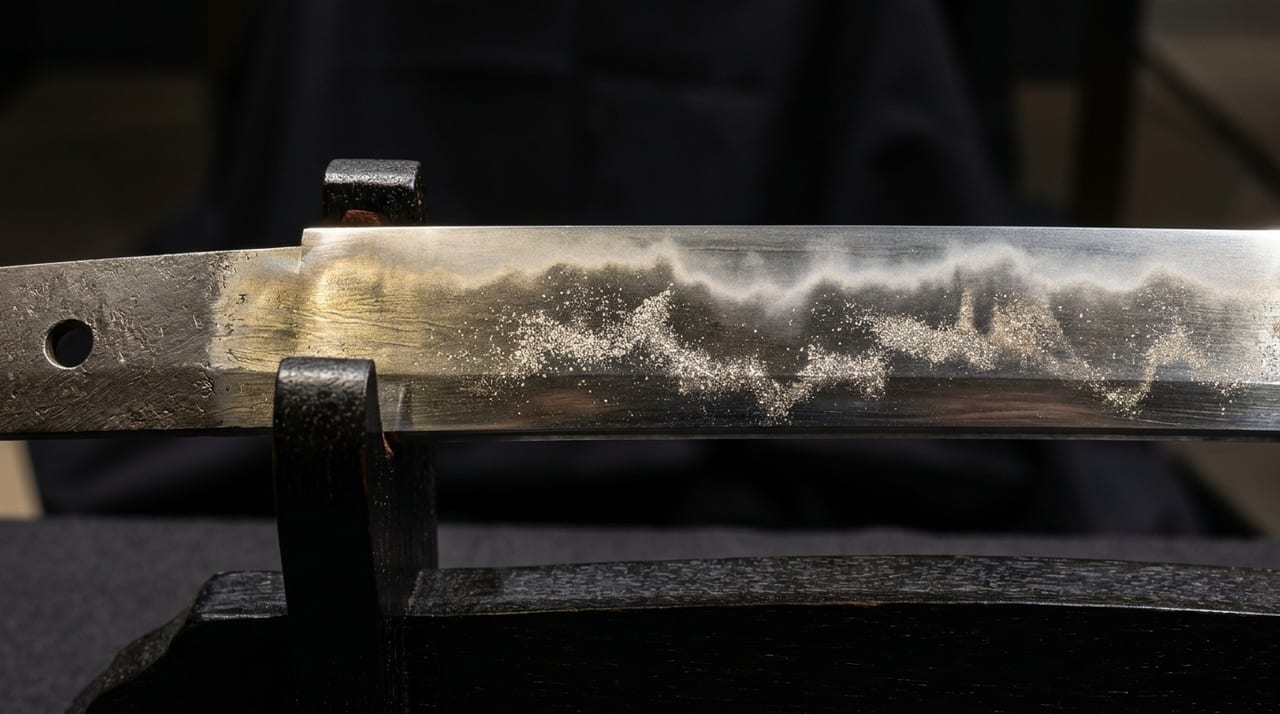
A metallurgical explanation of the formation mechanisms of "nie" (bright crystalline pattern) and "nioi" (misty luminous pattern) that constitute Japanese sword blade patterns. Through the relationship between martensitic transformation, cooling rate, and carbon content, this article scientifically explains why nie appears bright and nioi appears diffuse.
A budget-based practical guide for first-time Japanese sword buyers. From beginner-level blades in the ¥100K range to authentic antique swords in the ¥500K range and masterpieces of renowned smiths exceeding ¥1 million, this guide explains what you can expect at each price point and how to find trustworthy sellers.
Overview of major Japanese sword-related events in 2026 (antique markets, sword fairs, NBTHK-hosted events, museum special exhibitions) organized by region nationwide. Also introduces characteristics of each event, venues, and how beginners can enjoy them.
A comprehensive explanation of all procedures required to export Japanese swords internationally: cultural property export permits, customs clearance, and transportation. Covers how to apply with the Agency for Cultural Affairs, key points for confirming import regulations by country, how to select transport providers, and common issues and solutions.
A practical guide for foreign tourists visiting Japan on the essentials of purchasing Japanese swords, tailored for English-speaking audiences. Covers the distinction between decorative souvenir swords and authentic Japanese blades, required registration certificates and export permits, and how to select reputable English-speaking shops. Comprehensive resource for navigating the legal requirements and import regulations.
A practical guide explaining the handling of registration certificates, inheritance tax assessment, and name transfer procedures necessary for Japanese sword inheritance and gifts. Covers everything from sword succession among family members to handling in estate division discussions, including precautions when heirs reside overseas.