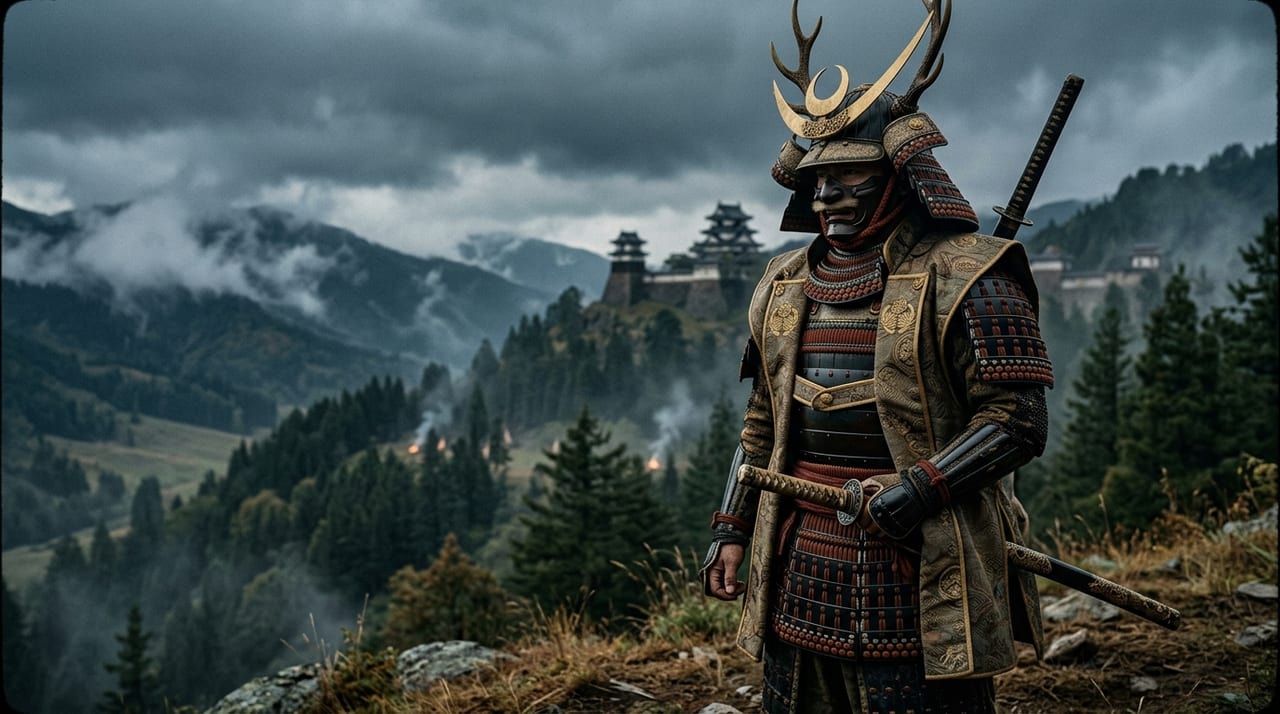
 * Image is for illustrative purposes only.
Mōri Motonari
毛利元就
The God of Stratagems: From a Minor Lord of Aki to a Great Daimyō of the Chūgoku Region, a Rare Strategist Who Astonished the Realm with His Cunning
Description
The Birth of the God of Stratagems
Born in 1497 (Meiō 6) as the second son of the Aki local lord Mōri Hiromoto, Mōri Motonari rose from a minor lord in Aki Province to a great daimyō who ruled most of the Chūgoku region, and he is counted among the leading strategists of the Sengoku period. He valued stratagem over brute force and believed that 'those with many stratagems win, and those with few lose.' His life truly earned him the title 'God of Stratagems.'
The Battle of Itsukushima
The most celebrated of Motonari's military achievements is the Battle of Itsukushima in 1555 (Kōji 1). Facing the more than 20,000 troops of Sue Harukata, Motonari landed on Itsukushima with only 4,000 men, made a surprise attack on the enemy forces that had landed there, and destroyed them. The operation combined a surprise attack that exploited a stormy night, a naval blockade by the navies of Kobayakawa Takakage and the Murakami navy, and the cutting off of the enemy's line of retreat. This flawless plan is counted among Japan's three great surprise attacks and made Motonari's military talent known throughout the realm.
The Three Arrows
The teaching of the 'Three Arrows' is Motonari's most famous anecdote. He is said to have summoned his three sons, Mōri Takamoto, Kikkawa Motoharu, and Kobayakawa Takakage, and taught them that a single arrow breaks easily, but three arrows bound together do not break. Many points conflict with the historical record, and the anecdote is said to derive from the Sanshi Kyōkunjō (Letter of Admonition to Three Sons) that Motonari addressed to the three in 1557 (Kōji 3). This teaching is the emblem of Motonari's family precepts, which placed the highest priority on the unity of the clan, and it bore fruit as the Mōri Ryōsen system.
The Strategy He Left Behind
Motonari died at Yoshida-Kōriyama Castle in 1571 (Genki 2) at the age of 75. The strategy he displayed throughout his long life is still remembered as that of one of the finest military strategists of the Sengoku period. The prosperity of the Mōri house, built on the cohesion of the Three Arrows, was maintained even after the defeat at Sekigahara. As the Chōshū Domain, it became a driving force in the Bakumatsu period and the Meiji Restoration.