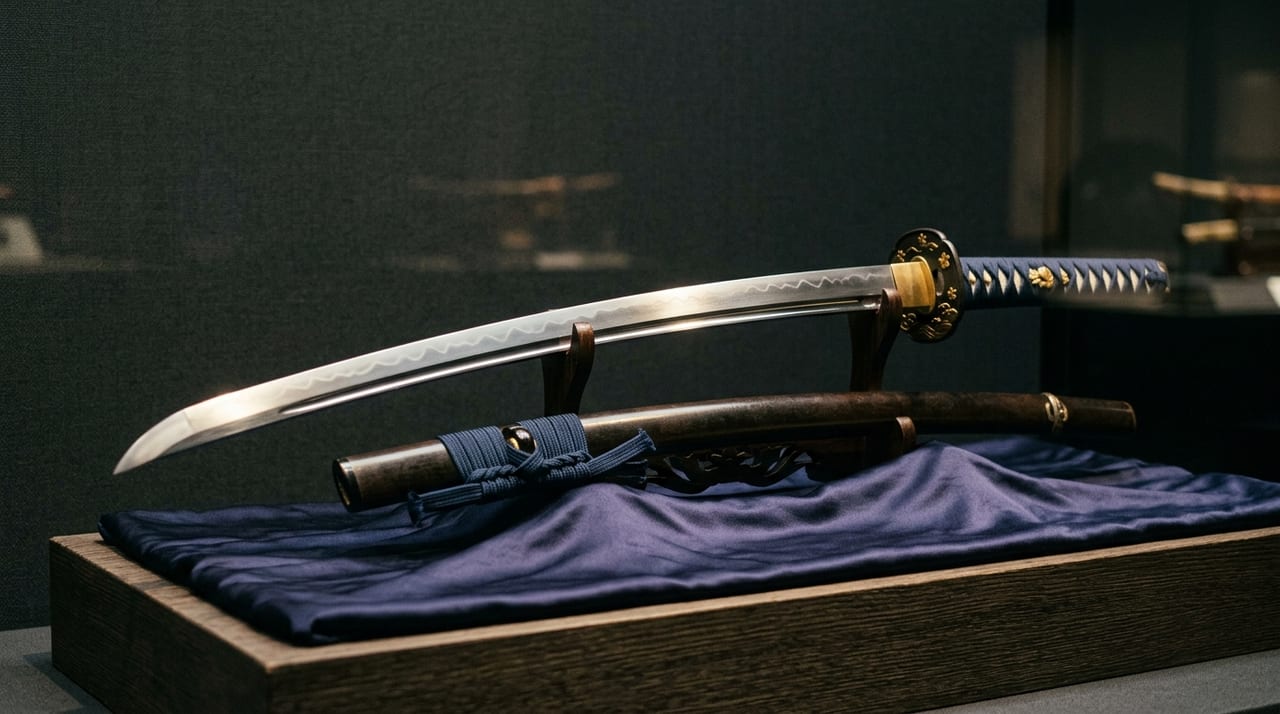
 * Image is for illustrative purposes only.
Kogitsune-maru
小狐丸
Also known as: Little Fox Blade
Description
A legendary tachi said to have been forged by Sanjō Munechika with the divine assistance of a fox spirit sent by the deity Inari. The tale is immortalized in the Noh play 'Kokaji' (The Little Swordsmith), one of the most beloved works in the traditional performing arts. When Munechika was commanded by Emperor Ichijō to forge a blade but lacked a skilled assistant to strike the steel, he prayed to Inari, whereupon a fox spirit appeared and served as his hammer-striker. This legend symbolizes the sacred relationship between swordsmithing and the divine, forming a cornerstone of Japanese sword culture. Its appearance in Touken Ranbu has made it popular among younger audiences as well.
Legends & Stories
Legend and Anecdote
The most detailed account of the legend of how Kogitsune-maru was forged is found in the Noh masterpiece "Kokaji."
To the Hands of the Warriors
This play is said to have been established in the Muromachi period (author unknown), and it remains a popular work frequently performed on the Noh stage today. The narrative unfolds as follows: Emperor Ichijō, guided by a dream revelation, orders Sanjō Munechika to forge a tachi. However, troubled by the lack of a skilled assistant striker worthy of his talents, Munechika journeys to Fushimi Inari Grand Shrine to plead for divine aid. Then a beautiful young boy appears and says, "To forge a blade is my desire. Await me at the forge," before vanishing. When Munechika lights the forge, purifies the space by hanging sacred rope, and chants prayers to prepare for the forging, the boy appears once again. But this time, the boy reveals his true form—that of the Inari fox spirit—and with supernatural power, takes up the small hammer for striking. Munechika and the fox spirit, moving in perfect harmony, take turns striking the iron, scattering sparks as they perform their all-consuming work of forging. On the Noh stage, this forging scene is the climax where the two performers display a dance both fierce and beautiful, filled with overwhelming power that captivates the audience. Thus completed, the tachi bears the inscription "Kogitsune-maru" on one side and "Munechika" on the other. After handing the sword to Munechika, the fox spirit is said to have returned to Inari Mountain.
This legend speaks to a belief: the finest blade cannot be forged by human strength alone. Only when divine power and human skill unite is the ultimate blade born. This philosophy forms the core of Japan's distinctive cultural perspective that positions the Japanese sword not merely as a metal object but as a sacred entity. Indeed, in Japan's traditional sword-forging process, the practice of hanging sacred rope in the forge and performing ritual ceremonies as religious rites before beginning the forging remains to this day, maintaining the sacredness that resonates with the legend of Kogitsune-maru. Within the precincts of Fushimi Inari Grand Shrine in Kyoto, there are historical sites related to the location where Munechika is said to have secluded himself, making it a pilgrimage destination for sword enthusiasts. Precisely because no actual Kogitsune-maru has been confirmed, the purity of the legend is preserved, and it remains the most important narrative for discussing the relationship between the Japanese sword and the divine.