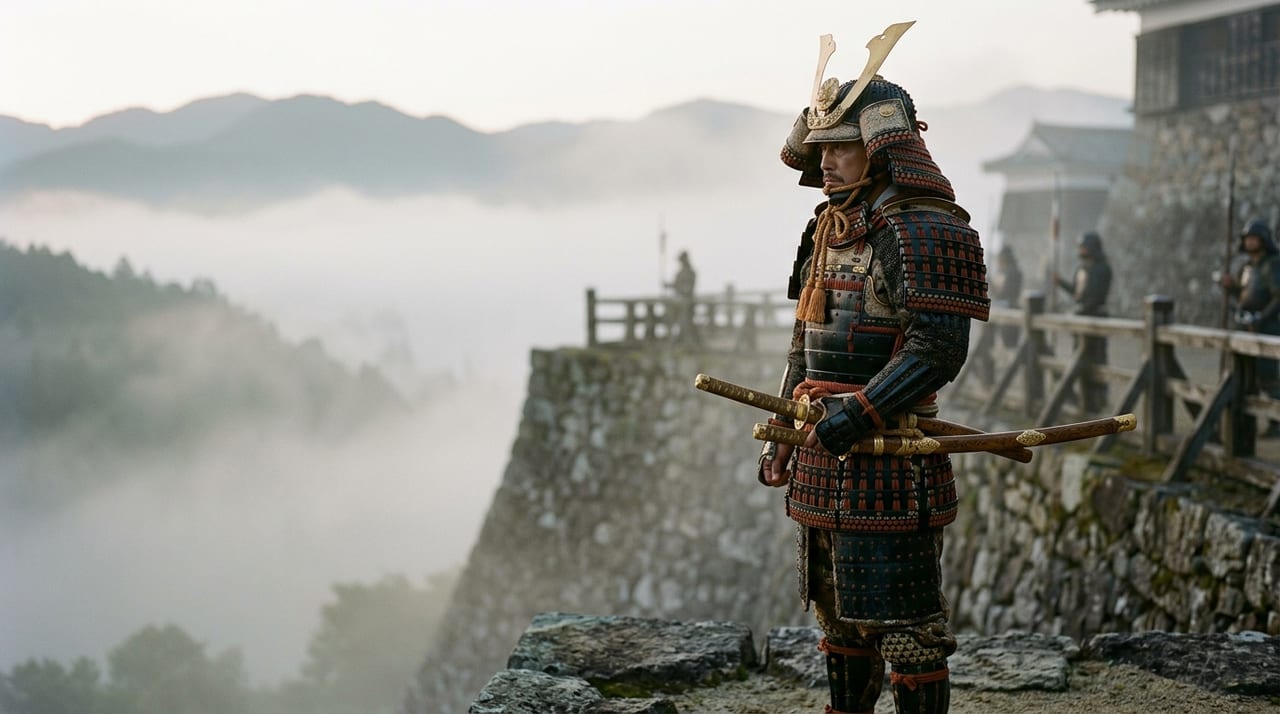
 * Image is for illustrative purposes only.
Gamō Ujisato
蒲生氏郷
Direct Retainer of Toyotomi Hideyoshi, Great Lord of Aizu 910,000 Koku
Description
Gamō Ujisato (1556–1595) was a leading daimyō of the Azuchi-Momoyama period and a distinguished general who, as a trusted confidant of Toyotomi Hideyoshi, held 910,000 koku in Aizu in Ōshū. Welcomed by Oda Nobunaga as a son-in-law, he was active across two generations, serving both Nobunaga and Hideyoshi.
Ujisato was born into the Gamō family of Hino in Ōmi Province. In Eiroku 11 (1568), he went to Oda Nobunaga as a hostage and then became his son-in-law. Under Nobunaga he learned the most advanced military and political affairs of the Sengoku period, and after the Honnō-ji Incident (1582) he served Toyotomi Hideyoshi and earned many military distinctions. His performance in the Odawara Campaign (1590) was especially praised, and after the Ōshū Shioki (settlement of Ōshū) that followed the war, he was granted 420,000 koku in Aizu (later increased to 910,000 koku through land surveys and further grants).
In governing Ōshū, Ujisato greatly remodeled and expanded Kurokawa Castle (later Wakamatsu Castle, now Aizu-Wakamatsu Castle), turning it into a castle with a seven-story tenshu, and he devoted himself to developing the castle town. He was also deeply devoted to Namban culture (Christianity); he received baptism and held the baptismal name Leon, making him a Christian daimyō. His baptism is said to have been performed by Organtino, and in Aizu he also encouraged the domain's residents to convert.
In the context of Japanese swords, the National Treasure tantō “Aizu Shintōgo,” made by Shintōgo Kunimitsu, is known by a name derived from Ujisato's possession of it. Ujisato, who also built Matsusaka Castle (Ise Matsusaka), left a legacy of extensive governance spanning from the Tōkai region to Ōshū that is still highly valued today.
Ujisato died of illness in 1595 at the young age of 40. His early death also cast a shadow over the stability of the Toyotomi regime. Sen no Rikyū praised him as the “Great Commander of the Two Paths of Letters and Arms,” and he was a distinguished general highly regarded by his contemporaries.
Notable Swords
- Aizu Shintōgo (tantō by Shintōgo Kunimitsu, National Treasure)