 * Image is for illustrative purposes only.
Kenuki-gata Tachi
毛抜形太刀
Also known as: Kenuki-gata; ancient-style tachi; tachi displaying the proto-form of the Japanese sword
Description
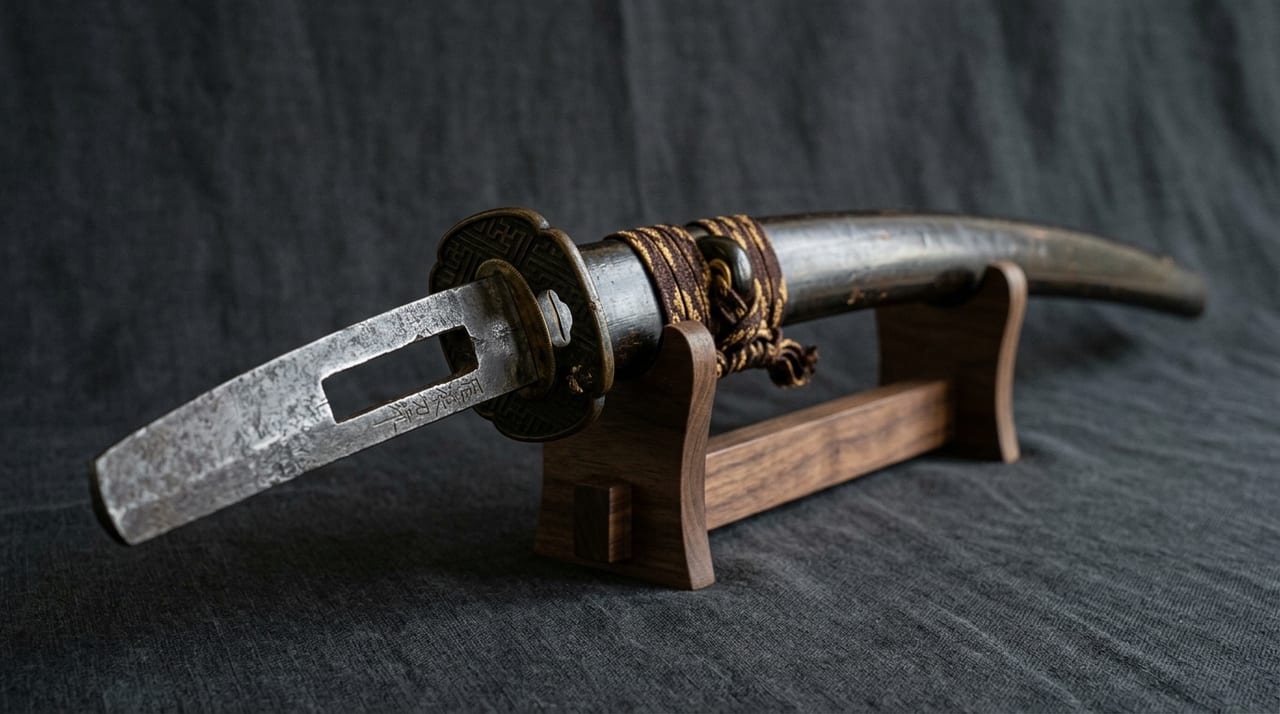
Kenuki-gata Tachi refers to a category of tachi in one of the most ancient formal traditions of the Japanese sword, characterized by the distinctive structural feature of a nakago (tang) in whose center a "kenuki" (tweezers) shape — a rectangular or leaf-shaped openwork perforation — has been cut through. This piercing is understood to have been not merely decorative but a practical design intended to allow the tang to be gripped directly by the bare hand without requiring a separate tsuka (grip), making these swords among the most valuable surviving specimens in the developmental history of Japanese sword fittings (koshirae). Most surviving kenuki-gata tachi date to the period from the late Heian to the early Kamakura, and examples by Ko-tō period smiths from Ko-Bizen, Yamato, Yamashiro, and other traditions survive. Among the most celebrated National Treasure examples of kenuki-gata tachi are the "Gold and Silver Mounted Kenuki-gata Tachi" (Kingin-sō Kenuki-gata Tachi) and the "Raden Kenuki-gata Tachi with Ikakeji Ground" (Ikakeji Raden Kenuki-gata Tachi) at the Tokyo National Museum — world-renowned treasures of Heian craft that fuse the formal beauty of the blade with the decorative beauty of the koshirae at the highest level. The blade has the deep koshi-zori curvature characteristic of the Heian tachi form: slender, ko-kissaki, thin kasane, overall of delicate and graceful silhouette. The hamon is centered on suguha or ko-midare, with quiet nie and nioi, and the jigane presents densely packed ko-itame-hada with a clear, tranquil surface.
Legends & Stories
One of the oldest legends associated with kenuki-gata tachi is the "deer myth" of the kenuki-gata tachi dedicated at Kashima Jingū. The enshrined deity of Kashima Jingū, Takemikazuchi-no-kami, is worshipped as both a thunder god and a sword god, and the kenuki-gata tachi connected to sword-god worship have been specially revered under the belief that "a sword held by a god — a sword without a hilt — is the form nearest to the divine." The hole in the tang, perforated in the kenuki shape, is said to be "the hole through which the god's fingers pass," and it has been handed down that the god himself would insert his fingers through this hole to wield the sword.
As for the kenuki-gata tachi at Kasuga Taisha, a tradition that "the sacred deer of Kasuga gather before this sword every night and guard it" has been transmitted since the Edo period. The concept of deer guarding a sword represents a distinctive mythological worldview born of the fusion of Kasuga faith, which reveres deer as divine messengers, and sword worship, which venerates swords as sacred instruments.
Furthermore, the structure of the kenuki-gata tachi's tang, which can be grasped by the bare hand, has also been interpreted as "a form designed not as a weapon but to be offered directly to the god before the shrine." The poetic myth that when presenting the sword, it was designed to fit the human hand so that it reaches the god's hand as directly as possible — is inherent to this form, and kenuki-gata tachi are deeply rooted in the Japanese Shinto vision of the sword as "the tachi that mediates between god and humanity."