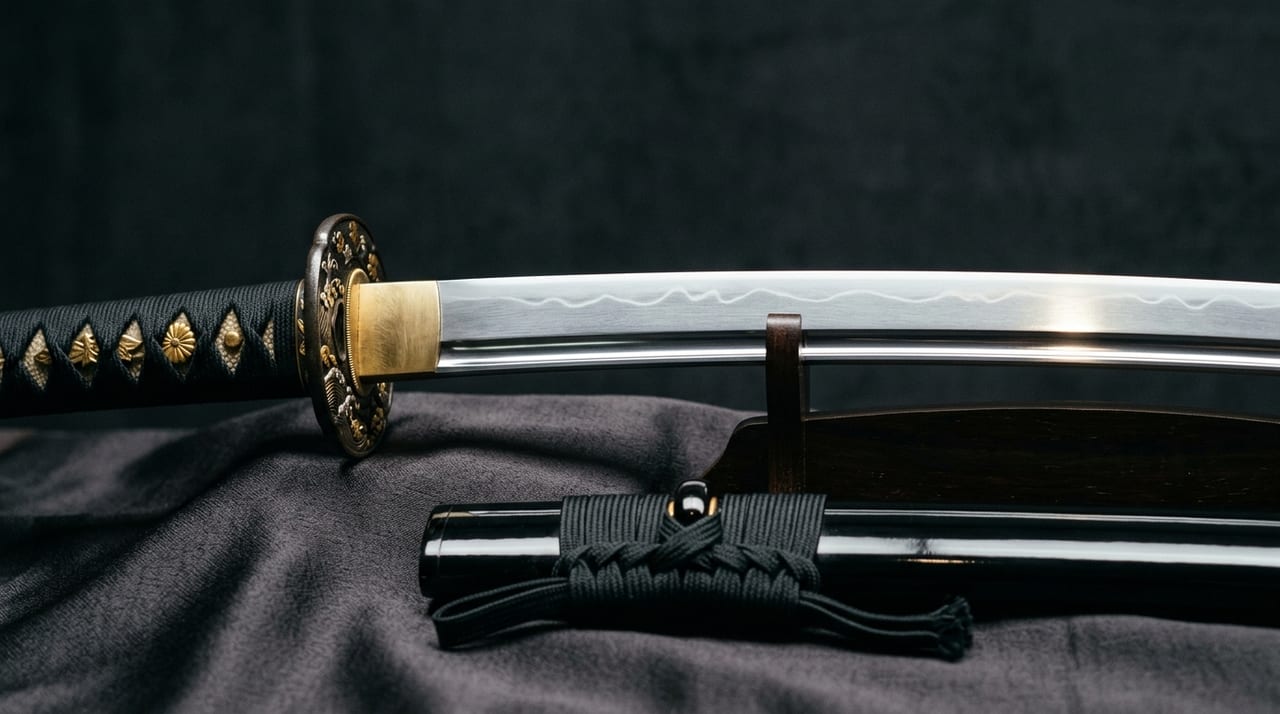
 * Image is for illustrative purposes only.
Kashū Kiyomitsu
加州清光
Also known as: Kashū Kiyomitsu · Beloved blade of Okita Sōji · Symbol of the tragedy of the genius swordsman · The face of Touken Ranbu
- Smith
- Kashū Kiyomitsu (6th generation and others)
- Era
- Edo period (17th–18th century)
- Type
- Katana
- Designation
- Not designated (private collection)
- Location
- Private collections and various museums
Description
Overview of the Blade
Kiyomitsu is a smith's signature passed down through generations of smiths in Kaga Province (present-day Ishikawa Prefecture), and smiths using the same signature continued from the Muromachi period until the bakumatsu period. The name Kashū Kiyomitsu is widely known as the beloved blade of Okita Sōji, captain of the 1st Unit of the Shinsengumi, and the bond between Okita and Kashū Kiyomitsu has decisively established this sword's modern fame.
The Smiths
Smiths of Kaga Province are collectively called Kashū smiths, and under the protection of the one-million-koku Maeda clan they achieved a distinctive development of their own. Kiyomitsu was the most representative of these signatures, and it was used by several generations of smiths, from the first generation onward.
Forging Method and Characteristics
The style of Kashū Kiyomitsu is well regarded for the beauty of its jigane. The ko-itame-hada is tightly packed, fine ji-nie is present, and the steel displays a lustrous iron color. The hamon is based on a gunome-midare pattern, and many examples have a bright, clear nioiguchi and a striking, elegant finish. Kaga's smithing culture is not as widely known as the Bizen or Mino traditions, but the distinctive techniques and aesthetic sensibility cultivated under the Maeda clan have been passed down continuously through the works of smiths, including Kashū Kiyomitsu. Okita Sōji (1842 or 1844–1868) was a swordsman of the bakumatsu period who, as captain of the 1st Unit of the Shinsengumi, was known by the sobriquet “genius swordsman.” At a young age he served as head instructor (jukutō) of the Shieikan dojo, and according to tradition his swordsmanship surpassed all others in the Shinsengumi. The tradition that Okita's beloved blade was Kashū Kiyomitsu is widely known, but there is debate over whether documentary evidence confirms it. In the game Touken Ranbu, Kashū Kiyomitsu appears as one of the starting characters (the first tōken danshi players can choose when the game begins). As a beautiful and spirited character, Kiyomitsu has become the “face” of the game.
Legends & Stories
Legends and Anecdotes
The brief life of Okita Sōji and the story of Kashū Kiyomitsu perfectly embody the tragic pattern the Japanese love most: “genius and early death.” Okita Sōji was born into a family of Shirakawa Domain retainers, but he lost his father at a young age, and the household was inherited by his elder sister Mitsu, who took in a husband as heir. At around the age of nine, he entered the Shieikan dojo of Kondō Shūsuke, third headmaster (sōke) of Tennen Rishin-ryū, where he displayed extraordinary talent for swordsmanship. At a young age he served as head instructor (jukutō) of the Shieikan dojo, and his thrusting technique was called the sandan-zuki (three-stage thrust). According to tradition, the sandan-zuki is a technique in which three thrusts were delivered while the footfall of the lunge sounded only once. In Bunkyū 3 (1863), Okita went up to Kyoto together with Kondō Isami, Hijikata Toshizō and others, and later became captain of the 1st Unit of the Shinsengumi. At the Ikedaya Incident on the 5th day of the 6th month of Genji 1 (1864), Okita charged in as vanguard and fought with lionlike ferocity against multiple patriotic activists in the cramped interior. However, there is a tradition that Okita collapsed in the midst of this battle after coughing up blood (the historical facts are debated), and this is said to have been the first sign of his illness. The illness that consumed Okita was rōgai (tuberculosis). Tuberculosis at the time was an incurable disease, and Okita gradually became unable to carry out his duties in the unit. In Keiō 4 (1868), after the Battle of Toba-Fushimi, the Shinsengumi retreated to Edo, but Okita, whose condition had worsened, left the ranks and came to recuperate in Sendagaya in Edo. On the 30th day of the 5th month of that year (19 July 1868), Okita Sōji passed away at the young age of 25 (or possibly 27). “The genius swordsman is felled by illness.” This tragic story also casts its shadow over Kashū Kiyomitsu, Okita's beloved blade. Kashū Kiyomitsu, a blade of a genius that could not see the battlefield through alongside its wielder, symbolizes both the brilliance and the sorrow of Okita, and occupies a special place among bakumatsu enthusiasts. In the game Touken Ranbu too, Kashū Kiyomitsu has drawn high popularity.