New Arrivals — Browse our catalog for the latest authentic Japanese sword arrivals. Browse →
1083–1087 (Eihō 3 – Kanji 1)
Mutsu and Dewa provinces (present-day Iwate and Akita prefectures)
Forces
Minamoto no Yoshiie / Kiyohara no Kiyohira's Forces
Kiyohara no Iehira / Takehira's Forces
About 13 min read
The Later Three Years' War, fought from Eihō 3 (1083) to Kanji 1 (1087) across Mutsu and Dewa (the present-day Tōhoku region), stands alongside the Earlier Nine Years' War (1051–1062) as one of the "two great Tōhoku campaigns." It is a battle that shines brilliantly in the history of the samurai in Japan. The protagonist of this battle, Minamoto no Yoshiie (Hachiman Tarō Yoshiie), is a warrior recorded in Chūyūki as "the foremost warrior of the realm." His military exploits and character became the foundation for establishing the martial authority of the Minamoto clan.
In the Earlier Nine Years' War (1051–1062), when Minamoto no Yoriyoshi and his son Yoshiie destroyed the Abe clan of Mutsu, the Kiyohara clan, a warrior band from Dewa, joined the fight on their side and made a major contribution. As a reward, the Kiyohara clan gained a hegemonic position in Mutsu and Dewa. Within the Kiyohara clan, however, complex power struggles continued afterward.
The root of the problem was the conflict between Sanehira, the clan head who succeeded Kiyohara no Takesada, and the rest of the clan. In the Kiyohara clan's internal strife, after the death of the clan head Sanehira, Iehira (backed by his uncle Takehira) and the adopted son Kiyohira came into conflict, and the strife developed into armed clashes. Minamoto no Yoshiie, who had been posted as Governor of Mutsu, intervened in this strife and chose to support Kiyohira.
Yoshiie's intervention was not driven by simple notions of justice alone. In the Earlier Nine Years' War, Yoshiie's father Yoriyoshi fought under orders from the imperial court as Governor of Mutsu and Chinjufu shōgun. This time, however, Yoshiie continued to fight as a "private war" without formal authorization from the court. This character of a private war is also the greatest distinguishing feature of the Later Three Years' War.
Yoshiie's military genius is symbolized by the anecdote of the "disordered flight of geese." In this famous scene depicted in the Gosannen Kassen Ekotoba, Yoshiie sees geese flying in disorder over a field and declares, "There is an ambush." Yoshiie's insight, reading a phenomenon of nature to see through an enemy's hidden scheme, was passed down for a long time in the samurai education of later generations. A warrior who was not merely strong but also possessed the ability to read heaven, earth, and nature: that is what completed Yoshiie's legend.
In the late Heian period, when the Later Three Years' War was fought, the swords used by Tōhoku warriors included a mix of tachi made by sword smiths of the center (Kinai) and works by sword smiths of the provinces. A sword culture unique to the Tōhoku region gradually took shape over the course of this era.
Two tachi, the "Higekiri" and the "Hizamaru," are passed down in legend as famous swords of the Minamoto clan. These are legendary swords that were transmitted to the Minamoto in the Heian period, and their ties to Yoshiie, who displayed martial prowess in the Earlier Nine Years' and Later Three Years' wars, are also told. The "Higekiri" is a famous sword said to have been named because, when it cut down a criminal, it even cut through the beard. The "Hizamaru" is said to have been named from the legend that when it was tested on a criminal, it cut through to the knee. Such naming anecdotes show how strongly warriors of the Heian period saw spiritual power in their swords.
The harsh natural environment of the Tōhoku region and the lessons of prolonged warfare raised the demand for durability and practicality in swords. The swords sought by warriors of the Kantō and Tōhoku were not elegant ceremonial pieces but battle swords able to withstand open-field fighting in midwinter. This tradition of the "swords of the eastern provinces" also influenced views of the sword in later Kamakura samurai culture.
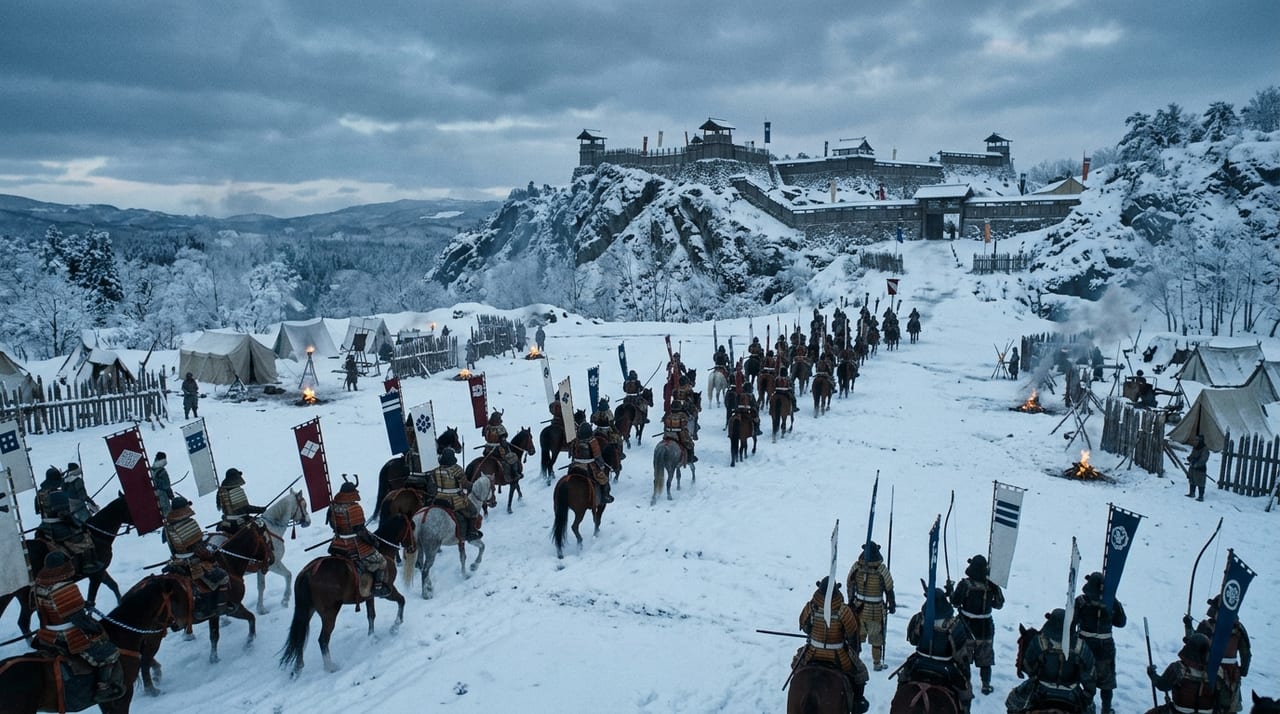
The greatest climax of the Later Three Years' War was the siege of the Kanazawa Stockade (present-day Yokote City, Akita Prefecture) in the autumn of Kanji 1 (1087). Iehira and Takehira shut themselves inside the Kanazawa Stockade and withstood Yoshiie's long siege. The Kanazawa Stockade was a strongly fortified mountain castle that made use of natural terrain. Yoshiie's army continued the siege from autumn into deep winter, driving the enemy into a corner through starvation tactics. However, the cold of the Tōhoku winter was merciless and imposed heavy sacrifices on the besiegers as well. Yoshiie's forces held on despite the freezing cold, and in the end the food inside the stockade ran out. Takehira was captured and then cut down, and Iehira was slain while attempting to flee.
After the end of the Later Three Years' War, it is said that Yoshiie gave rewards to the warriors of the eastern provinces who had joined the fight at their own expense. Because the court did not recognize official rewards for a "private war," Yoshiie is said to have rewarded his men even at the cost of his own property. This act made Yoshiie's fame decisive. The sentiment of the eastern warriors, "to fight and risk their lives for Minamoto no Yoshiie," became the spiritual foundation of a lord-vassal relationship that may be called the prototype of go'on and hōkō in the Kamakura period.
The pride of the samurai who staked their lives on a single sword merged with the spiritual culture of "absolute loyalty to one's lord," and the Later Three Years' War was an important juncture in this process. Yoshiie's act of rewarding his men with his own private wealth is also the prototype of the "duty of the lord" in later samurai ethics. It became the source of the idea that the samurai world can only stand when true sentiment exists between lord and retainers, not merely when men fight by receiving orders.
Kiyohira, who had been supported by Yoshiie in the Later Three Years' War and had defeated Iehira and Takehira, later established, as the first head of the Ōshū Fujiwara clan, a major cultural sphere at Hiraizumi (present-day Hiraizumi Town, Iwate Prefecture). The more than 100 years of Ōshū Fujiwara rule (1087–1189) brought a golden culture to the Tōhoku region. The exquisite craftsmanship seen in the Konjikidō (Golden Hall) of Chūson-ji, built in 1124, also suggests the high level of sword-making technology in this region. The history of the Tōhoku warriors, which began with the two great Tōhoku wars, the Earlier Nine Years' War and the Later Three Years' War, continued on to the Ōshū Campaign led by Minamoto no Yoritomo (1189). The role that Japanese swords played within this continuity of history is immeasurable.