Yakimodoshi Technique: The Science of Post-Yaki-ire Low-Temperature Treatment and Toughness Enhancement
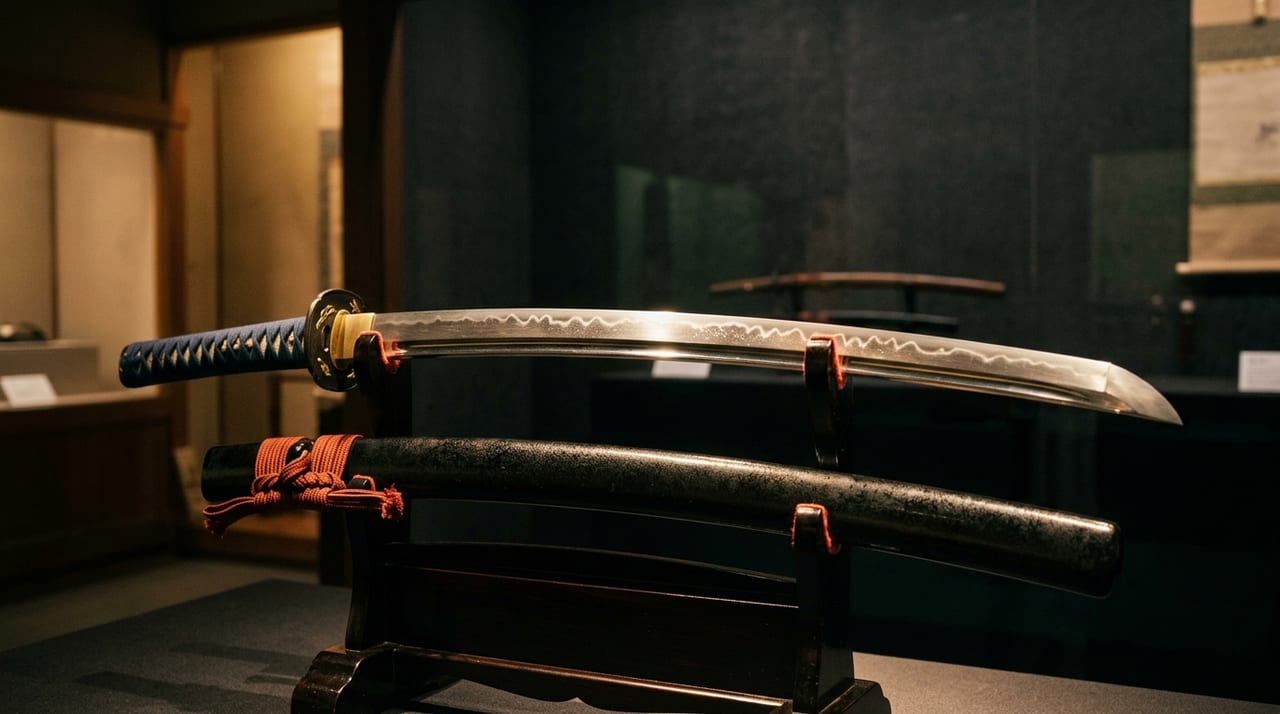 * Image is for illustrative purposes only.
Table of Contents
The "Aftermath" of Yaki-ire: What Is Yakimodoshi?
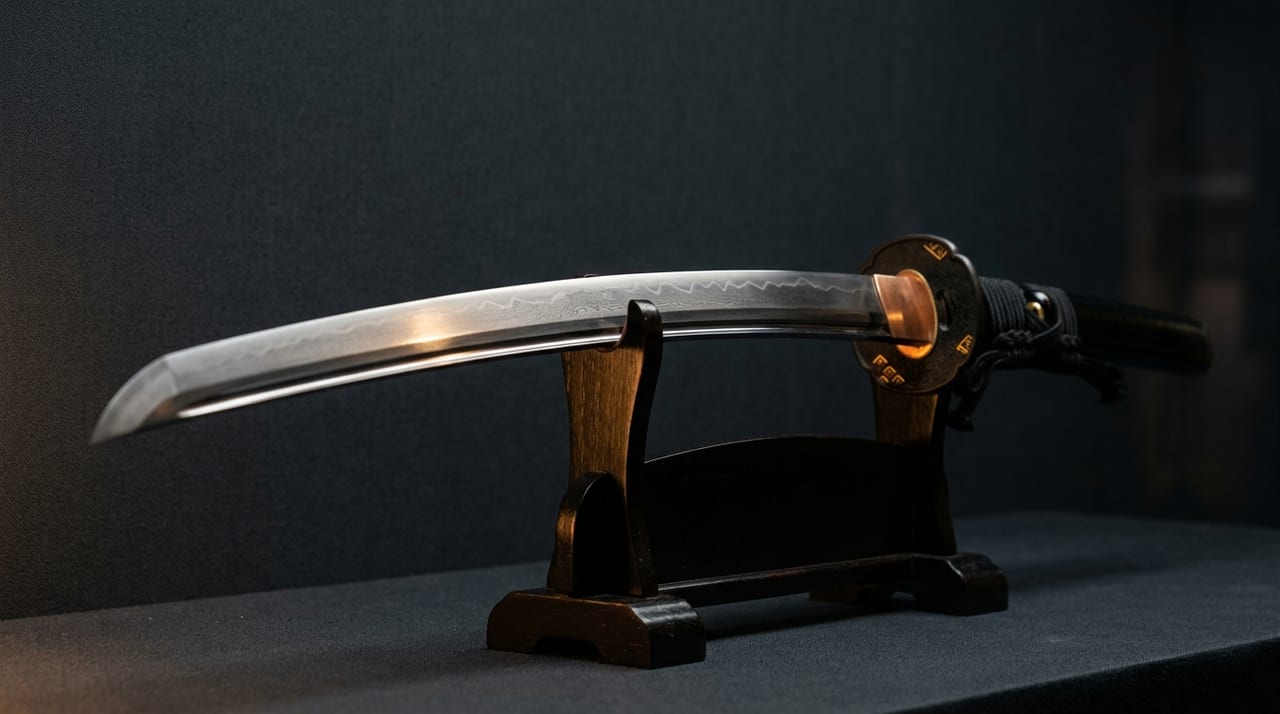
Among the processes in nihontō manufacture, yaki-ire is the one most widely discussed. The blade is coated in clay (tsuchioki), heated in a furnace, quenched in water to harden the edge, and a beautiful hamon is produced. This dramatic process can be called the very symbol of the nihontō (see also The Science of Yaki-ire and Hamon).
However, yaki-ire has a side effect that cannot be overlooked. The "martensitic transformation" produced by rapid quenching hardens the blade but also brings brittleness. A blade that is merely hard but brittle carries the risk of breaking under the stress of impact or clashing.
The low-temperature treatment applied to relieve this brittleness is "yakimodoshi," also known as "modoshiyaki." It is considered a process of equal importance to yaki-ire in realizing the three virtues of the nihontō: "never breaking, never bending, cutting well."
Yaki-ire and Martensite from the Perspective of Metallurgy
To understand yakimodoshi, one must first grasp what happens during yaki-ire.
From Austenite to Martensite
When steel (with a carbon content of approximately 0.3–1.5%) is heated to above roughly 800°C, the iron atoms adopt an arrangement called a face-centered cubic lattice (austenite), and carbon atoms dissolve uniformly within the lattice.
When this state is rapidly quenched (yaki-ire), the iron lattice transforms into a body-centered tetragonal lattice (martensite) with carbon atoms "trapped" inside, before they have time to escape the lattice. The lattice distortion produced at this point is the source of high hardness. Vickers hardness can reach HV 700–900 or more, equivalent to 2–3 times that of ordinary steel.
The Brittleness of Martensite
The problem is that in martensite, dislocations are difficult to move due to lattice distortion, and the toughness of the material falls dramatically. When subjected to impact, brittle fracture (breaking) rather than ductile deformation (bending) becomes more likely.
Immediately after yaki-ire, the blade is in a state of being "hard but brittle," and in that condition it cannot withstand practical use.
The Principles of Yakimodoshi: Relieving Brittleness Through Low-Temperature Treatment
Yakimodoshi (tempering) is a treatment in which the quenched steel is reheated to a low temperature of approximately 150–300°C. In this temperature range, no large transformation sufficient to soften the steel occurs, but several important changes proceed.
1. Fine Precipitation of Carbides
The carbon trapped in the martensite begins to precipitate as fine crystals of "cementite (iron carbide, Fe₃C)" through low-temperature heating. This eases the lattice distortion and toughness is gradually restored.
2. Stabilization or Decomposition of Retained Austenite
"Retained austenite" that did not fully transform to martensite during quenching is either stabilized by the low-temperature treatment or transforms into a different microstructure. Retained austenite has the property of suddenly converting to martensite under external force (transformation-induced plasticity). Treating it in advance is said to have the effect of preventing unexpected deformation.
3. Relief of Internal Stress
"Residual stress" arising from thermal non-uniformity during quenching is partially eliminated by low-temperature heating. Because internal stress can cause changes in the sori of the blade and fine cracks, relieving it contributes to the stability of the blade.
Forms of Yakimodoshi Practice in Nihontō
Whether yakimodoshi was carried out in traditional nihontō forging with the same awareness as modern metallurgy is a matter on which written records are limited and opinions differ. However, from the following points it is inferred that it was practiced in some form.
The Tōshō's Techniques for "Cooling"
The water temperature immediately after yaki-ire, the speed of cooling, and how the blade was held: these are said to have been precisely controlled by experienced tōshō (see also Yaki-ire Water and Temperature for the effects of water temperature). It has been pointed out that the process of holding the blade drawn from water in a specific state while residual heat remained, regardless of intent, may have produced the effect of yakimodoshi through low-temperature heating.
The Process Called "Sashimodoshi"
It is recorded that some tōkō had a process called "sashimodoshi" or "modoshi." Methods varied by tōkō: low-temperature heating of the blade after yaki-ire in a furnace or embers, or fitting the tsuka and gripping it, holding it at a temperature close to body heat, among others.
Modern materials science interprets these processes as having produced an effect equivalent to yakimodoshi at approximately 150–250°C, thereby increasing the toughness of the blade.
The Scientific Approach of Modern Tōkō
Some modern tōshō actively incorporate knowledge from materials science and carry out yakimodoshi consciously. Electric furnaces and thermocouple thermometers are used for temperature control, and there are examples of yakimodoshi being performed in an electric furnace set to 150–200°C.
In the world of traditional sword forging, however, there are divided opinions on the introduction of electronically controlled furnaces for yakimodoshi. A philosophical debate continues to this day between tōkō who value "maintaining traditional processes based on the sense of the hand and experience" and those who value "stabilizing quality through scientific management."
Insufficient Yakimodoshi (Excessive Brittleness)
If yakimodoshi is insufficient, the brittleness of the martensite remains, leaving the blade vulnerable to impact. The edge becomes prone to chipping (hakobore) from strong impact or clashing, and in the worst case may break. In particular, when toughness on the mune side is lacking, the risk of the entire blade fracturing increases.
Excessive Yakimodoshi (Loss of Hardness)
Conversely, if the yakimodoshi temperature is too high or the duration too long, the martensitic hardening is lost and cutting performance declines. The hamon (the boundary of the quenched microstructure) may also blur, potentially affecting appraisal evaluation.
The Effect of Yakimodoshi on the Appearance of the Hamon
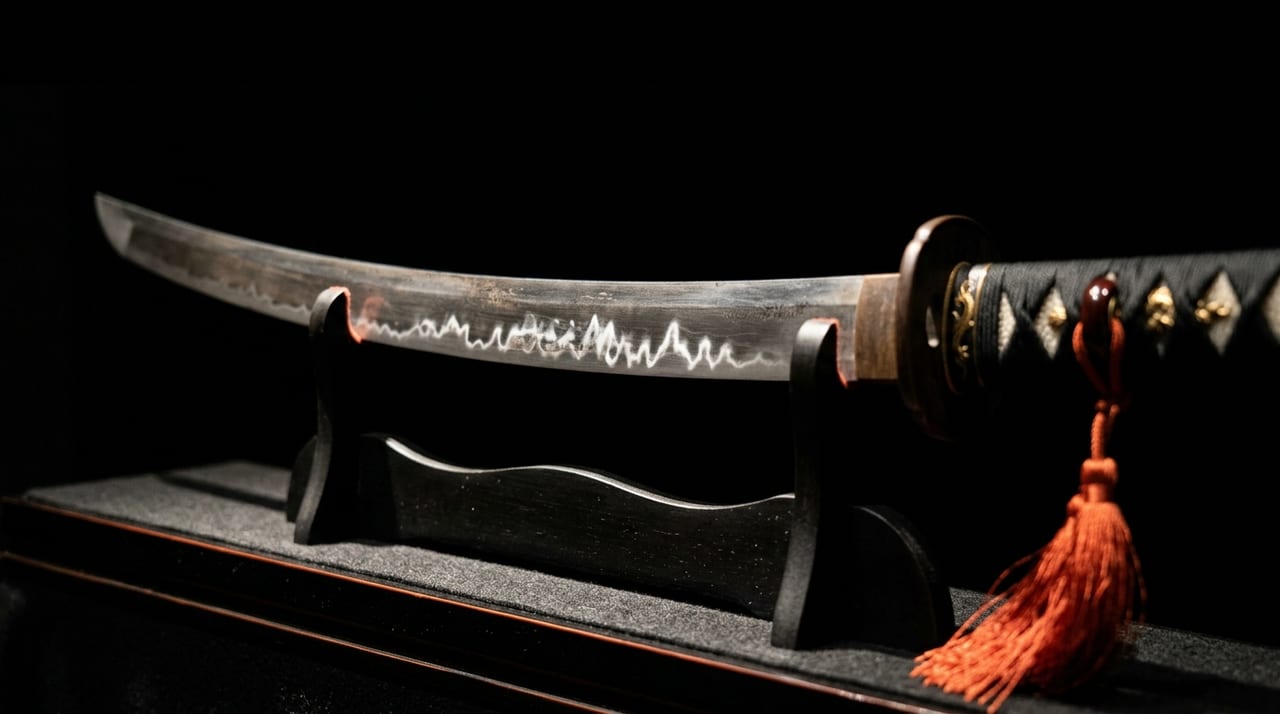
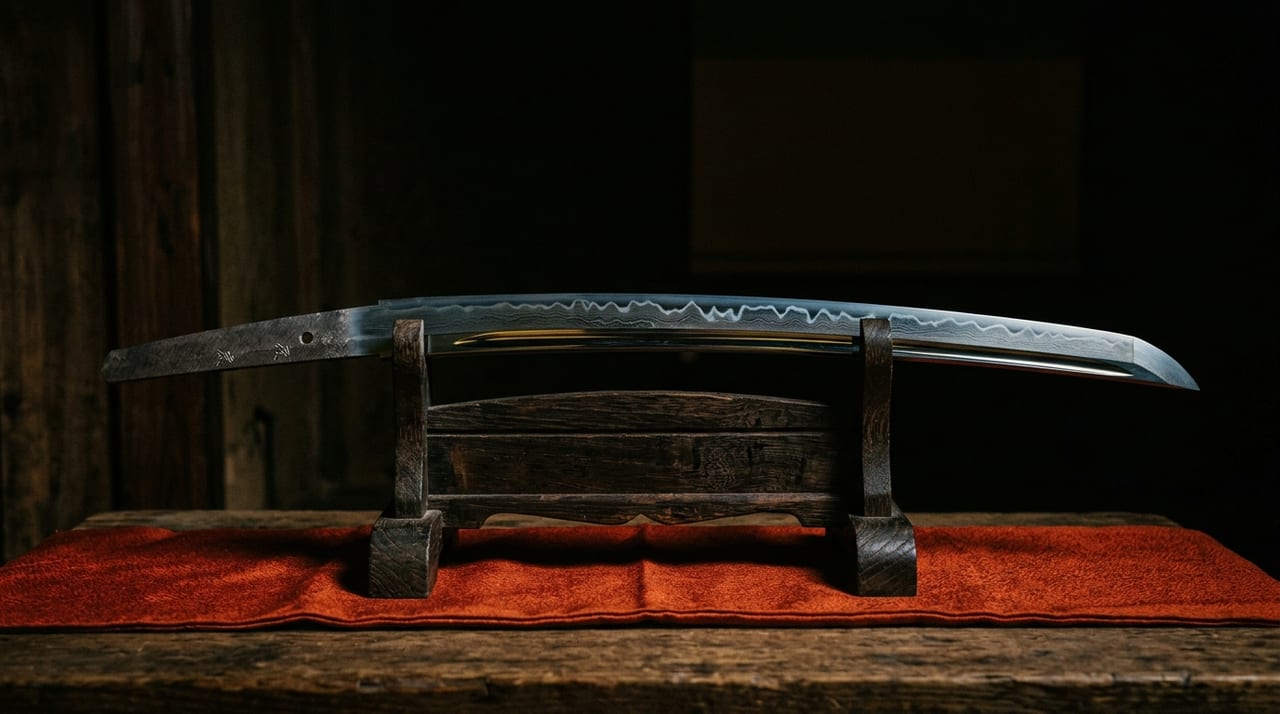
While yakimodoshi does not change the shape of the hamon itself, it is said to have a subtle effect on the appearance of nie and nioi.
- nie (the granular glitter seen at the hamon boundary): the larger the martensite particles, the more conspicuous it is. When particles become finer through yakimodoshi, the appearance of the glitter can change
- nioi (the haze-like gradation at the hamon boundary): related to the temperature gradient at the boundary and the state of carbide precipitation, its appearance can change depending on the conditions of yakimodoshi
Some appraisers have built up experience in reading the degree of yakimodoshi from "the way nie particles stand" (see also Practical Guide to Hamon Appreciation for the practice of hamon appreciation).
Conclusion: The Science Supporting "Never Breaking, Never Bending, Cutting Well"
The three great virtues of the nihontō — "never breaking, never bending, cutting well" — cannot be achieved by a single process alone. If yaki-ire delivers "cutting performance and hamon," then yakimodoshi bears the role of securing "the toughness that prevents breaking."
The mechanisms that modern materials science has elucidated — martensitic transformation, carbide precipitation, and residual stress relief — can be said to validate the techniques that tōshō have long cultivated through experience and intuition. The technique of yakimodoshi, where tradition and science meet, is one aspect that symbolizes the profound depth of nihontō forging.