The Complete Guide to Uchigatana (打刀) and Wakizashi (脇差) Differences—Length, Purpose, and Koshirae (拵え): Understanding Two-Sword Pair Culture
 * Image is for illustrative purposes only.
Table of Contents
"Daishonihondashi"—The Two-Sword Combination That Defined Samurai
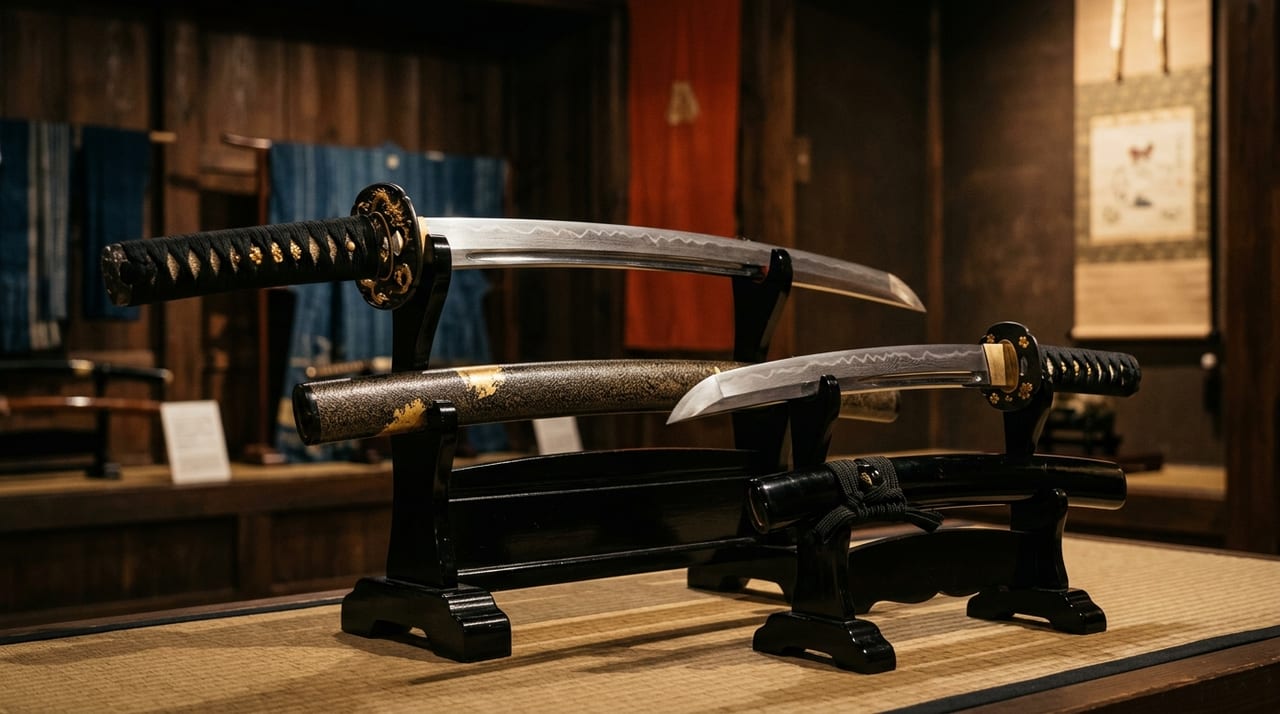
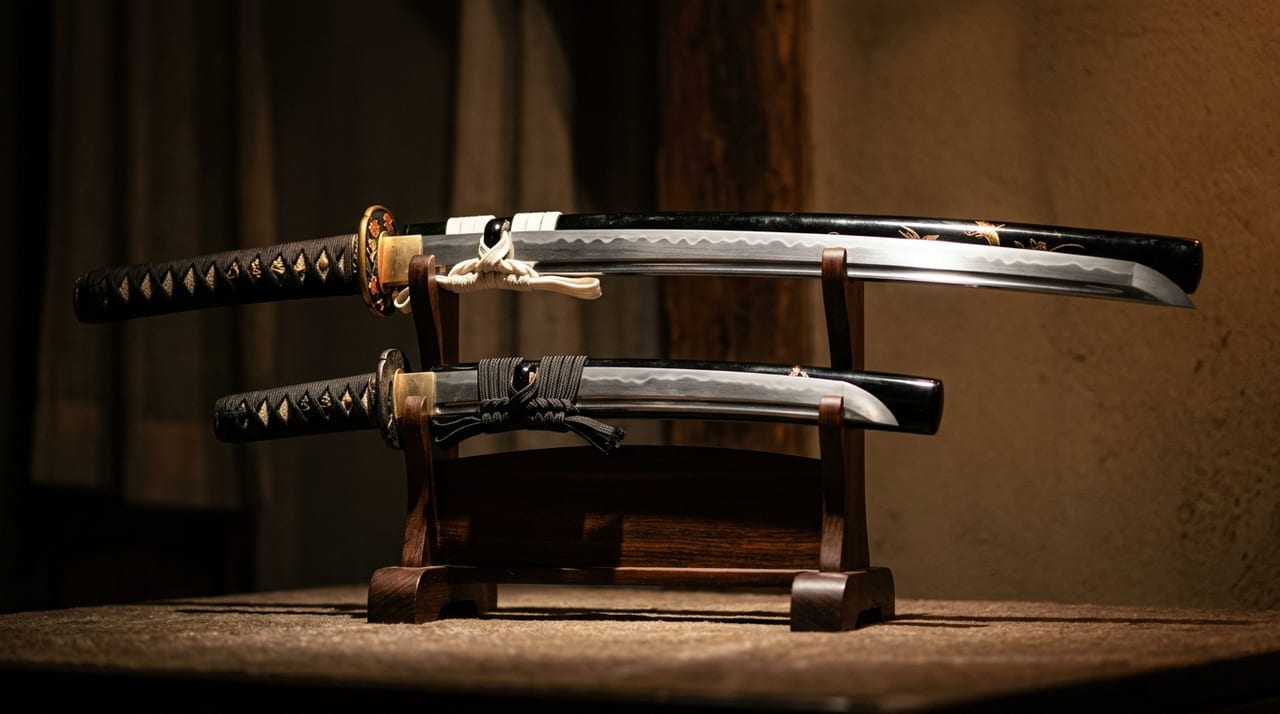
The quintessential image of a samurai during the Edo period is the "daishonihondashi"—wearing a long uchigata-na and short wakizashi at the waist. This style of dress was external proof of samurai status and marked a clear distinction from farmers and merchants.
However, when asked "What is the difference between an uchigata-na and wakizashi?" many answers stop at "they differ in length." In reality, these two swords each possess different concepts of purpose, different manufacturing techniques, and different traditions of koshirae, and the very concept of "the two swords as a pair" is one of the finest expressions of Japanese sword culture.
This article thoroughly examines the differences between uchigata-na and wakizashi from multiple angles: length, purpose, manufacturing technique, koshirae, and historical development.
Definition and Length Differences
The classification of Japanese swords is determined by blade length (ha-wari).
Definition of Uchigata-na
An uchigata-na is a single-edged Japanese sword with a blade length of "2 shaku (approximately 60cm) or longer," carried in a "sashi-gata-na" style with the edge facing upward at the waist. From the middle of the Muromachi period onward, it replaced the tachi as the primary armament of samurai, and by the Edo period it became synonymous with "the samurai's sword."
In modern Japanese firearms and swords law, any sword with a blade length of 15cm or more must be registered as a "sword and blade," but by custom "uchigata-na" refers to long swords of 2 shaku (approximately 60cm) or longer.
The typical blade length of an uchigata-na ranges from 2 shaku 1 sun to 2 shaku 4 sun (approximately 63–72cm). During the Sengoku period, shorter blades of around 2 shaku were the mainstream, but by the Edo period, decorative significance increased and approximately 2 shaku 3 sun became the "standard uchigata-na."
Definition of Wakizashi
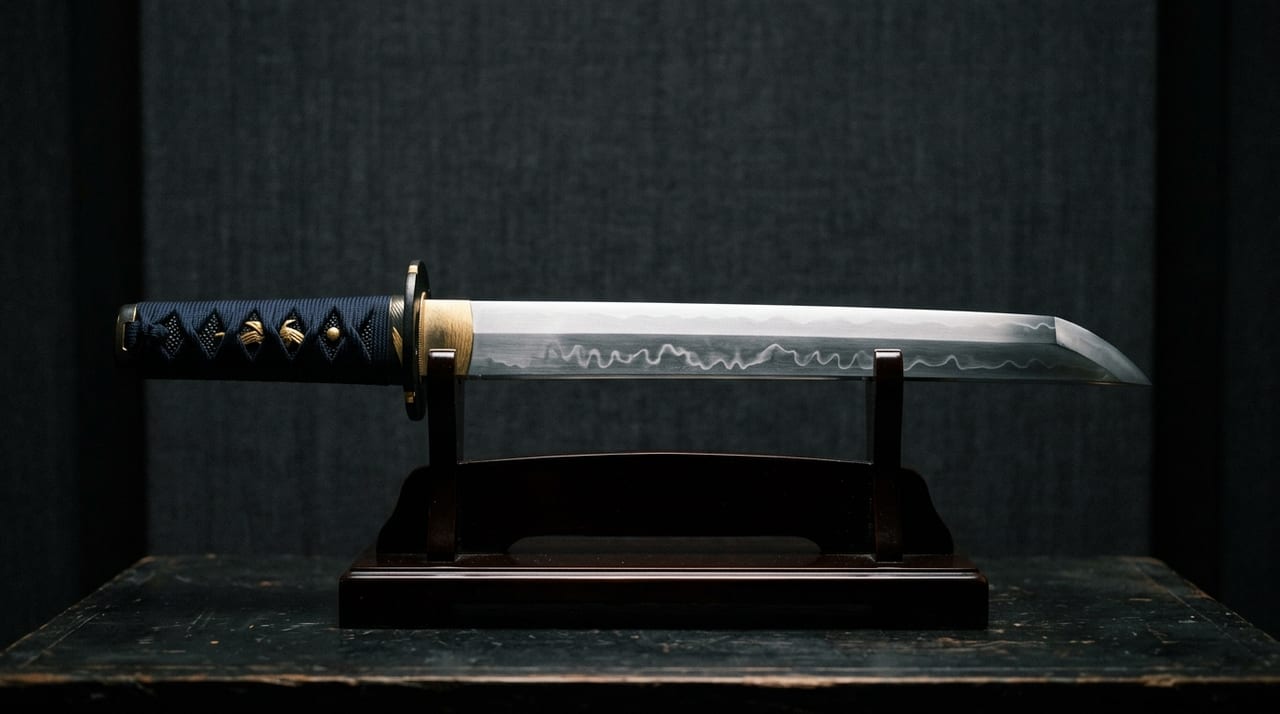
Wakizashi refers to swords with a blade length of "1 shaku (approximately 30cm) or longer but less than 2 shaku (approximately 60cm)." The term "wakizashi" derives from "a sword worn at the side," and developed as a supplementary blade worn at the flank (in front of the uchigata-na on the left side of the waist).
Wakizashi are sometimes further classified as follows:
- Oo-wakizashi: Blade length 1 shaku 8 sun to less than 2 shaku (54–less than 60cm)
- Chu-wakizashi: Blade length 1 shaku 5 sun to 1 shaku 8 sun (45–54cm)
- Ko-wakizashi: Blade length 1 shaku to 1 shaku 5 sun (30–45cm)
Differences in Purpose: The Roles Each Sword Fulfilled
The Purpose of Uchigata-na: "The Primary Sword"
The uchigata-na was the primary sword samurai employed in actual combat. Its purposes can be classified as follows.
Outdoor combat: Because the uchigata-na is worn with the edge facing upward, the motions of drawing and striking flow in a continuous sequence. Iaijutsu is a martial art that maximized this characteristic, and the philosophy of "draw and cut in one motion" is deeply connected to the design philosophy of the uchigata-na.
Ritual and status display: By the Edo period, the uchigata-na transcended its practical combat purpose and acquired ritual significance indicating a samurai's rank. Specific types and styles of uchigata-na were prescribed for use as "sashi-soe no katana" (ceremonial swords) when in the presence of the shogun.
The Purpose of Wakizashi: "The Secondary Sword and Self-Defense Blade"
The wakizashi served as a supplement to the uchigata-na and as an independent self-defense weapon with multiple functions.
Indoor self-defense: Indoors, the long uchigata-na was difficult to use, making the wakizashi the primary weapon. Particularly in tight corridors and confined spaces, the shorter wakizashi had the advantage. The wakizashi was often used during seppuku as well.
Complementing the uchigata-na: When the uchigata-na broke, chipped, or could not be returned to its scabbard, the wakizashi became the secondary option as an emergency weapon.
Self-defense for women and non-samurai: Short swords carried for self-defense by eldest sons of farming families or the wives of merchants (called "kaiken") are sometimes included in the broader concept of wakizashi.
Differences in Manufacturing Technique: How Swordsmiths Made the Distinction
Even when the same swordsmith created both uchigata-na and wakizashi, the approach in the manufacturing process differed.
The Difference in Curve (Sori)
Uchigata-na tend to have relatively modest curve. This was done to ensure smooth drawing motion when worn at the waist. By contrast, many wakizashi have somewhat deeper curves than uchigata-na. However, some wakizashi also feature what is called "hirazukuri"—construction nearly straight, almost like a dirk.
The Style of Kissaki
The uchigata-na features the "chu-kissaki" as standard, a design that balances thrusting and cutting. Wakizashi often display "inokubi-kissaki"—a kissaki that is short and wide—which is better suited for thrusting purposes.
Trends in Hamon
Long uchigata-na tend to favor uniform hamon across their entire length, such as "suguha" or "gunome." Because wakizashi have shorter blades, there is greater room to apply more decorative and individualistic hamon, and many masterpieces feature complex patterns such as "hitatsura" or "midareba."
The Cultural Distinction of Koshirae
"Koshirae" refers to the complete set of fittings that house the blade—the saya, tsuka, tsuba, fuchigashira, menuki, and other ornamental components. Uchigata-na and wakizashi koshirae show distinct stylistic differences.
Uchigata-na Koshirae Style
Edo-period uchigata-na koshirae is called "uchigata-na koshirae" and possessed the following characteristics:
- Tsuka: A relatively long tsuka (typically around 1 shaku) with tightly set menuki
- Saya: Lacquer coating was standard. For daimyo, lavish ornamental sheaths featured raden and nashiji decoration
- Tsuba: Large tsuba made of iron or metalwork, with decorative carving during the Edo period
The uchigata-na koshirae served as a public symbol of samurai rank, and domain regulations often restricted materials and decoration.
Wakizashi Koshirae Style
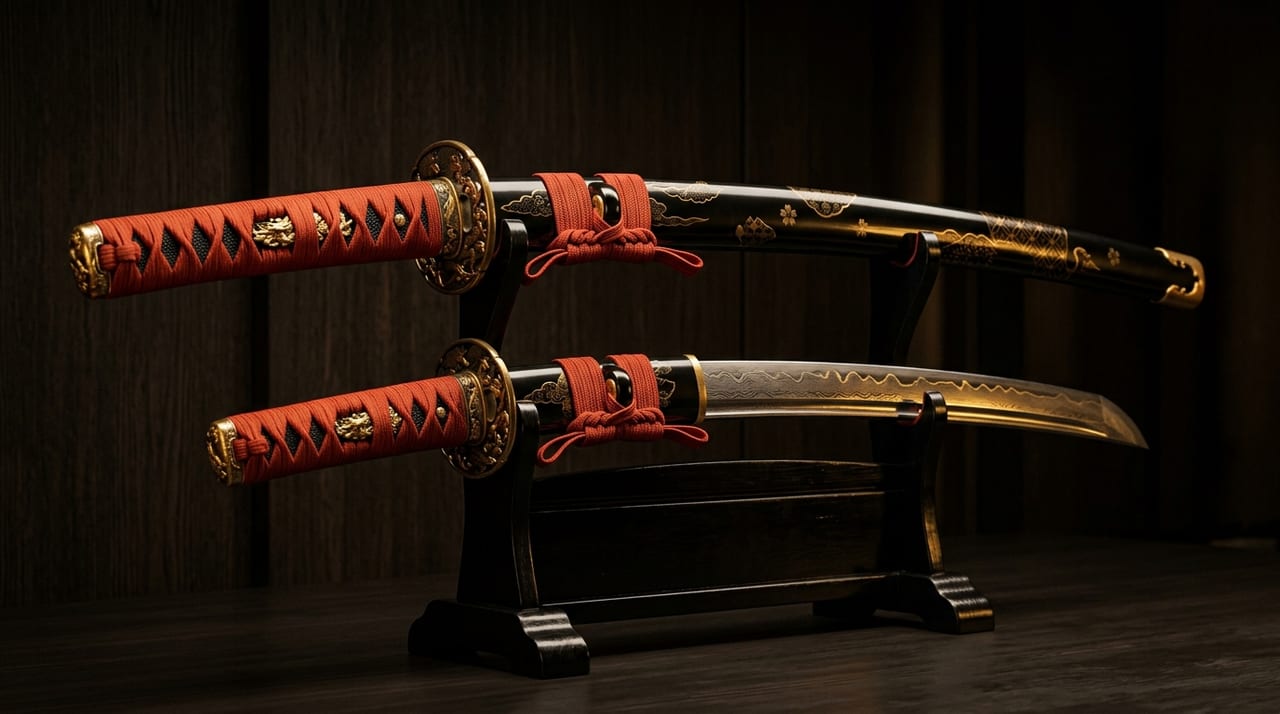
Wakizashi koshirae were often created to complement the paired uchigata-na with unified design. This is called "daishoso-roi" (a matched pair of large and small).
By matching the wakizashi's tsuka, saya, and tsuba materials and patterns to the uchigata-na, the two blades functioned as a single set. Masterpieces of "daishoso-roi" are particularly highly valued in the sword market.
However, there was also a tendency for the wakizashi to have greater freedom from formal convention, allowing for more decorative and personal aesthetic touches. If the uchigata-na displayed the owner's public persona, the wakizashi expressed personal taste.
Historical Transition: The Changing Relationship Between the Two Swords
Muromachi Period: The Birth of Wakizashi
The wakizashi became established as samurai equipment around the middle of the Muromachi period (15th century). The transition from a pairing of tachi and ko-gata-na to the combination of uchigata-na and wakizashi occurred during this era.
Sengoku Period: The Spread of "Daisha"
During the Sengoku period, the "daishonihondashi" combination of uchigata-na and wakizashi became widespread among the samurai class. This combination became central to samurai culture through its practical utility on the battlefield and its function as a symbol of status.
Edo Period: The Ritualization of the Two Swords
With the arrival of the Edo period, the practical combat significance of the two swords declined while their meaning within the status system grew stronger. The bakufu obligated samurai to wear the two swords and prohibited farmers and merchants from doing so, using the swords as a visual tool for social classification.
The distinction between uchigata-na and wakizashi became important in the following contexts during this period:
- Entering the castle: Wearing domain-prescribed uchigata-na and wakizashi
- Tea gatherings and receptions: Removing swords and entrusting them to attendants as proper etiquette
- Self-defense for samurai women: Carrying a wakizashi-like "kaiken" at all times
A Collector's Perspective: Which to Choose?
For modern Japanese sword collectors, the choice between uchigata-na and wakizashi remains an important question.
Merits of the uchigata-na: Visual impact from length, beautiful proportions, high historical prominence.
Merits of the wakizashi: Requires less storage and display space, more examples with refined hamon and proportions exist, easier to handle.
Many collectors also pursue "daishoso-roi," with sets of uchigata-na and wakizashi from the same swordsmith and with matching koshirae commanding premium status in the market.
The uchigata-na and wakizashi each possess independent beauty, yet only when combined does the "universe of the samurai" become complete. The culture of the two swords as a pair is a crystallization of Japanese wisdom that elevates the Japanese sword beyond a mere weapon into an artistic and philosophical presence.