What Is Shuriken — Types and Throwing Methods of Bō Shuriken and Hira Shuriken (Kuruma-ken), and Differences from the Nihontō
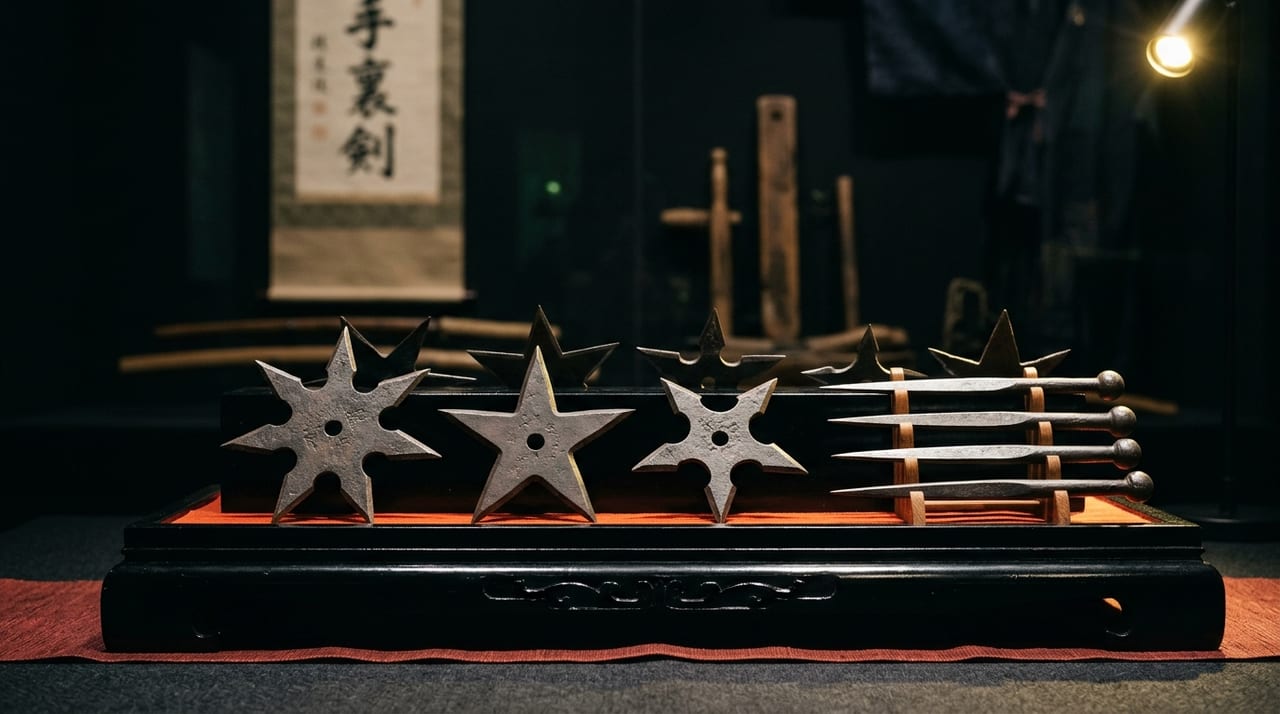 * Image is for illustrative purposes only.
Table of Contents
When most people think of shuriken, they picture a star-shaped blade thrown by a ninja dressed in black. This image, spread through films, manga, and video games, is in fact only one aspect of shuriken. In shurikenjutsu as a martial art, the elongated bō shuriken — resembling a nail or needle — was considered the central form, with the star-shaped kuruma-ken classified as one variety within that tradition. This column organizes the main types of shuriken, their uses, and their differences from the nihontō, distinguishing between oral tradition and what can be verified.
What Is Shuriken?
Shuriken is a collective term for small bladed weapons and metal pieces held in the hand and thrown. Unlike weapons such as swords or spears that are swung in close contact with the opponent, shuriken are used by throwing them from a distance. However, they are generally regarded not as a decisive weapon for defeating an enemy single-handedly, but rather as a supplementary technique used for feinting and stopping an opponent.
Among schools of shurikenjutsu, Karigane-ryū (from around the first half of the 17th century) is sometimes cited as one of the earliest documented examples. It is also said that kenjutsu and sōjutsu schools such as Yagyū Shinkage-ryū and Tenshin Shōden Katori Shintō-ryū taught shuriken as a supplementary technique. However, these accounts are based on secondary sources and have not been verified through exhibition catalogs of holding institutions or cultural property records. Here we limit ourselves to the understanding that shuriken "was transmitted as an ancillary technique of kenjutsu and sōjutsu."
As for when shuriken appeared, it is often explained that the form as we know it today took shape in the late Muromachi period, though this remains partly within the realm of oral tradition.
Bō Shuriken and Hira Shuriken
Shuriken are broadly described in two shapes.
- Bō shuriken: an elongated shuriken resembling a nail or needle, either round or square in cross-section. The center of gravity lies at the middle, and it is thrown straight to drive the tip into the target.
- Hira shuriken: a flat, plate-shaped shuriken. This category includes the form known as kuruma-ken, in which blades extend radially outward from a central point.
In martial arts training, bō shuriken are described as having been the primary form. This is because the elongated shape makes it easier to keep the tip pointed at a single target point. Kuruma-ken, on the other hand, have a visually striking shape and have been depicted in later fiction as a symbol of the ninja. This image cannot be verified in historical sources as evidence that ninja widely used kuruma-ken, and is considered to be heavily influenced by fictional portrayals. The gap between the historical reality and popular myths surrounding ninja equipment is also discussed in "Did the Ninja Sword Really Exist?."
Fundamentals of Throwing
There are said to be two broad approaches to throwing bō shuriken.
- Choku-daihō: a method in which the shuriken does not rotate and travels straight with the tip continuously aimed at the target, driving it in.
- Hanten-daihō: a method in which the shuriken rotates in flight, completing a half-turn or full turn so that the tip strikes the target.
With choku-daihō, the tip orientation does not change regardless of the distance to the target, making it easier to hit even when the distance varies. With hanten-daihō, the amount of rotation must be adjusted to the distance, so practitioners develop a feel for each distance through training. Which method is emphasized differs by school, and opinions remain divided among modern practitioners as well.
Differences from the Nihontō
Even though both are metal blades, the philosophy of construction differs greatly between shuriken and the nihontō.
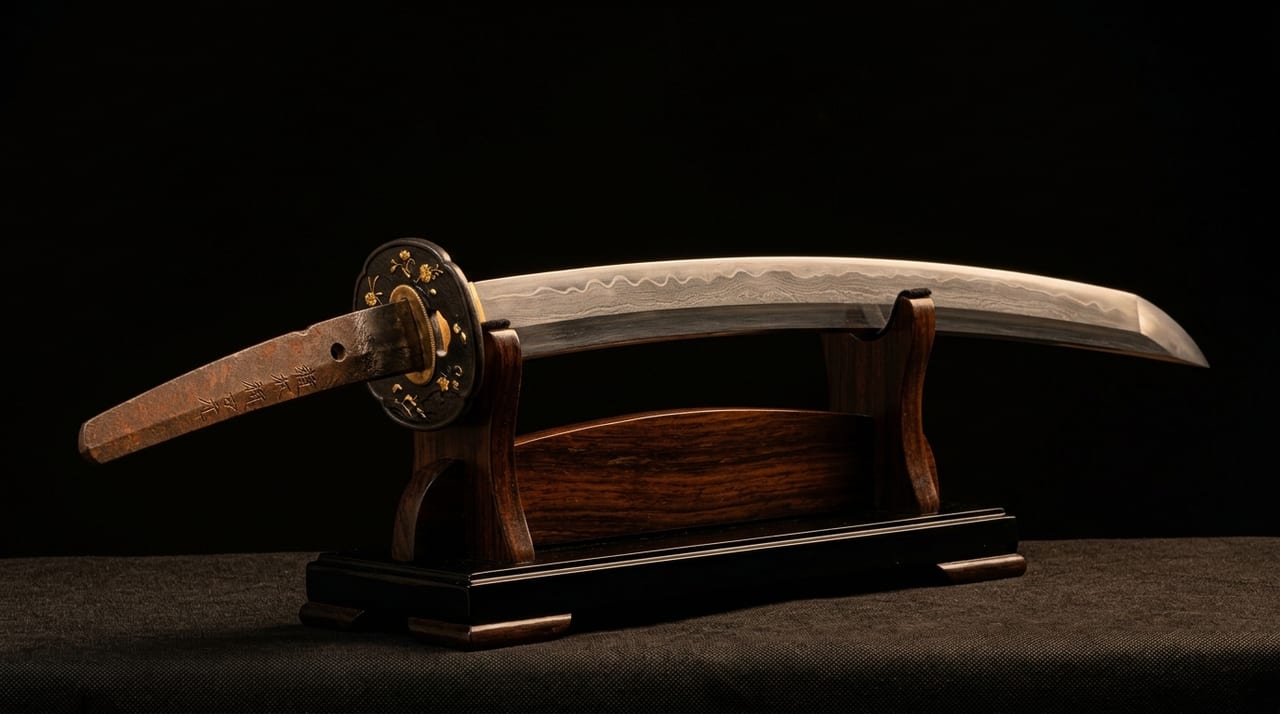
The nihontō is forged by combining kawagane and shingane, and yaki-ire (quenching) is used to achieve both a hard edge and a resilient body. The hamon and jigane that are objects of aesthetic appreciation also arise from this process. The topic is covered in greater detail in "The Structure of Kawagane and Shingane."
Shuriken, by contrast, are essentially made by hammering a small piece of iron into shape and are not blades that presuppose the long and complex tanren (forging) of the sword. Because they are tools used by throwing, the position of the center of gravity, the balance of weight, and stability in flight are valued over the sharpness of the edge. Even within the category of "weapons made by working iron," the nihontō has been treated as a craft object to be appreciated individually, while shuriken were consumable, practical tools — a fundamental difference.
Similarly, among specialized weapons other than swords, there are the "kusarigama" and "jitte and tessen." Viewing them alongside the sword makes it clear that the arms of warriors and townspeople were not limited to a single type.
Precautions When Handling Shuriken Today
Shuriken are still practiced as part of budō and kobudō, but care is required in handling them as bladed objects. Carrying them in public or handling them in places visible to others may implicate the regulations of the Act for Controlling the Possession of Firearms or Swords and Other Such Weapons (Jūtōhō) or the Minor Offenses Act. The specific category into which shuriken fall cannot be confirmed here. If you are considering possessing or carrying them, please verify the full text of the relevant laws and the guidance of your local police station yourself.
Furthermore, safety management at the training venue is indispensable when handling real-bladed shuriken. Checking basic matters such as whether anyone is behind the target and whether a rebound could occur is something that experienced practitioners carry out all the more thoroughly.
As a Starting Point for Understanding Swords
Within Japanese weapons, shuriken play a supporting role to swords. Even so, understanding the differences in a weapon's function — throwing, cutting, or thrusting — is helpful for understanding the form and use of the nihontō.
If you would like to compare swords themselves, you can browse works from different periods and in different styles through the online catalog (sword listings). For questions, please use the contact form.