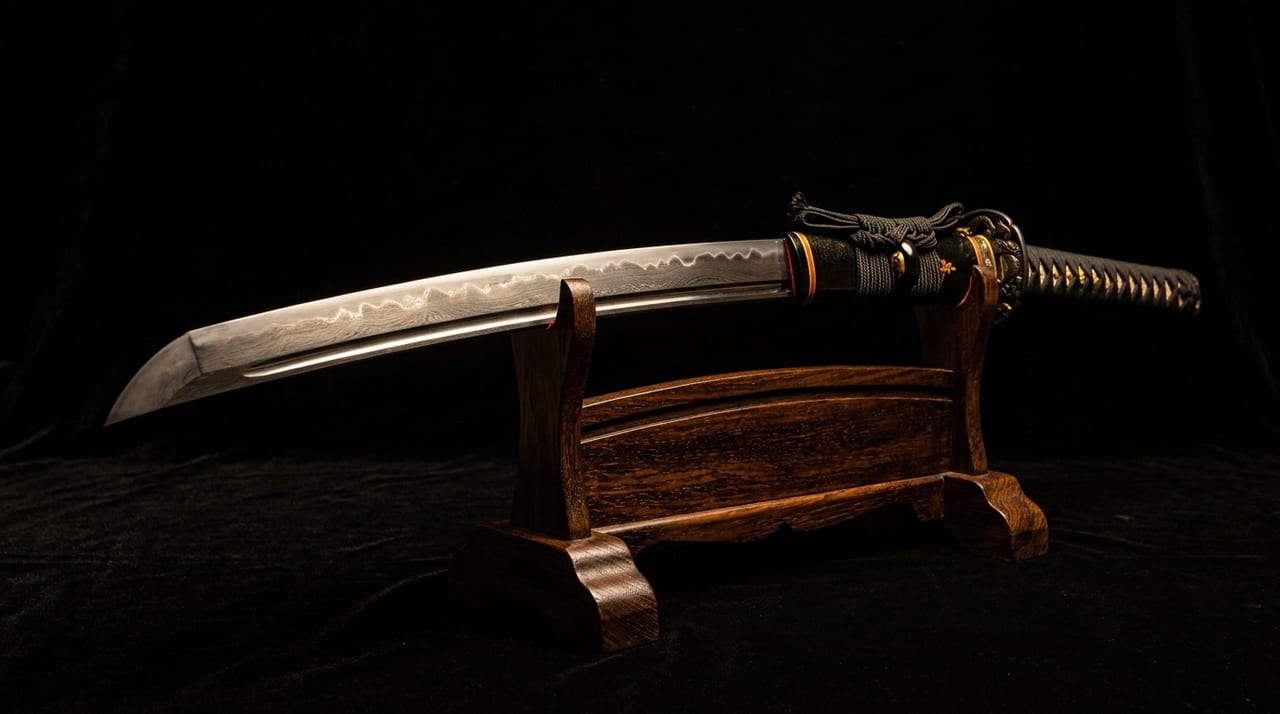
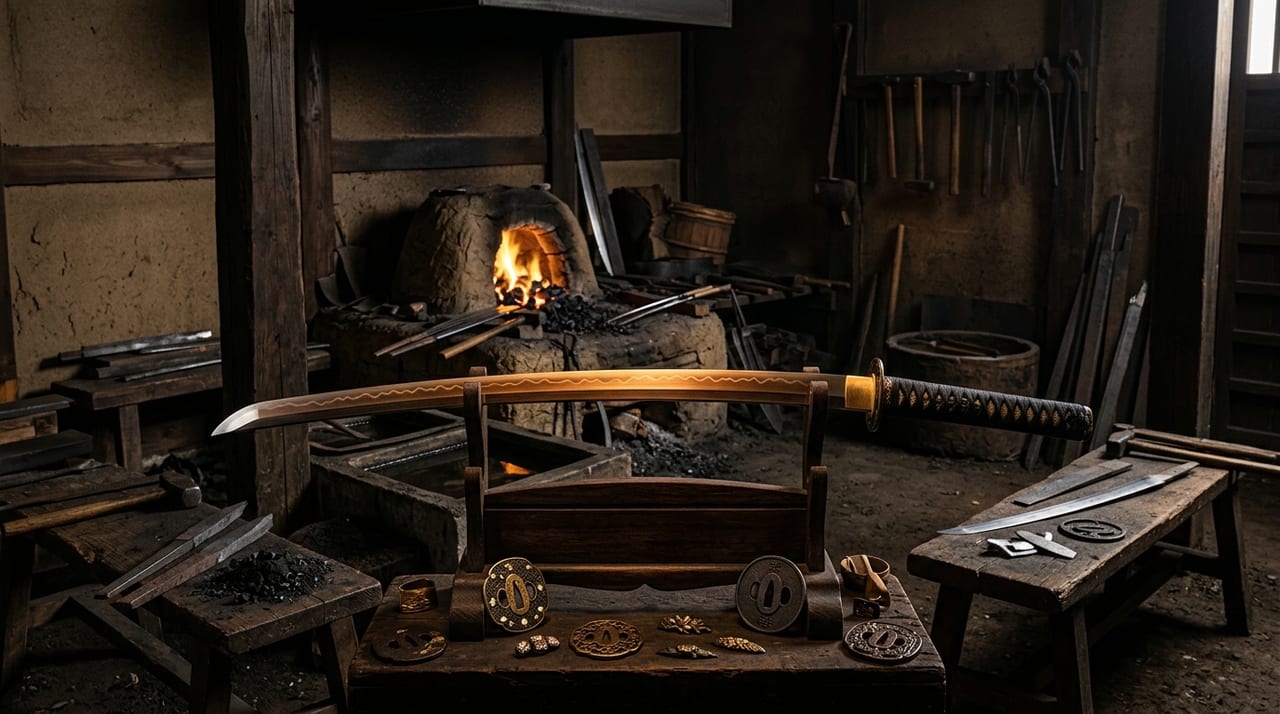
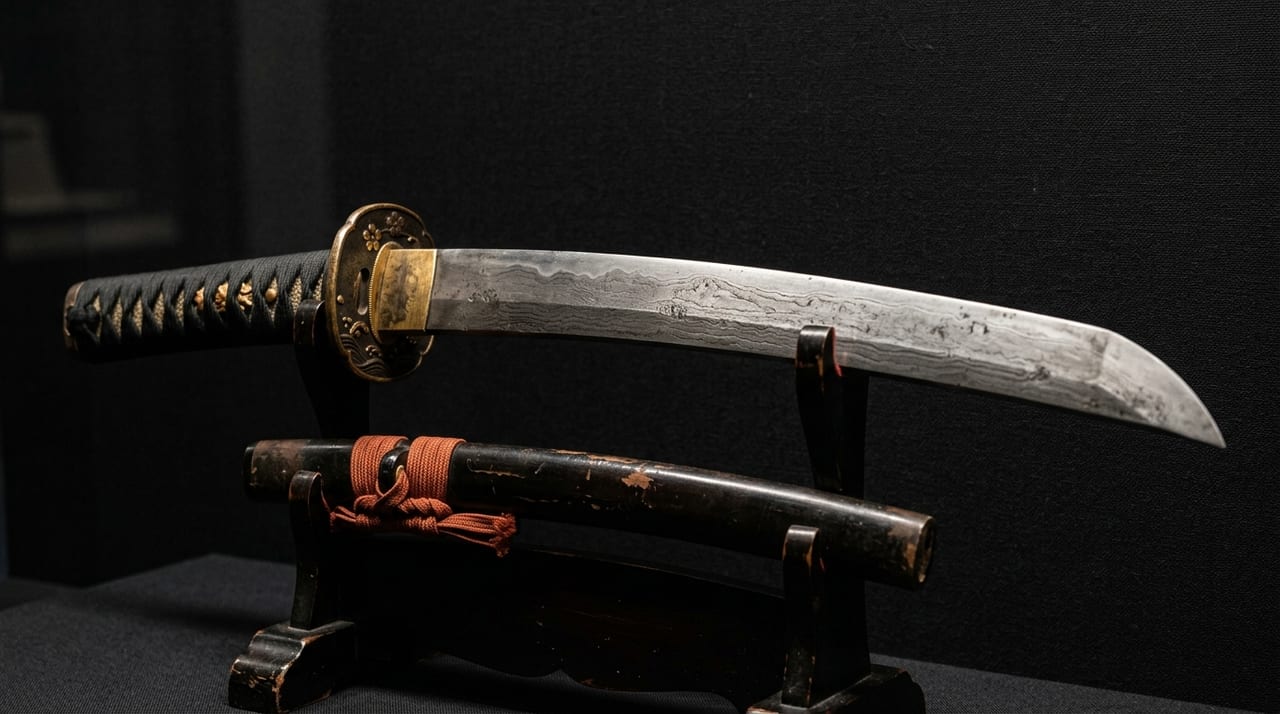
The Mishina School Swordsmiths: A Modern Period School and Style Based in Kyoto
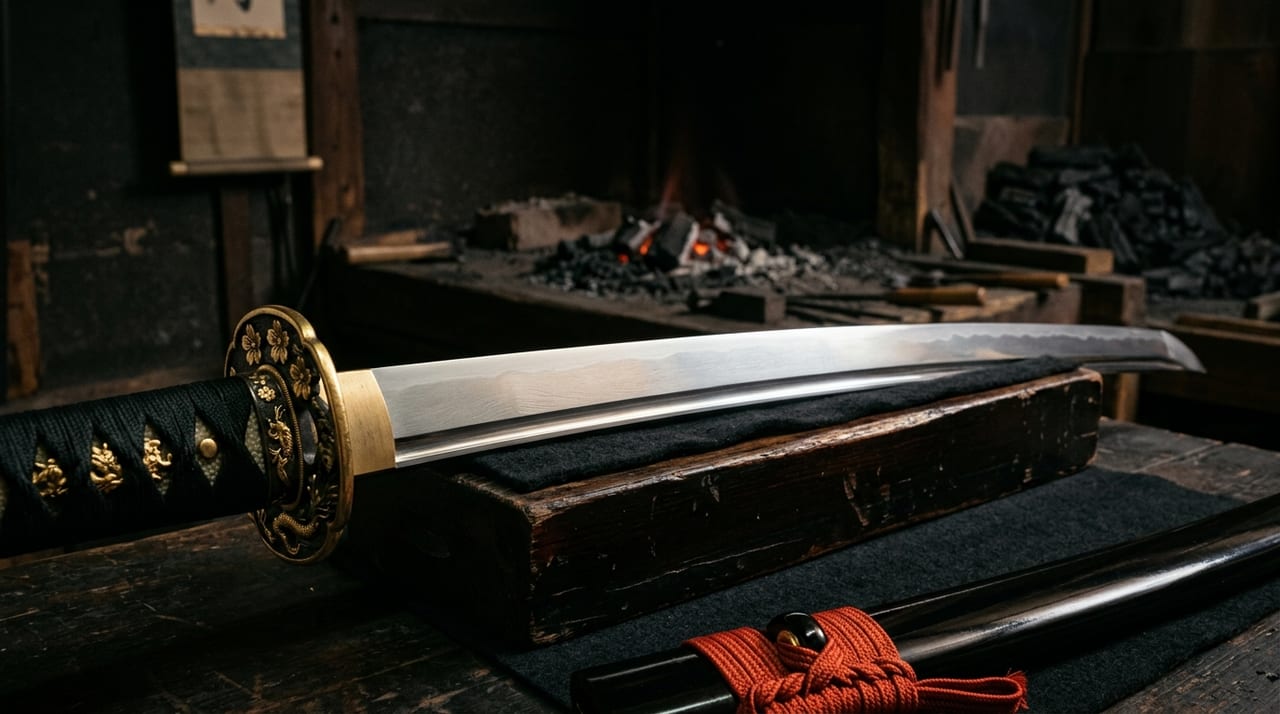 * Image is for illustrative purposes only.
Table of Contents
The Mishina School—A Kyoto Shintō Lineage
The Mishina School (Mishina-ha) is a school of swordsmiths that was active in Kyoto throughout the Edo period. The name "Mishina" is said to derive from the given name or common name of the first generation.
Kyoto (Yamashiro Province) is one of Japan's oldest centers for Japanese sword production, and since the Heian period has possessed its own distinctive technical system called the Yamashiro tradition (Yamashiro-den). While inheriting this Yamashiro tradition, the Mishina School established its own unique style adapted to the demands of the new Edo period.
Characteristics of the Yamashiro Tradition—The Technical Foundation of the Mishina School
To understand the Mishina School's style, one must understand the characteristics of the Yamashiro tradition:
Hamon characteristics:
- Gentle hamon dominated by straight blade (suguha) or small irregular patterns
- Refined distribution of fine nie uniformly throughout
- "Nioi-deki"—a soft hamon close to the nioi of the Bizen tradition
- Refined and restrained hamon, in contrast to the vigorous nie of the Soshu tradition
Jihada characteristics:
- Itame or kozaitame grain pattern
- Bright and clear jihada
- Jikei and kinsuji arranged neatly and without unsightliness
- Yamashiro jihada is praised as having "calm brightness"
These characteristics are commonly seen in Mishina School blades as well.
The Mishina School Lineage—Principal Swordsmiths
First Generation (Founder of the Mishina Family)
The founder of the Mishina School was Kanemichi (later known as Mutsu no Kami Daidō), a swordsmith from Seki in Mino Province (present-day Gifu Prefecture). Around 1593 (Bunroku 2), he traveled to Kyoto accompanied by his four sons—Iga no Kami Kinmichi, Izumi no Kami Kinmichi, Tanba no Kami Yoshimichi, and Etchu no Kami Masatoshi—and established the Mishina School. These four sons, together with Ōmi no Kami Hisamichi, formed a group of five known as the "Kyoto Five Smiths" (Kyō go-kaji). "Mishina" is the family name of this lineage.
Development During the Mid-Edo Period
During the mid-Edo period, Mishina School swordsmiths established a stable position in Kyoto, supplying blades to the nobility, upper samurai class, and wealthy merchants. The cultural refinement of Kyoto as a city is reflected in the Mishina School's "refined style."
The Mishina School in the Late Edo Period
During the late Edo period (19th century), records indicate that Mishina School swordsmiths continued their work even amid the turbulent times in Kyoto, including the activities of late-Edo patriots and the Kinmon Incident.
Representative Swordsmiths and Characteristics of Their Works
Hamon Variations in the Mishina School
Mishina School swordsmiths passed down the Yamashiro tradition hamon from master to master, yet each smith developed individualistic variations in their hamon:
Suguha style: The most typical Mishina School style. The edge boundary is distinct and the fine nie uniform. The "refinement of the straight blade" is the key evaluation point.
Ko-gunome style: Gentle gunome irregularity. Rather than wild disturbance, small and regular wave patterns.
Suguha with choji-ashi: A style where "feet" extend into the blade from the straight edge. A characteristic form of the Yamashiro tradition influenced by the Bizen tradition.
Jihada Evaluation
Mishina School jihada is praised as "bright, clear, and lively." The kozaitame grain is tightly and uniformly packed, with the jikei flowing in orderly fashion. The "beauty of the mean"—neither excessively complex nor excessively simple—is the distinguishing quality of Mishina School jihada.
The Social Context of the Mishina School—The Advantages of Kyoto
One reason the Mishina School survived throughout the Edo period lies in "the advantages of Kyoto as a location":
Contact with nobility and refined culture: Even during the Edo period, Kyoto remained the capital of the emperor and nobility, providing a clientele with high cultural standards.
Proximity to Nara and Mount Kōya: Proximity to centers of Buddhist culture generated demand for ceremonial blades and votive blades.
Artisan networks: Swordsmiths were positioned within the craftsman culture of Kyoto's traditional crafts (Nishijin brocade, ceramics, lacquerware, etc.), giving them a stable cultural status.
The Mishina School Compared to Other Kyoto Swordsmiths
Besides the Mishina School, multiple swordsmiths were active in Edo-period Kyoto:
| School | Main characteristics | Historical period |
|---|---|---|
| Mishina School | Yamashiro tradition inheritance, gentle suguha and small irregularities | Throughout Edo period |
| Ōmi no Kami lineage | Wide variety of styles | Early to mid-Edo period |
| Tanba no Kami lineage | Title used by swordsmiths coming to Kyoto from various regions | Various periods of Edo |
The Mishina School is distinguished from other lineages by the fact that a specific family line inherited the name "Mishina." Tracing the genealogy of Kyoto swordsmiths further back leads to the Awataguchi School and the Rai family, who flourished in Kyoto during the Kamakura period. The gentle suguha of the Mishina School can be seen as inheriting the aesthetic of the Yamashiro tradition cultivated by these Kamakura-period Kyoto smiths, adapted to the demands of the new Edo era.
Evaluation in the Contemporary Market
How are Mishina School blades evaluated in the contemporary sword market?
Evaluation position: The Mishina School is recognized as a "prominent Kyoto Shintō school," but does not possess the fame of "highest peaks of Shinshintō" smiths such as Koyama Munetsugu and Suishinshi Masahide.
Price range guidelines:
- General works (Preservation to Special Preservation): approximately ¥100,000 to ¥500,000
- Superior works (Important Sword class): approximately ¥800,000 to ¥2,000,000
- Special Important class: over ¥2,000,000 (rare)
Actual transaction prices vary depending on the individual blade's quality, condition, and certification status, so please regard these figures as guidelines only.
Points for collectors: The Mishina School is a "hidden gem" and receives high evaluation from dedicated Japanese sword enthusiasts. It is particularly popular among those who favor the refined suguha of the Yamashiro tradition.
Conclusion—The Mishina School as Crystallized Kyoto Refinement
The Mishina School is a school that, in the Edo period—an age when swords lost their practical utility—continued to hone the blade as a purely artistic object. The refined suguha of the Yamashiro tradition, bright jihada, and meticulous finishing are the crystallization of the aesthetic sensibility of Kyoto as a cultural capital.
To hold a single Mishina School blade in your hand is to experience the refined aesthetic sensibility of Edo-period Kyoto.