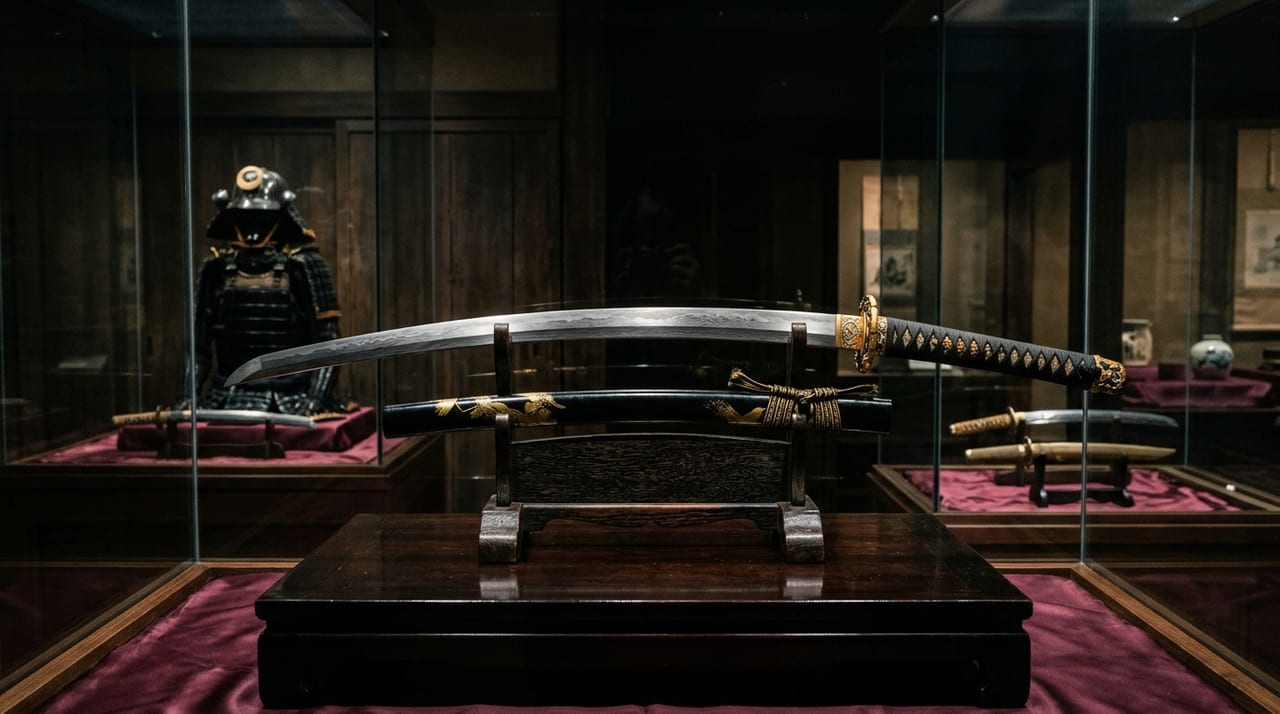
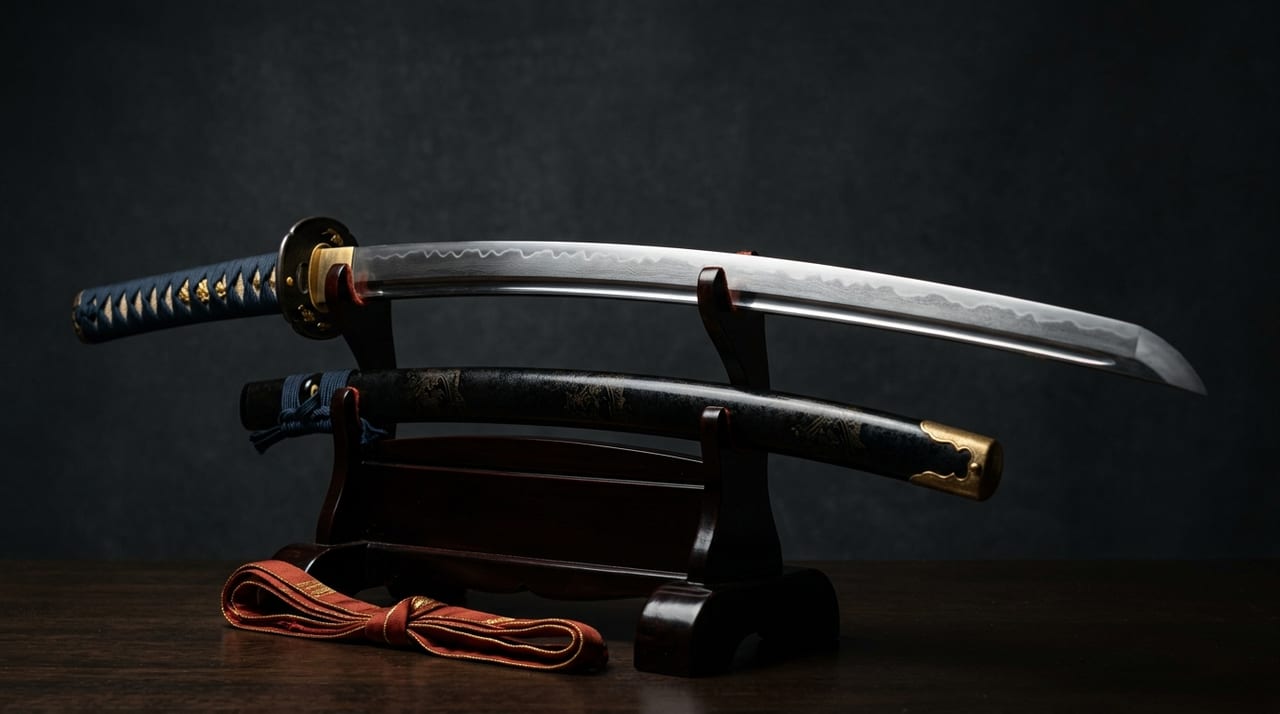
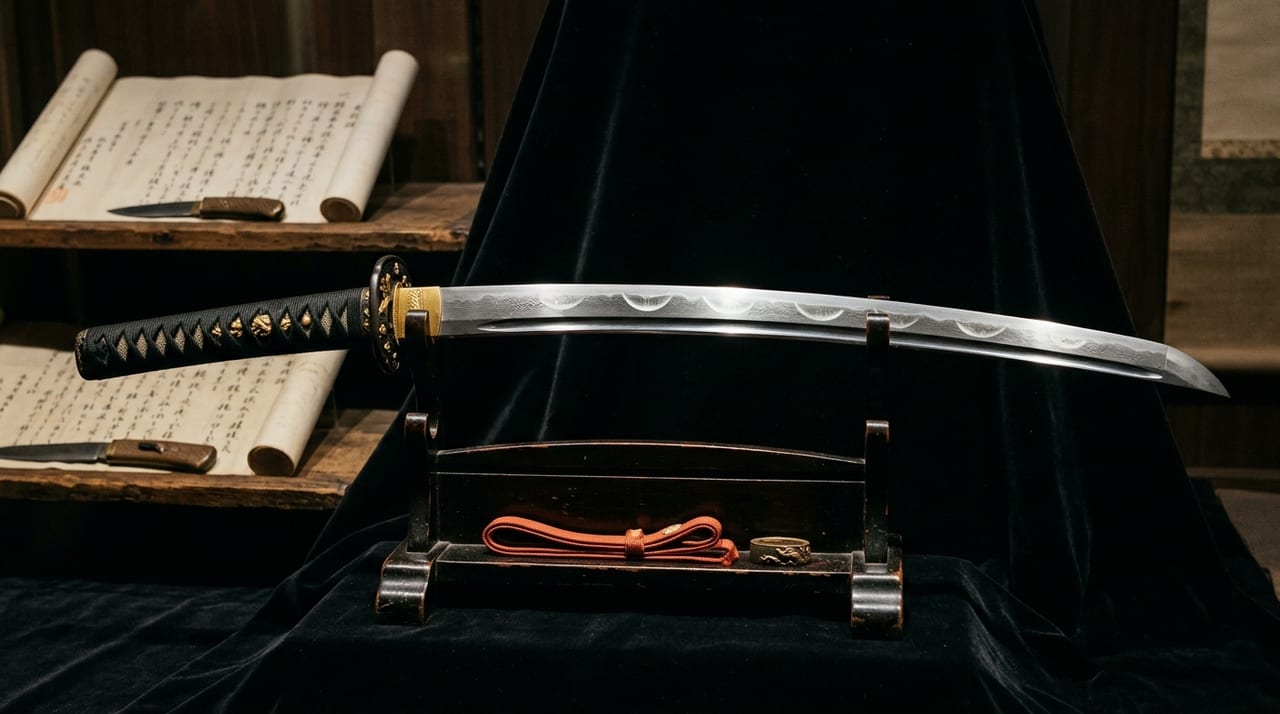
The Japanese Sword World After the Meiji Haitou-rei: The Reality of Defunct Sword Smiths and Surviving Schools
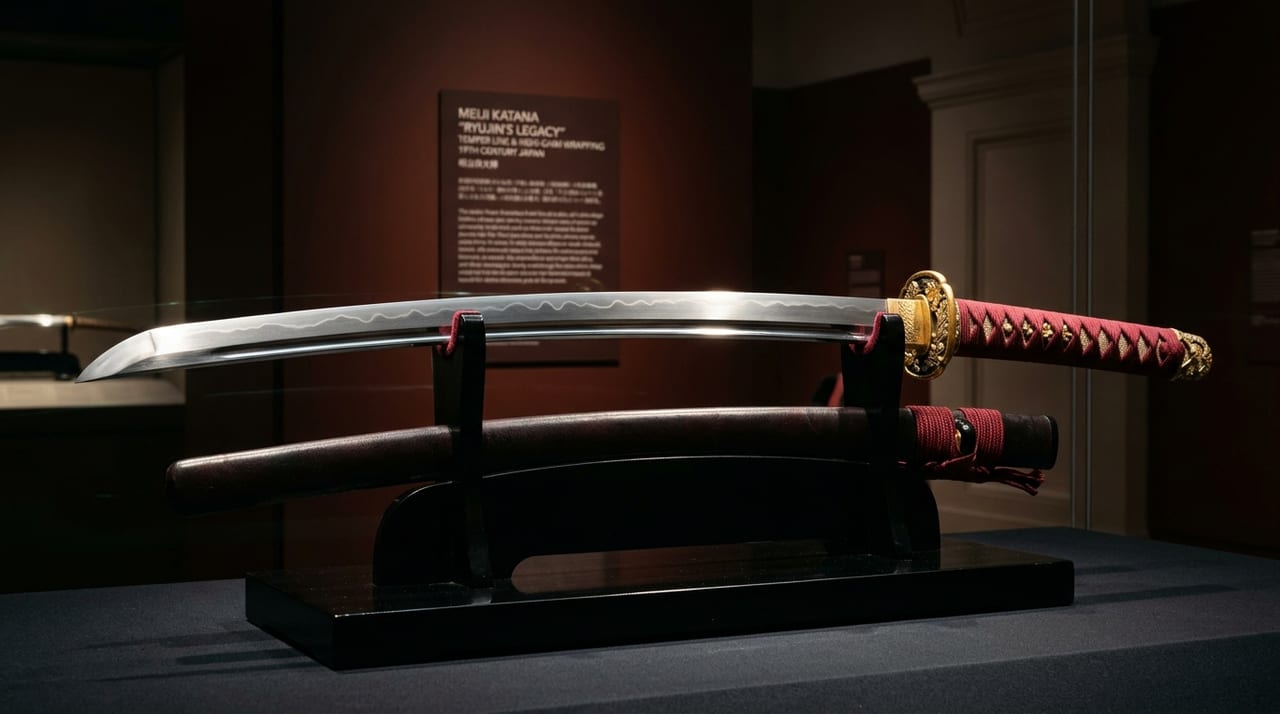 * Image is for illustrative purposes only.
Table of Contents
The Haitou-rei: The Policy That Instantly Devastated the Japanese Sword Industry
On March 28, 1876 (Meiji 9), the Meiji government issued the "Haitou-rei" (sword-bearing prohibition). Its official name was "Prohibition on Sword-Bearing Except for Court Dress, Military Personnel, Police Officials, and Other Government Officials in Their Official Uniforms," a decree that completely prohibited civilian sword-bearing except for military personnel, police officers, and imperial court ceremonies.
This single imperial edict fundamentally transformed Japan's sword industry. Although the practice of sword-bearing had been maintained even after the abolition of the samurai class (through the 1871 abolition of the domains and establishment of prefectures), this decree completely prohibited it, causing the primary market for swords to vanish instantly.
The Scale of the Japanese Sword Industry Before the Haitou-rei
To understand the impact of the Haitou-rei, it is necessary to know the scale of the industry before the edict.
The Japanese sword industry in the late Edo period (1850s–1860s):
- Number of sword smiths: Thousands across the nation (no definitive statistics, but considering domain-employed smiths and town smiths, the number was substantial)
- Major production centers: Throughout the nation, including Edo (Musashi), Osaka (Settsu), Bizen, Owari (Mino tradition), Satsuma, and Echizen
- Primary customers: The samurai class (regular sword replacement, inheritance, and gifting), demand from samurai rituals, and famous sword collections among high-ranking warriors
Although political instability in the late Edo period and the Boshin War (1868–1869) actually increased sword demand at times, the rapid Westernization following the Meiji Restoration gradually eroded that demand.
The Fate of Sword Smiths After the Haitou-rei: Three Paths
After the Haitou-rei, sword smiths diverged into three major directions:
The First Path: Closure and Career Change
The vast majority of sword smiths closed their businesses. In particular, mid- and lower-ranking smiths became farmers, merchants, or craftsmen in rural areas. Some converted to manufacturing iron products such as agricultural tools and carpentry tools, leveraging their sword forging skills.
Records show that many sword smith workshops in Mino (Gifu Prefecture), Settsu (Osaka Prefecture), and Musashi (Tokyo Prefecture), which had thrived in the late Edo period, closed in the early Meiji era.
The Second Path: Conversion to Industrial Technology
Some sword smiths with forging expertise converted to modern industries (machine parts and cutlery manufacturing). In Seki City, Gifu Prefecture (a center of Mino sword production), sword forging techniques were applied to manufacturing Western-style cutlery (knives, scissors, etc.), which became the foundation for today's "blade capital of Seki."
The Third Path: Specialization and Continuation in Artistic Swords
Some master and prominent sword smiths discovered a new market in "Japanese swords as art objects" and continued their craft. Those who chose this path were primarily:
- Master smiths who had already established high reputations: Students of the Suishinshi Masahide school, the Gassan school, and others
- Sword smiths supported by former daimyo and nobility: Assistance from former samurai families who continued to collect swords after the Meiji Restoration
- Connections with the Imperial Household Ministry (now the Imperial Household Agency): Demand remained for swords presented to the emperor and imperial family
Major Sword Smiths and Schools That Survived After the Haitou-rei
Gassan Sadakazu I (1836–1918)
A leading sword smith representing the Osaka-based Gassan school. He continued his work after the Haitou-rei until just before the 50th anniversary of the Meiji Emperor's enthronement in 1918. Gassan I symbolizes how sword smiths lived after the Haitou-rei.
Survival Strategy:
- Selling swords as art objects to the upper classes (former nobility and business leaders)
- Selling to overseas collectors (the Japanese art boom of the Meiji period)
- Exhibiting at art exhibitions and expos (such as the 1873 Vienna World's Fair)
Heirs of the Suishinshi School
The late Edo master Suishinshi Masahide (1750–1825) died before the Haitou-rei, but his techniques were passed on to his students. Even after the Haitou-rei, his students and students' students continued their work, and the lineage continued through the Showa period as heirs to the "Shinshintō (new new sword) techniques."
The Miyairi School
The Miyairi school, based in Nagano Prefecture (Shinshū), continued its activities after the Meiji period, with the lineage extending to Miyairi Gyokuhei (1913–1977), a designated National Treasure in the Showa period. It is likely that regional schools had lower closure rates than sword smiths in Tokyo and Osaka.
The Paradox of Meiji-Era "Sword Transformation into Art Objects"
The Haitou-rei eliminated demand for Japanese swords as practical tools. Yet simultaneously, it became an opportunity for Japanese swords to be re-evaluated as "art objects and antiques."
The "Japanese Art Boom" in the West
During the Meiji period, enthusiasm for Japanese art, called "Japonism," emerged in the West. Japanese swords attracted attention from Western art enthusiasts for their beautiful blade patterns and intricate mountings.
Japanese sword exhibits at international expositions, beginning with the 1873 Vienna World's Fair, became an opportunity to develop overseas collector markets.
Establishment of "Antique Value" Domestically
After the Haitou-rei, a culture of "appreciating and collecting Japanese swords as objects of admiration precisely because the era no longer permitted sword-bearing" spread among former samurai families and intellectuals in Japan. This shift became the foundation for modern Japanese sword collecting culture.
Reconstruction of the Sword World in the Meiji and Early Showa Periods
About 40 years after the Haitou-rei, around 1906 (Meiji 39), sword enthusiast organizations that became the predecessor of the "Japan Art Sword Association" began to form, and activities for the preservation, research, and promotion of Japanese swords resumed.
Imperial Craftsman (Teishitsu Gigeiin): The Meiji imperial household established a system to recognize and protect outstanding craftspeople and artisans as "Imperial Craftsmen." Some sword smiths benefited from this system and avoided closure.
Military Demand: During the military expansion period from the 1930s onward, demand for military swords (officer swords) revived. However, this was primarily "machine-made swords (Showa swords)" in mass production, and the benefits to traditional sword smiths were limited.
Conclusion: What the Haitou-rei Proved About the "Artistic Value" of Japanese Swords
Paradoxically, the Haitou-rei proved the value of Japanese swords as art objects. "There is something that endures even when utility is lost"—this proof created the cultural foundation that keeps Japanese swords alive in the modern era.
Upon the sacrifice of many closed sword smith workshops, a small number of survivors—the Gassan, Miyairi, and Suishinshi schools among them—pioneered a new form of Japanese swords called "artistic swords." The story of the sword smiths during this difficult era lies at the heart of modern Japanese sword history.