Neuheiten — Aktuelle Neuzugänge finden Sie in unserem Katalog. Ansehen →
Einblicke in das Wissen über japanische Schwerter und die Kultur
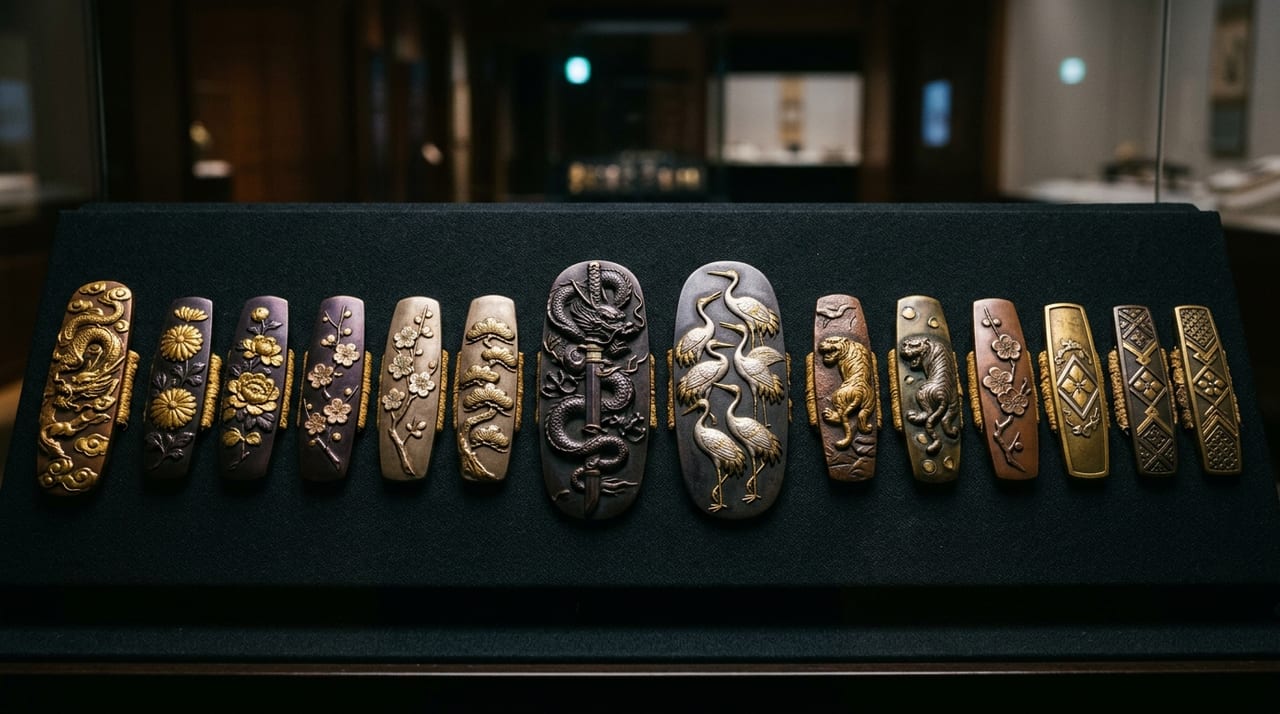
Small metal fittings attached to the handle—menuki (目貫). This article explains their original function as fasteners, their development as decorative elements, the richness of their subject matter, and the principal points of appreciation.
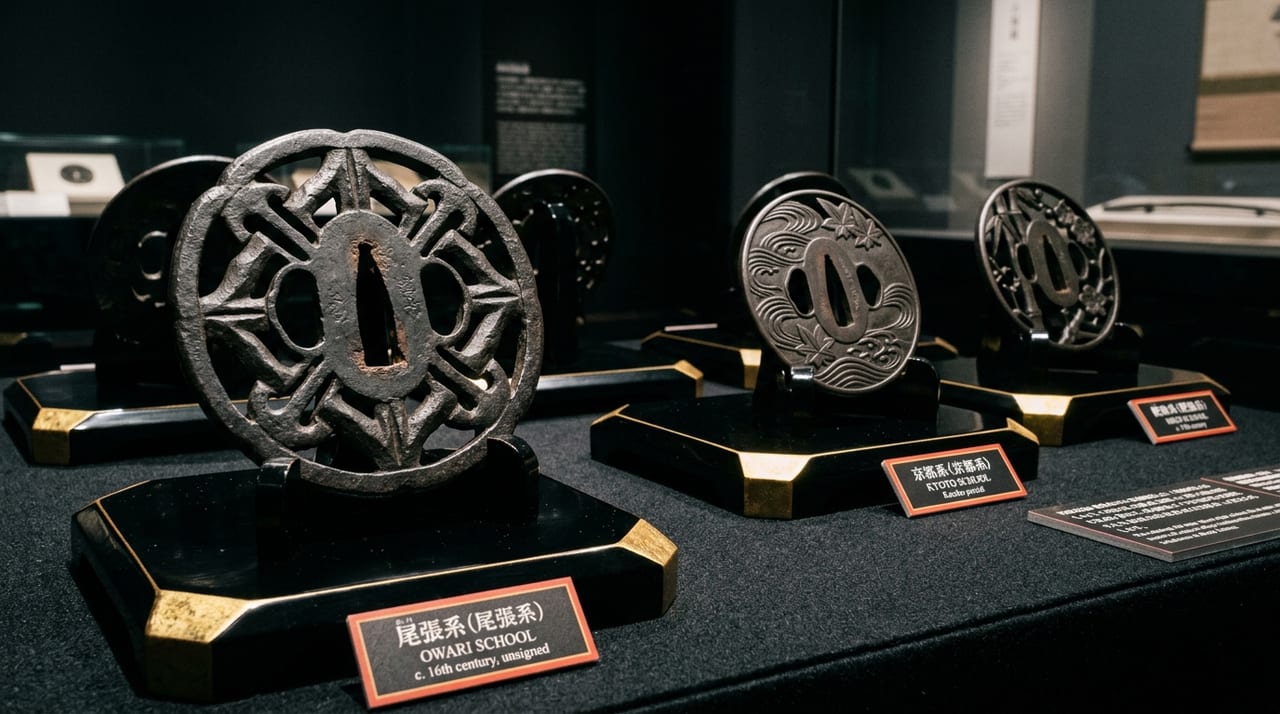
Openwork tsuba (透かし鐔) that create patterns through the iron ground. Explains the stylistic differences among the three major schools of Owari, Kyoto, and Higo, and key points for appreciation.
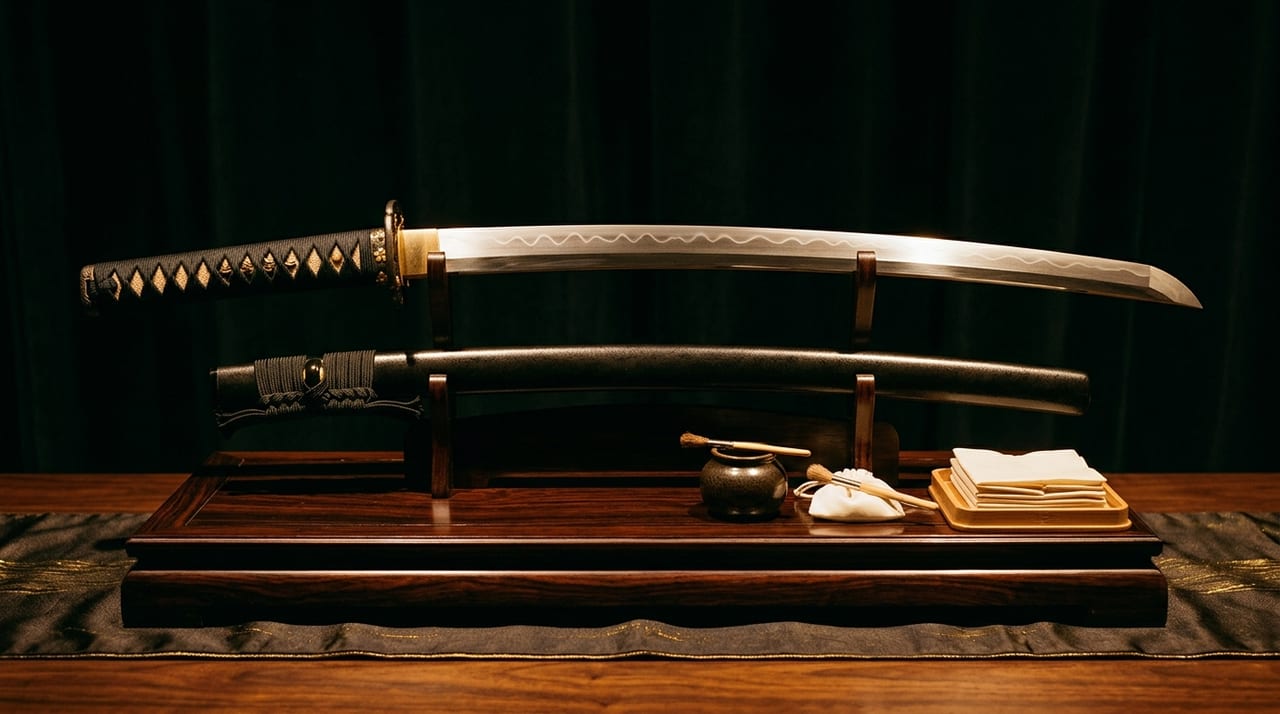
Daily maintenance and long-term preservation of Japanese swords using choji oil (丁子油) and strike powder (打粉). Covers proper application and seasonal care schedules, optimal storage conditions (40-55% humidity, 15-20°C) in paulownia boxes with desiccants, sheath management techniques to prevent loose mekugi (目釘) or stuck koguchi (鯉口), and practical troubleshooting for rust, vibration damage, and humidity problems to help collectors preserve swords for future generations.
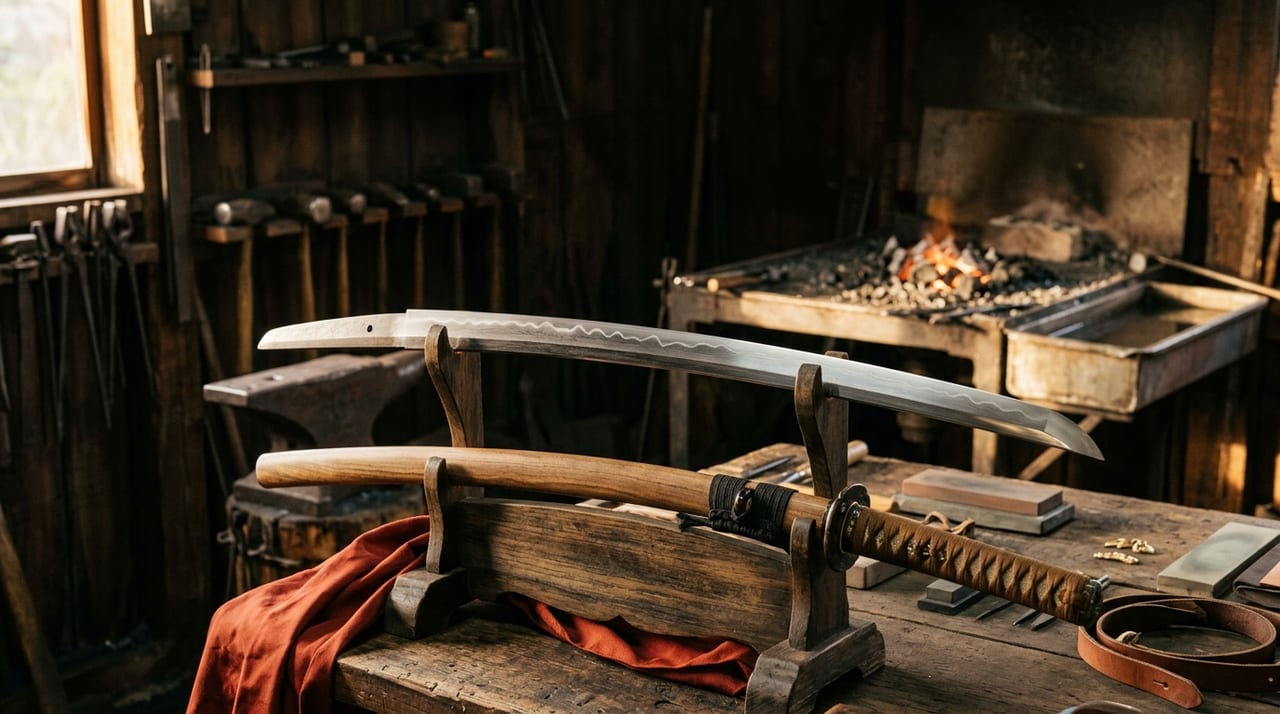
Japanese sword manufacturing faces a severe succession crisis across all occupational fields—sword smiths, togishi (研師), scabbard makers, and more. Economic barriers and declining apprenticeship applications have halted human resource regeneration. This article examines the rise of female craftspeople, regional employment realities, training challenges, and digital technology applications as paths toward the industry's sustainability.
The cutting performance of a Japanese sword is determined by the blade tip angle, or ha-kaku (刃角), and the finishing of the polish. An excessively acute angle makes the edge prone to chipping, while an obtuse angle diminishes cutting performance. This article explains how master swordsmiths (tosho / 刀匠) and sword polishers (togi-shi / 研師) design and achieve the balance between cutting performance and durability in their respective processes, drawing on both metallurgical knowledge and practical experience.
How did sword culture transform during the age of Matsudaira Sadanobu (松平定信), who led the Kansei Reforms (1787–1793)? This study examines how, as society regained stability after the turmoil of the Temmei Famine and the smashing of shops, a new intellectual current emerged: a reconsideration of swords' aesthetic values and the prelude to the shinshintō (新々刀) movement.
Tōza (刀座) 2026 is Western Japan's largest sword trading fair, held March 28–29 at Osaka Castle Hall with approximately 45 sword merchants. The article explains how this event complements online platforms like TOUKENZA through direct blade experience and expert dialogue. It examines the event's role as an industry networking hub and covers craftsman demonstrations, appraisal services, and legal regulations governing registered swords (touken, 刀剣).
The Kyoto National Museum's spring 2026 exhibition 'Bonds Tied by Swords' features national treasures and important cultural properties as an educational approach to sword appreciation. The exhibition demonstrates how swords served as media connecting historical figures, political power, and aesthetic traditions, providing a foundation for learning Japanese sword culture from beginners to experienced enthusiasts.
Japanese sword collectors traditionally formed an isolated hobby genre, but the proliferation of SNS and video platforms has revitalized online communities. This article examines how contemporary sword collectors connect with one another, explores the culture of information sharing, and considers the distinctions between online and in-person interaction.
Taikei Naotane (1778–1857) was a swordsmith who embodied the Shinshintō movement as a senior disciple of Suishinshi Masahide (水心子正秀), leaving behind outstanding forged blades during Edo's approach toward the end of the shogunate. Through deep research into the form, steel quality, and hamon (刃文) of ancient blades, and his skill in elevating this knowledge into his own work, he is counted among the 'Three Masters of Shinshintō.'
In the Sengoku period's war economy, weapon procurement costs dealt a direct blow to daimyo finances. This article examines the weapons market that sustained the hidden economy of war—the market prices and supply routes for swords, spears, and firearms respectively; the compensation structure for sword smiths; and price negotiations during mass procurement—from the perspectives of economic and commercial history.
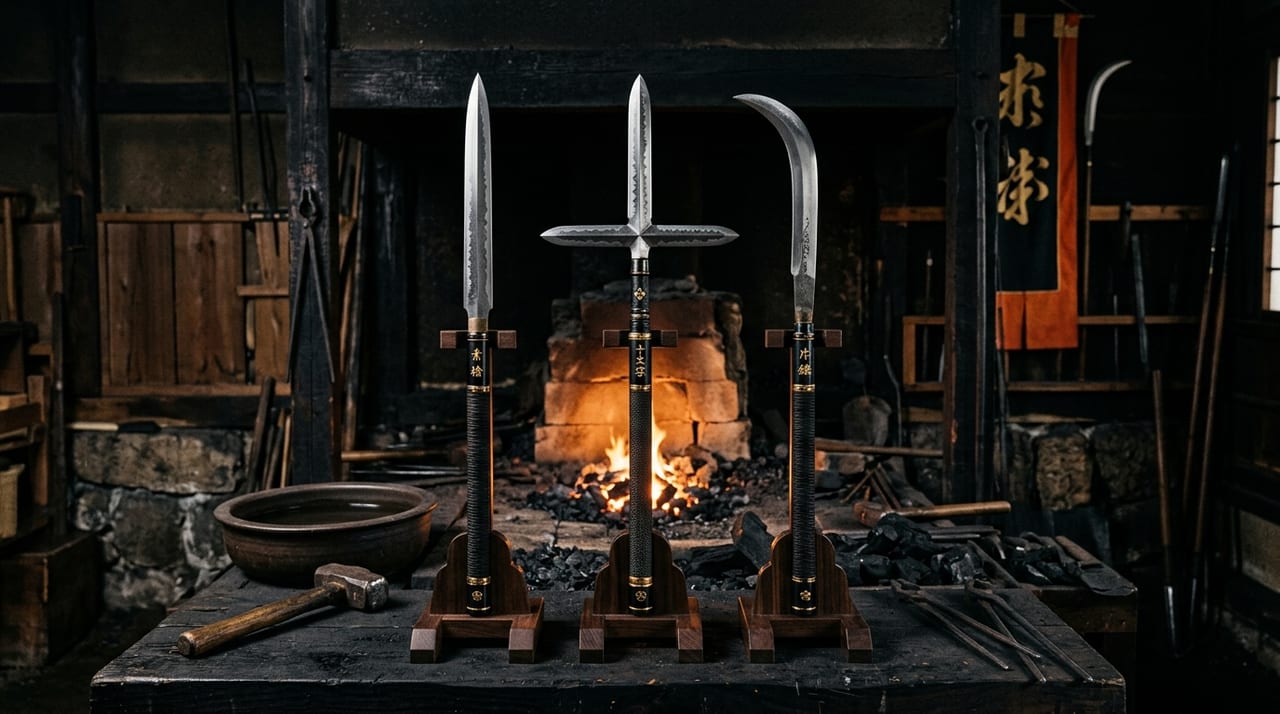
Spears (槍) are forged by the same swordsmiths as Japanese swords, but their manufacturing process differs significantly. This guide systematically explains spear-specific forging techniques—including techniques varying by blade-tip shape—jumonji (十文字), suayari (素槍), and katakamaayari (片鎌)—the placement of the shinogi (鎬), nakago (中子) finishing, and hardening control.