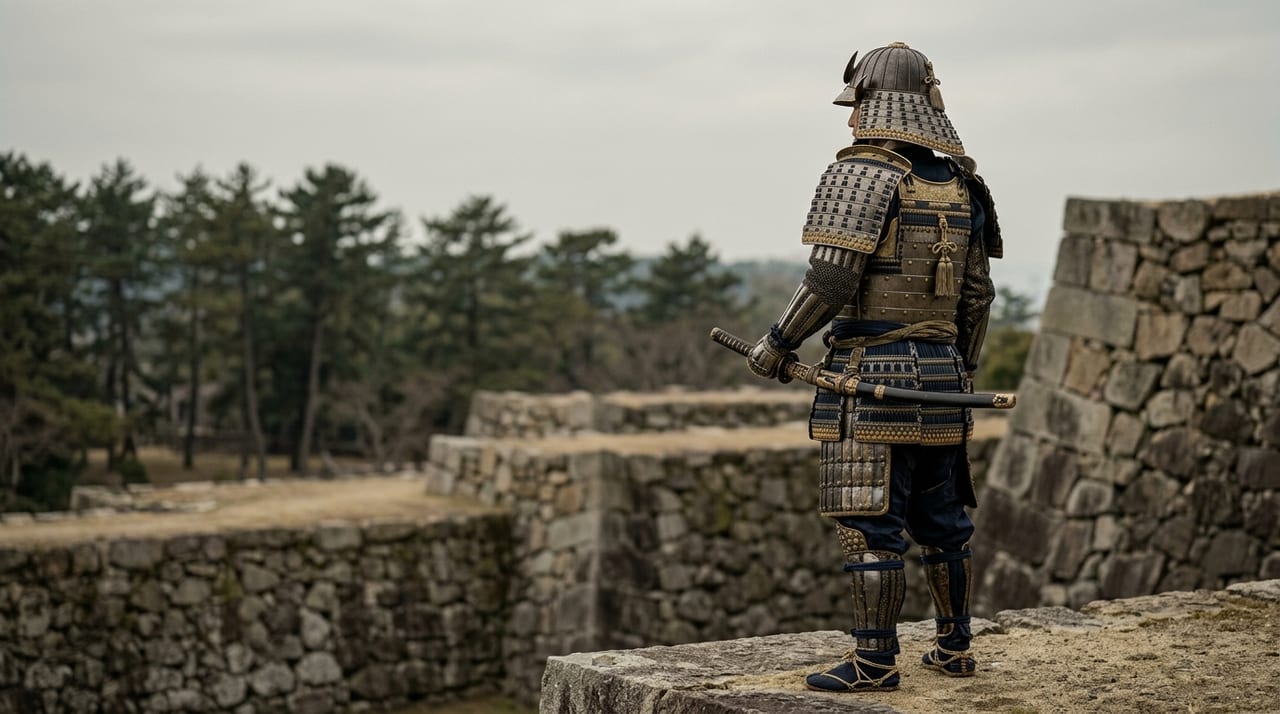
 * Image is for illustrative purposes only.
Yūki Hideyasu
結城秀康
Second son of Tokugawa Ieyasu and founder of the Echizen Matsudaira clan, a renowned general who ruled from Kita-no-shō Castle
Description
Yūki Hideyasu (1574-1607) was a samurai commander and daimyō. He was born as the second son of Tokugawa Ieyasu, passed through adoption into the Toyotomi family and the Yūki family, and was then transferred to Kita-no-shō in Echizen (present-day Fukui City, Fukui Prefecture). As the first lord of the Echizen Matsudaira family (Fukui Domain), he ruled 680,000 koku and made a name for himself as a leading power of Hokuriku. Although he was a commander of outstanding martial skill, he fell into political disfavor when his younger brother Hidetada took the shogunate. Even so, his achievements in building the foundations of domain governance are great.
Hideyasu was born in Tenshō 2 (1574) to Tokugawa Ieyasu and a concubine, Oman no Kata. Although he excelled in martial arts from an early age, after the peace settlement that followed the Battle of Komaki and Nagakute in Tenshō 12 (1584), he was sent as a hostage to Toyotomi Hideyoshi. He then became the adopted heir of Yūki Harutomo, a prominent house of the Kantō region, and succeeded to the Yūki family. At the Battle of Sekigahara in Keichō 5 (1600), he remained at Utsunomiya on the Eastern Army side, where he checked Uesugi Kagekatsu. After the battle, he was granted Kita-no-shō in Echizen with 680,000 koku.
Hideyasu greatly remodeled Kita-no-shō Castle, making it the predecessor of present-day Fukui Castle, and devoted himself to developing the castle town. However, from around Keichō 11 (1606) he fell ill, and in Keichō 12 (1607) he died young at the age of 34. It is said that his death was caused by syphilis, and many voices lament the untimely end of this young and renowned general.
In connection with Japanese swords, Hideyasu is a figure whose bond with the sword Dōjigiri Yasutsuna is passed down in tradition. Dōjigiri Yasutsuna is one of the Tenka Goken (Five Great Swords under Heaven), forged by Yasutsuna, a master smith of the Heian period, and is famous as “the sword that cut down Shuten-dōji.” Tradition holds that this celebrated sword was given to Hideyasu by Ieyasu in Tenshō 12 (1584), and that it was later passed down in the line of Hideyasu's son Matsudaira Tadanao (Tsuyama Matsudaira family). It is now held by the Tokyo National Museum as a National Treasure. As one of Japan's oldest celebrated swords, it receives special reverence from sword enthusiasts. Also, a Masamune sword given by Ishida Mitsunari in return for an escort is called “Ishida Masamune.” It is held by the Tokyo National Museum as an Important Cultural Property. Hideyasu's warrior temperament and his connections to these celebrated swords together mark an important page in the history of swords, spanning from the Sengoku to the Edo period.
Notable Swords
- Dōjigiri Yasutsuna – One of the Tenka Goken (Five Great Swords under Heaven), a National Treasure passed down in the Echizen Matsudaira (Tsuyama Matsudaira) family
- Ishida Masamune – A sword by Masamune given to Hideyasu by Ishida Mitsunari (Important Cultural Property, Tokyo National Museum)