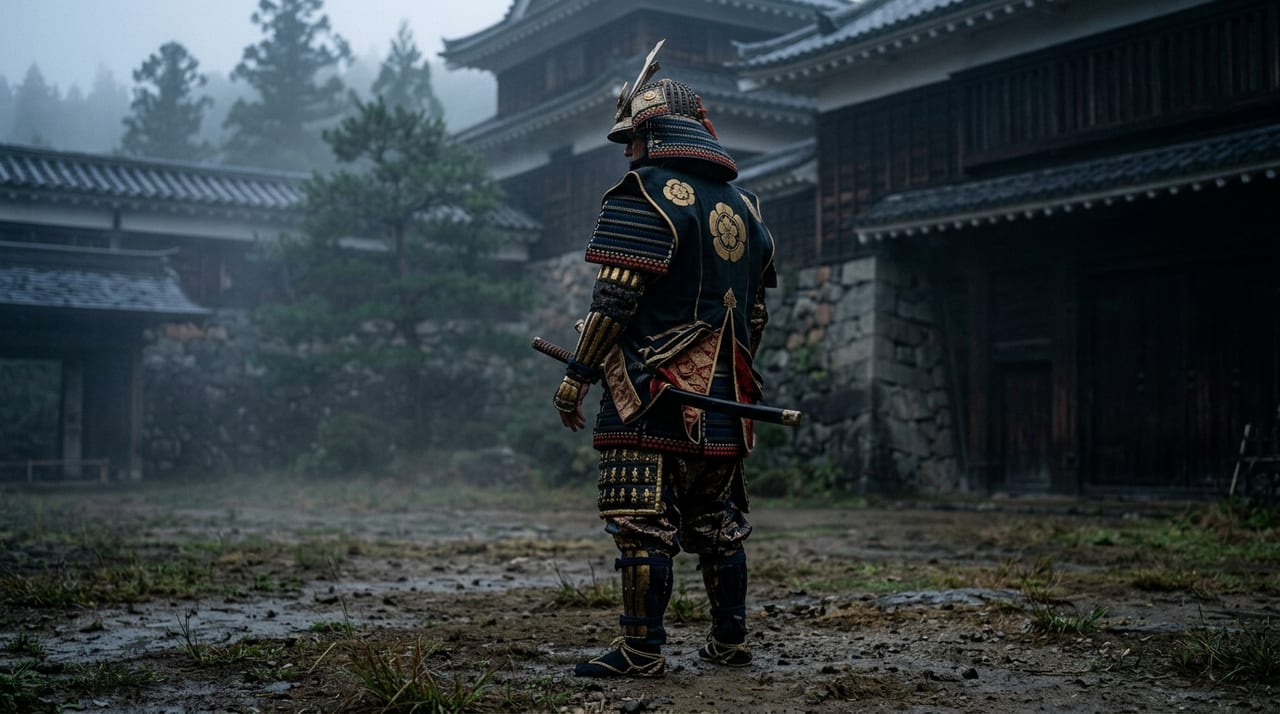
 * Image is for illustrative purposes only.
Oda Nobukatsu
織田信雄
Second Son of Nobunaga — Successor of the Oda Clan Who Allied with Ieyasu Against Hideyoshi at the Battle of Komaki and Nagakute
Description
Oda Nobukatsu (1558–1630) was a samurai commander and daimyō who was born the second son of Oda Nobunaga and succeeded to the Oda family headship after his father's death. In the Battle of Komaki and Nagakute in Tenshō 12 (1584), he cooperated with Tokugawa Ieyasu against Toyotomi Hideyoshi, and his actions affected the political situation at the end of the Sengoku period. Although his life was full of turbulence, he lived to the age of 73 and was one of the few Sengoku daimyō to survive into the early Edo period.
Nobukatsu was born in Eiroku 1 (1558) as the second son of Oda Nobunaga. His childhood name was Chasenmaru. He became an adopted heir of the Kitabatake clan of Ise, and in the Mise Incident of Tenshō 4 (1576) he killed Kitabatake Tomonori and other members of the Kitabatake family, bringing Ise under his control. When Nobunaga died a violent death in the Honnōji Incident (1582), Nobukatsu was installed as leader by Hashiba Hideyoshi, and in the Battle of Shizugatake he came into conflict with the side of Shibata Katsuie and Oda Nobutaka.
In Tenshō 12 (1584), Nobukatsu formed an alliance with Tokugawa Ieyasu and rose in revolt against Hideyoshi. In the Battle of Komaki and Nagakute, he fought against Hideyoshi's forces on at least equal terms under Ieyasu's command. However, in the 11th month of the same year, Nobukatsu concluded peace with Hideyoshi on his own initiative, which surprised Ieyasu. Because of this separate peace by Nobukatsu, the war effectively ended. He then continued as a daimyō under Hideyoshi's regime, but after the Odawara Campaign of Tenshō 18 (1590) he was deprived of his domain for refusing a transfer to the former territories of Ieyasu. He sided with the Western Army in the Battle of Sekigahara and was again stripped of his domain. After the Ōsaka Campaign, in Genna 1 (1615), Ieyasu granted him 50,000 koku, including Uda District in Yamato Province, and he returned to the status of daimyō. He died in Kyoto in Kan'ei 7 (1630).
Regarding Japanese swords, Nobukatsu's father Nobunaga was a well-known sword collector who owned famous swords of the realm, including Yagen Tōshirō and Heshikiri Hasebe. In his later years, Nobukatsu enjoyed tea and falconry in Kyoto, and he was also known as a cultured figure and an accomplished Noh performer. In Keichō 19 (1614), ahead of the Ōsaka Campaign, Ieyasu gave him a Samonji sword and a wakizashi by Yukimitsu.
Notable Swords
- A Samonji katana and a Yukimitsu wakizashi (given by Tokugawa Ieyasu in Keichō 19 (1614))