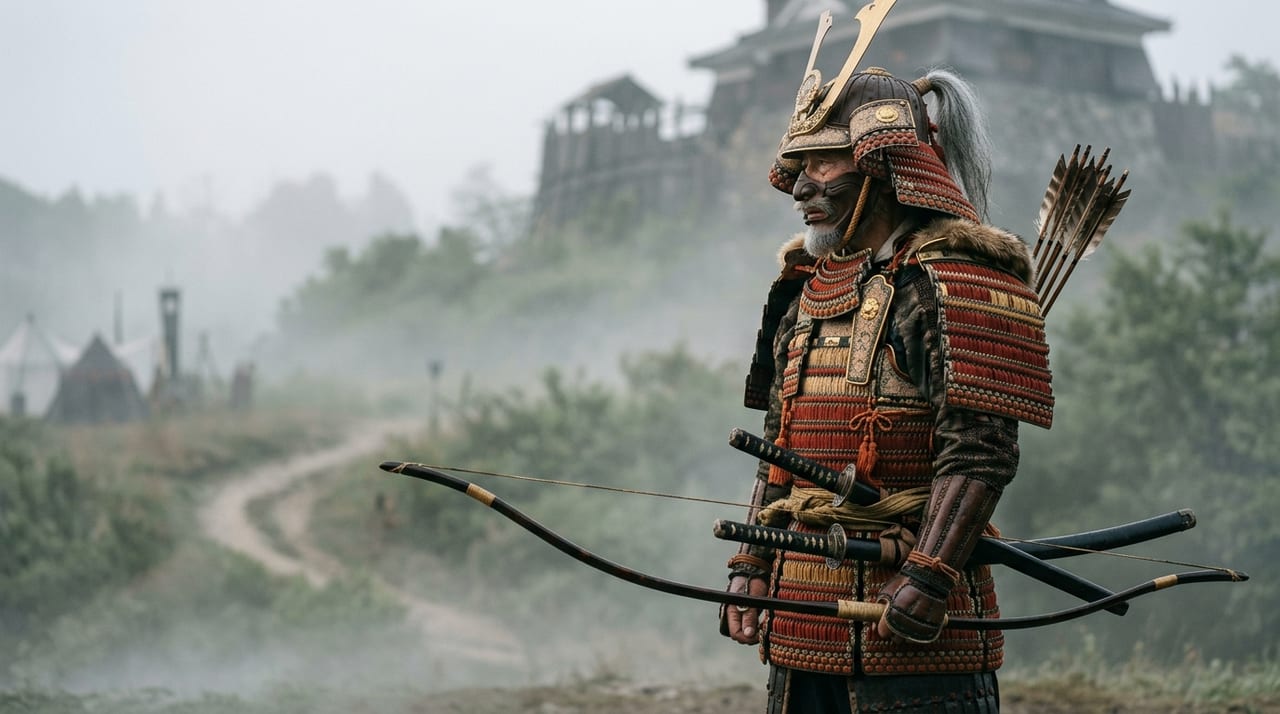
 * Image is for illustrative purposes only.
Ōtomo Yoshimune
大友義統
The Last Daimyo of the Bungo Ōtomo House: A Tragic Warlord Who Withdrew from the Korean Campaign and Was Stripped of His Domain
Description
The Heavy Responsibility Inherited as Ōtomo Sōrin's Eldest Son
Ōtomo Yoshimune, born in Eiroku 1 (1558) as the eldest son of Ōtomo Sōrin, became the last daimyō of the Ōtomo house, which was based in Bungo Province (present-day Ōita Prefecture). While his father, Sōrin, made a name for himself as the greatest daimyō in Kyushu, Yoshimune grew up under pressure as his heir and succeeded to the headship of the house in Tenshō 4 (1576). However, real power still rested with his father, Sōrin. After the Ōtomo suffered a major defeat to the Shimazu clan at the Battle of Mimikawa in Tenshō 6 (1578), the Ōtomo's influence declined sharply, and Yoshimune found himself in a difficult position.
Regaining Favor under the Toyotomi Regime and the Korean Campaigns
Following Toyotomi Hideyoshi's Kyushu Campaign (1587), the Ōtomo house was confirmed in possession of all of Bungo Province, and Yoshimune served as a direct retainer of Hideyoshi. In the Bunroku campaign (1592), he dispatched troops to Korea. However, at the Battle of Pyongyang (1593), he did not support the army of Konishi Yukinaga, which was being attacked by the massed Ming and Joseon armies and retreating. Because he had withdrawn on his own, he incurred Hideyoshi's wrath and was subjected to kaieki (attainder: confiscation of his domain). This kaieki was fatal for Yoshimune, and the Ōtomo house effectively perished.
Revival of the Ōtomo House and Later Years
In the Battle of Sekigahara (1600), he sided with the Western Army and raised troops in Bungo. At the Battle of Ishigakibaru, however, he was defeated by the forces of Kuroda Josui and Matsui Yasuyuki of the Hosokawa house, and he surrendered. He died in Keichō 10 (1605), early in the Edo period, at the age of 48 (by East Asian reckoning). Yoshimune's life is handed down to posterity as embodying the glory and decline of the Ōtomo house, which once reigned over Kyushu.