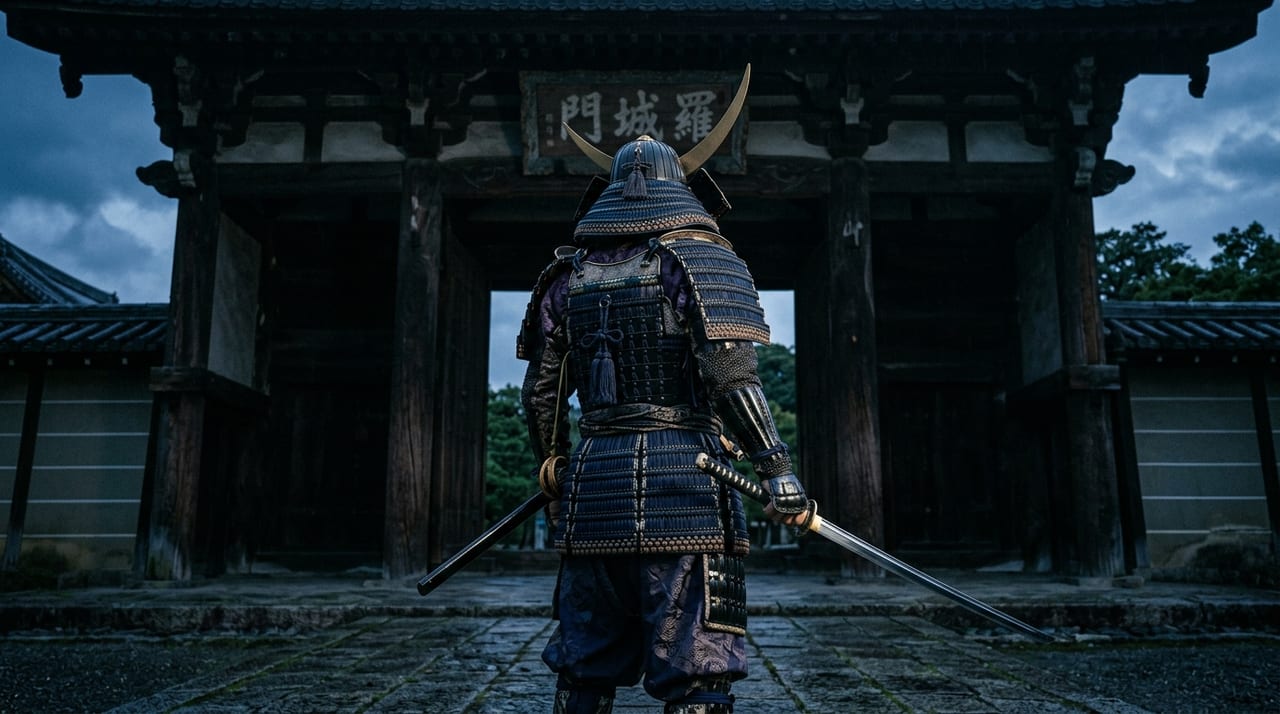
 * Image is for illustrative purposes only.
Kobayakawa Hideaki
小早川秀秋
The Defector of Sekigahara — The Man Who Decided Japan's Fate
Description
As Hideyoshi's Nephew
In Tenshō 10 (1582), Kobayakawa Hideaki was born as the nephew of Toyotomi Hideyoshi's principal wife, Nene. Initially named Toyotomi Hidetoshi, he was a young lord cherished as a future heir, adopted by Hideyoshi, the kampaku (regent). However, with the birth of Hideyoshi's own son, Hideyori, Hideaki's position became precarious, and he was sent out as an adopted heir to the Kobayakawa family, a branch house of the Mōri. Having inherited the headship of the distinguished Kobayakawa house, he was expected to become a principal pillar of the Toyotomi regime as daimyō of Najima in Chikuzen Province, with about 300,000 koku.
Trials in the Keichō Campaign
In the Keichō campaign (second Korean invasion), in Keichō 2 (1597), Hideaki crossed over at the age of sixteen as commander-in-chief of the entire army and was stationed at Busan. The following year, Keichō 3 (1598), upon returning home, he was reduced in fief and moved to Kitanoshō in Echizen Province. This reduction is often attributed to his rash actions at the Siege of Ulsan, but no primary source confirms that Hideaki took part in the Siege of Ulsan, and in recent years it has been considered unrelated.
Dilemma Before Sekigahara
In the Battle of Sekigahara in Keichō 5 (1600), Hideaki initially took the field on the side of the Western Army (Ishida Mitsunari and Mōri Terumoto). But his heart was in turmoil. Tokugawa Ieyasu had been urging Hideaki to defect from the start, and Hideaki agonized between his loyalty to the Toyotomi house and Ieyasu's enticements. On the battlefield of Sekigahara, he set up camp on Mount Matsuo and watched the situation. Standing on a neutral height where he could come under attack from either the Western or the Eastern Army, he waited for the moment that would decide his fate.
The Decisive Moment: Gunfire and Betrayal
On the 15th day of the 9th month of Keichō 5 (1600), the Battle of Sekigahara fell into a stalemate. Neither the Western nor the Eastern Army had a decisive blow, and the whole battlefield was in a breathless equilibrium. According to the traditional account, Ieyasu, irritated with Hideaki for remaining a spectator, fired guns at Hideaki's camp on Mount Matsuo (the so-called toi-deppō, the "questioning volley"), and this prompted Hideaki to resolve to turn against the Western Army and join the Eastern Army. However, the authenticity of the toi-deppō and the time at which Hideaki moved are subject to various theories. From Mount Matsuo, a force reportedly numbering some 15,000 attacked Ōtani Yoshitsugu's camp. Ōtani's forces repeatedly pushed them back, but when Wakisaka Yasuharu, Kutsuki Mototsuna, Ogawa Suketada, and Akaza Naoyasu also defected to the Eastern Army one after another, they were annihilated, and the Western Army collapsed completely.
Confrontation with Ōtani Yoshitsugu
The first target of Hideaki's attack was Ōtani Yoshitsugu's camp. Ōtani Yoshitsugu, though suffering from a grave illness (presumed to be Hansen's disease), took the field at Sekigahara and had deployed troops facing Mount Matsuo to guard against Hideaki's defection. Even in the hopeless situation, he fought on to the end, but overwhelmed by numbers, he took his own life. His death, falling to the very betrayal he had anticipated, left a deep impression on people in later generations.
Swords and a Short Final Life
As a result of the victory at Sekigahara, Hideaki became a great daimyō with 550,000 koku in Bizen-Okayama. However, his final years were extremely brief. Only two years after Sekigahara, in Keichō 7 (1602), he died suddenly at the young age of twenty-one. Historical records cite debilitation from drink as the cause of death, but a legend spread that he went mad and died in fear of the vengeful spirit of Ōtani Yoshitsugu. It is also said that in his last years he cried out in terror every night at the phantom of Ōtani Yoshitsugu. As for the swords Hideaki possessed, it is thought that as lord of the Okayama domain he collected famous blades befitting his station, but because of his short rule and disordered last years, detailed records are scarce.
Judgment of History
Kobayakawa Hideaki is often treated in Japanese history as the byword for "traitor." But this is a simplified view that overlooks the complexity of the situation Hideaki faced. Torn between loyalty to the Toyotomi house and the survival of his own house, and tossed about under the pressure of the powerful Tokugawa Ieyasu, the anguish of this nineteen-year-old young man cannot be dismissed with the simple verdict of "traitor." It is a fact that Hideaki's choice decisively changed the course of Japanese history, and in that sense he stands as a figure symbolizing the anguish and decision of an individual placed at a turning point of history, continuing to pose questions to later generations.