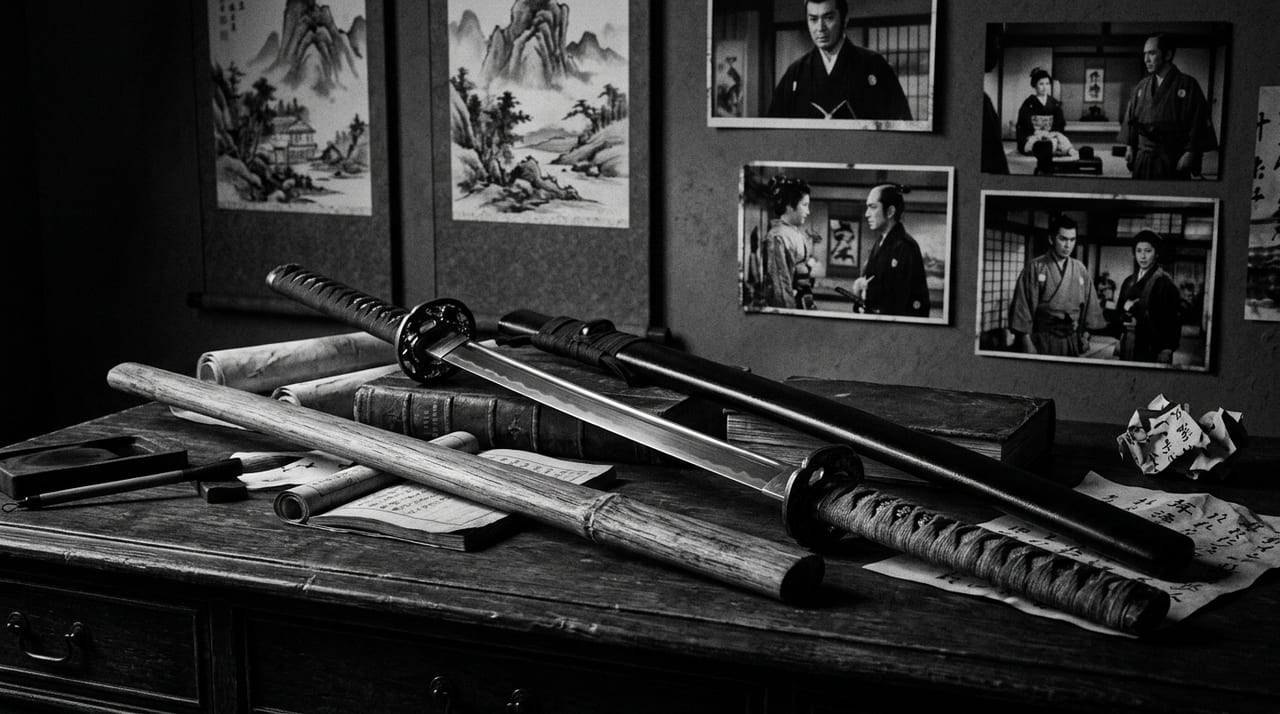
 * Image is for illustrative purposes only.
Harakiri
切腹
Anti-bushido masterpiece directed by Masaki Kobayashi (1962). Set in early Edo-period samurai society, the film follows the tragedy of a young rōnin forced to commit seppuku with a bamboo sword (takezao), exposing the hypocrisy of bushido and the true meaning of the blade. Winner of the Special Jury Prize at Cannes. Starring Tatsuya Nakadai, screenplay by Shinobu Hashimoto. A devastating examination of the sword as soul versus sword as formality.
Description
Harakiri — The Bamboo Sword That Exposes Bushido's Hypocrisy and the Soul of the Japanese Blade
Harakiri (1962) by director Masaki Kobayashi — known also for The Human Condition and Kwaidan — stands as perhaps the sharpest cinematic examination of what the Japanese sword truly means, evaluated not by the blade's beauty but by its moral content. Winner of the Special Jury Prize at Cannes and a declared influence on filmmakers from Sam Raimi to Quentin Tarantino, the film asks without compromise: what separates holding a sword from possessing a sword's spirit?
### The Bamboo Sword Paradox — Real Blade and False Blade
The film's central shock is the takezao — a bamboo replica blade made to look indistinguishable from a real sword. In the Edo period, desperately poor rōnin used bamboo swords to maintain the appearance of armed samurai status when they could not afford steel. The outward form was preserved; the essential substance was hollow.
The tragedy pivots on the discovery that a young rōnin — the son-in-law of the protagonist Hanshiro — carried only a bamboo sword when forced to commit seppuku in the Ii clan's courtyard. Bamboo cannot cut. Seppuku performed with a bamboo blade extends what should be a matter of minutes into hours of unbearable agony. Through this scene, Kobayashi burns into the viewer the gap between the form of ritual (the bamboo sword) and the spirit it claims to embody (the real blade's clean mercy).
### The Ii Clan's Hypocrisy and the Blade as Class Symbol
The social structure Kobayashi indicts connects directly to sword culture. Under the Tokugawa system, the samurai was required to treat his sword as a symbol of his soul — yet impoverished rōnin could not afford real swords, and the system created the conditions for bamboo blades to multiply silently. This historical reality is the ancestor of the modern collector's paradox: the sword as object of reverence versus the sword as inaccessible ideal. Harakiri makes this paradox concrete and devastating.
### Hanshiro's Swordsmanship and the Art of Minimum Force
Protagonist Tsugumo Hanshiro (Tatsuya Nakadai) is a master of Ittō-ryū, one of the two dominant Edo-period sword schools alongside the Yagyū Shinkage-ryū. His swordsmanship in the film is not theatrical — it is economical, targeting vital points with the minimum motion required, embodying the school's philosophy of rational simplicity. In his acts of revenge against the Ii clan's retainers, Hanshiro cuts off their topknots — the symbolic marker of samurai status — with his blade, enacting the ultimate humiliation: stripping a man of his warrior identity with the very tool that confers it.
### Perspective for Sword Collectors
For Japanese sword enthusiasts, Harakiri is an essential reference point on the cultural history of the bamboo sword — the takezao as evidence of how profoundly social access to real swords shaped Edo-period warrior society. The film's interrogation of the gap between "the sword as soul" and "the sword as socially inaccessible object" illuminates the historical context within which modern collecting culture developed. Understanding what it meant to be a rōnin without a real sword in the Edo period is prerequisite knowledge for anyone serious about Japanese blade culture, and this film makes that understanding viscerally real.
See authentic Japanese swords
See authentic Japanese swordsThis page is intended to introduce Japanese sword culture and is not affiliated with any of the works mentioned.