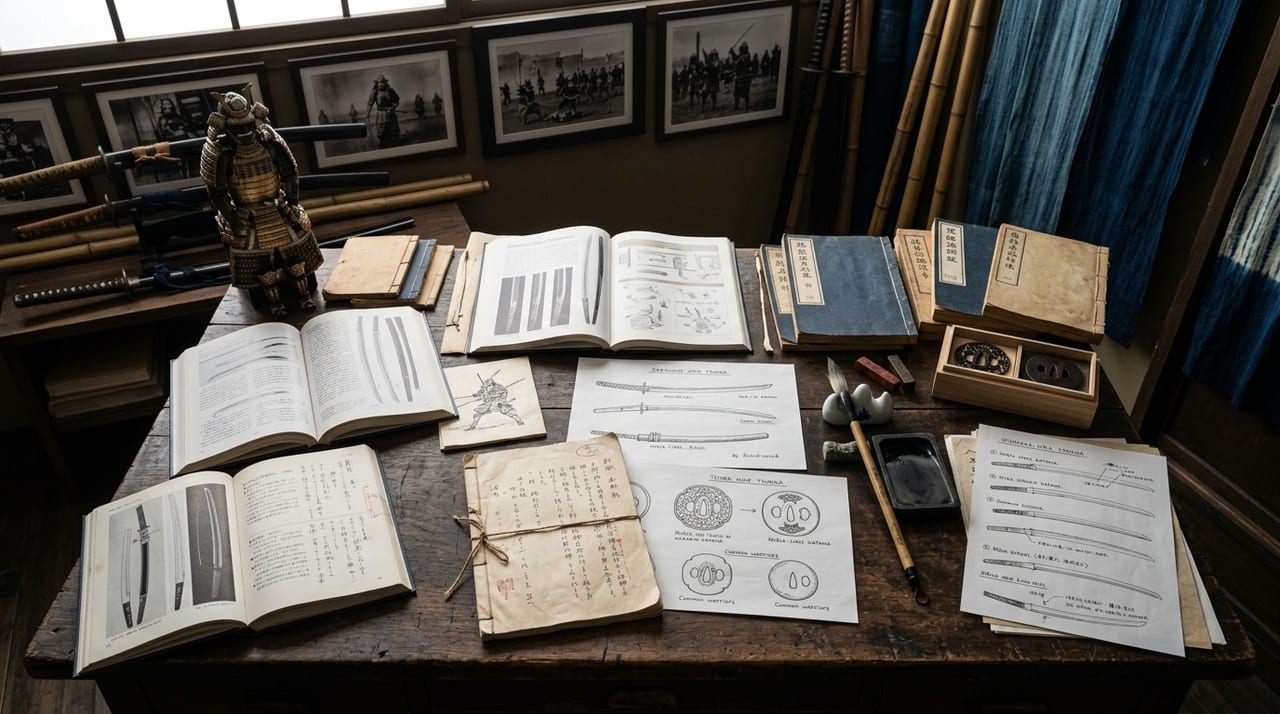
 * Image is for illustrative purposes only.
Seven Samurai
七人の侍
Akira Kurosawa's 1954 enduring masterpiece, one of the most influential works in the history of world cinema. Set in the late Sengoku period, its story of seven masterless samurai gathered to protect a village from bandits vividly depicts the social role of the samurai and the practical side of the sword. It is a monumental work that made Japanese swordcraft known to the world, and it influenced countless films, including The Magnificent Seven, Star Wars, and Mad Max.
Description
A Masterpiece of Film History
Akira Kurosawa's “Seven Samurai” (1954) is not only the greatest Japanese film ever made but also firmly holds a place as one of the most influential works in world film history. The film is set in late Sengoku-period Japan and depicts a farming village, terrorized by bandit raids, that hires seven masterless samurai (rōnin) to defend it. Within this three-and-a-half-hour epic, the social role of the samurai, the tensions between social classes, and the practical and symbolic meanings that swords held are vividly portrayed.
Rigorous Historical Accuracy
Kurosawa established a realism unprecedented in traditional jidaigeki through meticulous scripting and historical research, and he brought in Yoshio Sugino to provide swordsmanship instruction. The rōnin Kambei wears a tantō and a tachi mounted in uchigatana fittings, while Kikuchiyo, born a peasant yet calling himself a samurai, carries a long blade over his shoulder. Swords of the Sengoku period spanned an extremely wide range of quality, from mass-produced practical blades to masterpieces forged to order. The Sengoku period was a time of chronic warfare following the Ōnin War (1467), and demand for swords grew explosively. To meet this demand, the Sue-Bizen smith group of Bizen Province—Sukesada, Katsumitsu, Tadamitsu, and others—produced large quantities of practical swords while also forging masterpieces to order. In Seki in Mino Province, master smiths such as Kanemoto (Magoroku Kanemoto) and Kanesada (Izumi-no-kami Kanesada) forged battle-ready swords typified by the sanbon-sugi hamon, and they earned enormous support from Sengoku warlords.
Kikuchiyo and Swordplay
After studying actual swordsmanship movements, Kurosawa established his own directorial method that balanced cinematic power with the realism of swordplay. This technique influenced many later action films, and “Seven Samurai” was remade as the Western The Magnificent Seven (1960). George Lucas has said he was enormously impressed by “Seven Samurai,” and the Star Wars series is well known for being deeply influenced by this film. Kurosawa's jidaigeki quite literally shaped the direction of world cinema.
Diverse Weapon Use
The film honestly depicts a wide variety of weapons, including tachi, uchigatana, wakizashi, bows, and spears, showing that Sengoku battle was not fought with swords alone but unfolded through a combination of different weapons. This too is a sign of Kurosawa's realism: it conveys the reality of the Japanese sword accurately without overmythologizing it.
Real Swords Featured
Swords of the Sengoku Period
The swords forged during roughly 150 years of warfare that began with the Ōnin War (1467). Chronic conflict drove demand for swords up explosively, and large numbers of practical blades were produced, centered on Bizen and Mino. At the same time, prestige pieces were forged to the orders of Sengoku daimyō, so mass-produced and artistic works coexisted. Fighting styles also changed greatly, shifting from mainly mounted combat to group infantry combat centered on ashigaru, which advanced the transition from tachi to uchigatana. Blade lengths also tended to get shorter, and more practical dimensions that were easier to handle came into favor.
Wakizashi
Swords with a blade length between one shaku (about 30 cm) and two shaku (about 60 cm). The “daishō” style of wearing a wakizashi together with an uchigatana at the waist was established as the formal manner of samurai sword-wearing in the early Edo period, but wakizashi were already widely used as auxiliary weapons during the Sengoku period. They played an important role in complementing the main sword (daitō), such as when its blade was chipped, in combat in confined spaces, or for finishing an opponent in close-quarters grappling. There was also a period when townspeople and farmers, who were not samurai, were permitted to wear swords, and the wakizashi was carried as a self-defense tool regardless of social status. In Seven Samurai, the rōnin are shown wearing daishō, visually expressing the samurai culture of sword-wearing.
Sue-Bizen
A general term for the groups of smiths of Bizen Province from the late Muromachi period through the Sengoku period. Representative are Sukesada, Katsumitsu, and Tadamitsu, who descend from the Osafune school and produced large quantities of practical swords to meet the explosive demand of the Sengoku period. At the same time, special orders called “chūmon-uchi” were forged with great care, and many artistically accomplished works bear inscriptions with the name of the patron or the date. In particular, Yosozaemon-no-jō Sukesada was a master smith who represents the Sue-Bizen. Because Sue-Bizen swords survive in large numbers and are relatively easy to obtain, they are ideal for beginning to appreciate Japanese swords, and one can enjoy their practical soundness and the beautiful hamon of the Bizen tradition.
Mino-den
The Mino tradition is one of the Gokaden, a sword-forging tradition that developed centered on Seki in Mino Province (present-day Seki City, Gifu Prefecture). Its greatest feature is the sharply angled hamon called togari gunome, which is clearly exemplified in the hamon of Kanemoto (Magoroku Kanemoto), known as the “sanbon-sugi.” Izumi-no-kami Kanesada (No-Sada) is also a master of the Mino tradition. Incidentally, the “Izumi-no-kami Kanesada” sword favored by Toshizō Hijikata, vice-commander of the Shinsengumi, was made by the 11th-generation Aizu Kanesada, a smith of the late Edo period who inherited the same name. The Mino tradition won enormous trust from Sengoku warlords for its cutting sharpness and sturdiness in battle. Seki is still known worldwide as a city of cutlery, and Mino-den techniques continue in everyday blades such as kitchen knives and scissors.
See authentic Japanese swords
See authentic Japanese swordsThis page is intended to introduce Japanese sword culture and is not affiliated with any of the works mentioned.