New Arrivals — Browse our catalog for the latest authentic Japanese sword arrivals. Browse →
1474 (Bunmei 6) – 1580 (Tenshō 8)
Kaga Province (present-day southern Ishikawa) and surrounding Hokuriku region
Forces
Ikko-shu (Jōdo Shinshū adherents)
Opposition (provincial governor, later Oda forces)
About 16 min read
The Kaga Ikkō uprising (Kaga Ikkō Ikki) was a large-scale armed uprising and self-governing system led by adherents of Jōdo Shinshū (Ikkō-shū). It lasted about a hundred years, from Bunmei 6 (1474) to Tenshō 8 (1580), and was centered on Kaga Province (today's southern Ishikawa Prefecture). As the phrase "a province held by the peasants" shows, it produced a form of government that is exceptionally rare in medieval Japanese history: peasants, townspeople, and priests who had overthrown the shugo daimyō and shugo deputies held the reins of provincial government.
Jōdo Shinshū (Ikkō-shū) is a Buddhist sect founded by Shinran in the Kamakura period. Its teaching that anyone who chants the nembutsu "Namu Amida Butsu" can be reborn in the Pure Land drew broad faith among peasants, merchants, and warriors alike. Hongan-ji, revived under Rennyo, established a strong network of teaching across Hokuriku, Tōkai, and the Kinai, and many adherent organizations (kō) had also formed in Kaga Province.
Kaga Province was governed by the Togashi clan as shugo, but conflict with the shugodai was constant, and the province was politically unstable. In Bunmei 6 (1474), Ikkō adherents allied with Togashi Masachika and overthrew Togashi Kōchiyo, who was contending with Masachika (the Bunmei uprising). In the following year, Bunmei 7 (1475), however, Masachika grew wary of the adherents' power and turned to suppression, and the adherents fled to Etchū. In Chōkyō 2 (1488), adherents and local lords (kokujin) besieged Masachika at Takao Castle and destroyed him (the Chōkyō uprising). Kaga Province then came, in effect, under the self-rule of the Ikkō adherents.
After the Chōkyō uprising, Kaga Province was governed by a distinctive system in which adherent representatives under the influence of Hongan-ji, the bōzu-shū (temple priests), and dogō (local strongmen) ran state affairs by deliberation. This is why it was called "a province held by the peasants." In reality, influential groups such as wealthy farmers, dogō, and merchants often held the leadership, so it cannot be called complete commoner self-rule. Still, it was a political form clearly distinct from rule by the feudal shugo daimyō.
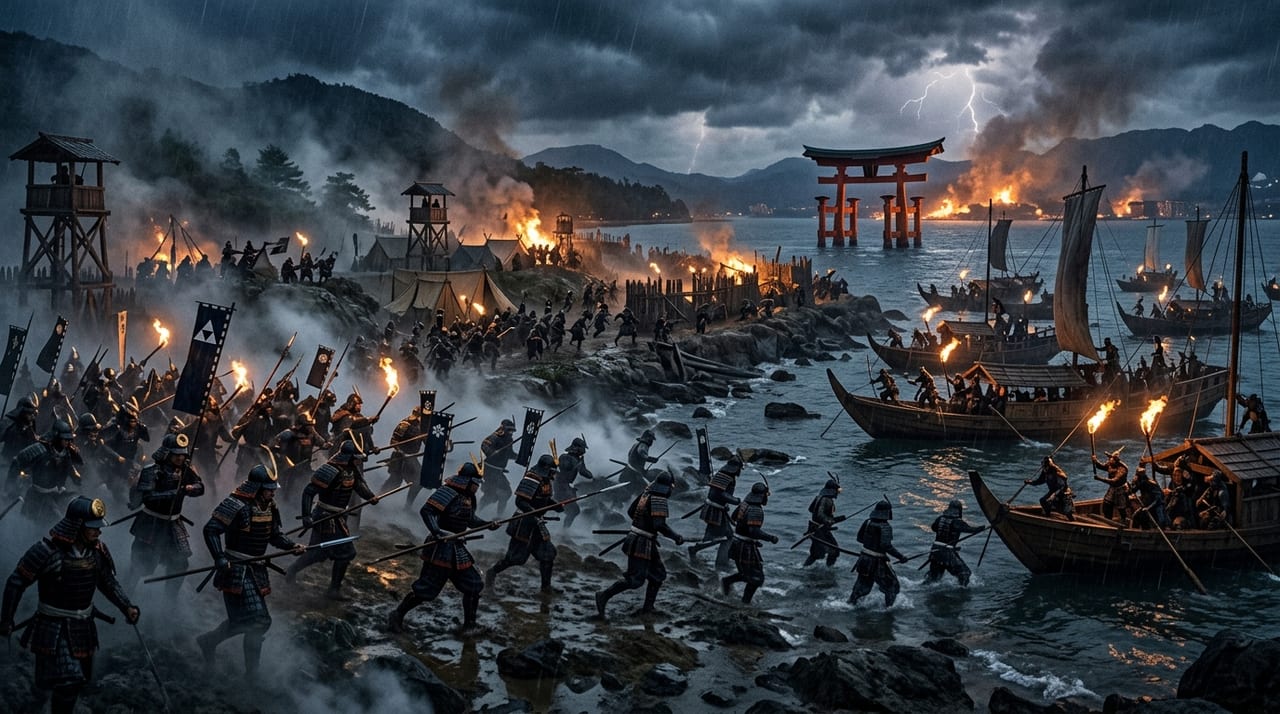
The Ikkō forces also built up their military strength, linking the dōjō (meeting halls where adherents gathered for the nembutsu) across the province to consolidate their organization. Adherent soldiers took up swords and spears between farm work to prepare for the defense of the uprising. Ikkō fighters, fighting under the banner "Namu Amida Butsu," were not to be underestimated and troubled many commanders. Nobunaga's ten-year war with Hongan-ji in the Ishiyama War (1570–80) is the greatest example of the military strength of the Ikkō forces.
The Kaga Ikkō uprising holds a special significance in the history of the Japanese sword. Japanese swords are generally regarded as the property of the warrior class, but in the Ikkō uprising, peasants and adherents actually fought with swords, spears, and naginata. At the time of uprisings, crude swords were used alongside farming tools, but the prominent dogō and bōzu-shū in particular possessed high-quality blades.
The relationship between Kaga's sword-smithing industry and the Ikkō uprising also cannot be overlooked. Kaga Province became a sword-smithing center known in the early modern period for smiths such as "Kashū Kiyomitsu," but its foundation was formed during the Sengoku period. The century-long armed state of the Ikkō uprising sustained demand for swords in Kaga and supported the activities of local smiths. Records of the practical swords used by Ikkō adherents survive only in fragments, but the existence of peasant soldiers carrying blades is confirmed from accounts of battles.
From Tenshō 1 (1573), Oda Nobunaga fully confronted Hongan-ji (the Ishiyama War). On the Hokuriku front, he advanced the conquest of Kaga, Etchū, and Noto, with Shibata Katsuie as the main force. In Tenshō 8 (1580), after a truce was concluded between Nobunaga and Hongan-ji (Kennyo), the Kaga Ikkō uprising effectively came to an end. Shibata Katsuie and Sakuma Morimasa took Oyama Gobō (Kanazawa Midō). The uprising that continued to resist in the foothills of Mount Hakusan was also suppressed in the third month of Tenshō 10 (1582). The Ikkō armed self-governing structure was dismantled, and Kaga came to be ruled by Sakuma Morimasa and others.
Maeda Toshiie later rose as a great lord holding Kaga, Noto, and Etchū, and built a rich cultural base known as the "Maeda Hyakumangoku" (million-koku) domain. The Maeda family collected and preserved many famous swords, and transmitted celebrated blades such as Ōdenta Mitsuyo. It could be said that the martial soil of Kaga, cultivated over the hundred years of the Ikkō uprising, ironically became one of the foundations for the Maeda family's promotion of sword culture. The Kaga Ikkō uprising, a century of self-rule protected by peasant blades, still carves its memory as one of the most dramatic chapters in the history of the Japanese sword.
In Sengoku-period Japan, the fixed notion that "peasants could not carry swords" does not necessarily match the actual conditions of the time. Toyotomi Hideyoshi's issuance of the Sword Hunt edict in Tenshō 16 (1588) was precisely a response to peasants and temples holding large numbers of weapons. The Kaga Ikkō uprising stands out as an example of peasants and adherents organizing and arming themselves more than a hundred years earlier.
Ikkō weapons were not limited to swords. Spears, naginata, bows, and crossbows were also used. The swords they used are presumed to have been mostly practical, utilitarian products rather than works by famous smiths, but they played an important role as field weapons that sustained the long uprising.
During the hundred years of the Kaga Ikkō uprising, Uesugi Kenshin of Echigo repeatedly intervened militarily in the Kaga, Etchū, and Noto region. Kenshin was a devout warlord known as an "incarnation of Bishamonten," and in the early 1570s he fought fiercely with the Ikkō uprisings in Etchū and Kaga. However, in Tenshō 4 (1576) he concluded a truce with Hongan-ji's Kennyo, and both came to stand in opposition to Oda Nobunaga. Famous blades such as Kenshin's beloved sword "Sanchōmō (unsigned Ichimonji)" shone on the Hokuriku battlefields of this era. The Hokuriku battlefield, where Ikkō peasant soldiers and Kenshin's elite warriors faced each other, was also a time and place rich in context for the history of the Japanese sword.
After the Kaga Ikkō uprising ended, Kaga's sword-smithing industry developed greatly under the patronage of the Maeda family. Smiths known under the name "Kashū Kiyomitsu" (Kaga Province Kiyomitsu) continued through generations from the Muromachi period. In the Edo period, Hinin Kiyomitsu, who forged blades in the hinin huts of the Kaga domain, became known, and the 12th-generation Kiyomitsu of the late Edo period was called a master. The sword of Okita Sōji of the Shinsengumi is also said to have been a Kashū Kiyomitsu. This lineage of Kaga smiths is a crystallization of both the martial tradition of Hokuriku that the Ikkō uprising sustained for a hundred years and the cultural richness nurtured by the Maeda family's hyakumangoku. The Kaga Ikkō uprising, as a rare historical stage where the practical aspects of the Japanese sword intersect with religion, peasants, and culture, also holds an important place in contemporary sword research.
What drove the fighters of the Kaga Ikkō uprising was the Jōdo Shinshū faith that "if one dies, one is reborn in the Pure Land." This idea of ōjō drove people to the battlefield on motives different from those of the warrior's bushidō. Warriors gave up their lives for honor, loyalty, and lord-retainer bonds, but Ikkō adherents did not fear death, out of faith and certainty of the Pure Land. This spiritual background was one reason the generals feared the Ikkō forces as having a "fanatical strength" beyond mere military power.
The Japanese sword is originally regarded as "the soul of the samurai," but the Kaga Ikkō uprising brings out another aspect of the sword as "the blade of the peasants and adherents." The sword became a tool for protecting people beyond their status, protecting faith, and protecting land. The swords carried by Kaga's peasants during this hundred-year uprising hold a special significance as the "sword of the people" in the history of the Japanese sword. Even today, the Kaga Ikkō uprising stands as an important historical testimony that the sword was not merely the exclusive property of the warrior class but a presence rooted in the deep layers of Japanese popular culture and religion.