Sword Culture of the Tenna, Jōkyō, and Genroku Eras (1681–1703) — The Shift from Military to Civil Rule under Tsunayoshi's Governance and the Transformation of the Sword Market
 * Image is for illustrative purposes only.
Table of Contents
Tokugawa Tsunayoshi and the Era of the "Dog Shogun"
Tokugawa Tsunayoshi (in office 1680–1709), the fifth shogun of the Edo Shogunate, held power for thirty years spanning three era names: Tenna, Jōkyō, and Genroku. Tsunayoshi was mocked as the "Dog Shogun" for his generous protection of dogs under the Edicts on Compassion for Living Creatures, yet the influence his governance exerted on Japanese culture and society was multifaceted, and sword culture was no exception.
This article examines the transformation of sword culture during Tsunayoshi's rule through three axes: the retreat of militarism, the rise of civil rule, and the economic background.
The Retreat of Militarism and the "Ritualization of the Sword"
Moving away from the era of his predecessors, who had emphasized military might, Tsunayoshi promoted a policy of civil rule that valued Confucian learning, scholarship, and propriety over armed force. This shift in policy brought subtle changes to the samurai's view of the sword.
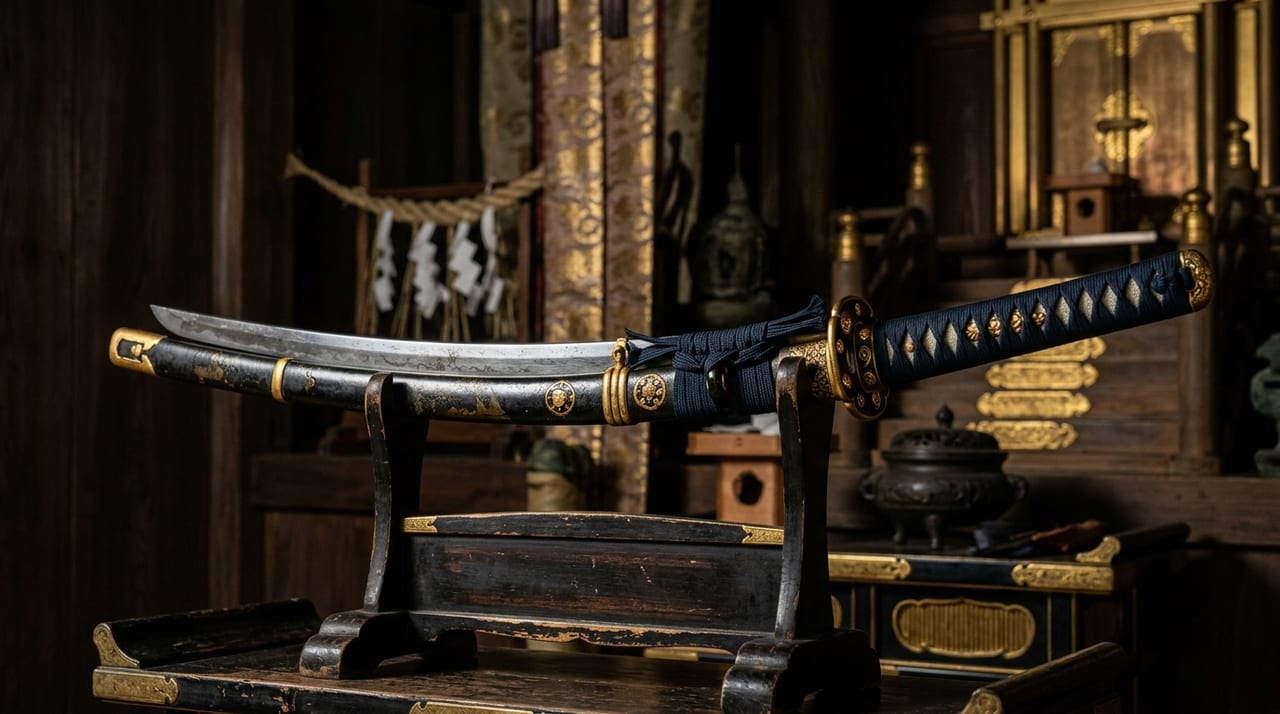
First, the meaning of sword-wearing shifted from practical use to ceremonial function. In the early Edo period, a samurai's wearing of a sword meant the "maintenance of armed force," and functionally practical swords suited to actual combat were preferred. However, as the Genroku era arrived — with over fifty years of peace having passed — there was virtually no occasion to draw a sword, and wearing one transformed into a ceremonial act that denoted social rank.
The Edicts on Compassion for Living Creatures (enforced 1685–1709), while primarily aimed at protecting dogs, carried at their root an ideology of "prohibiting the taking of life" that also influenced the training of swordsmanship as a martial art for samurai. The process by which practice at sword-training schools became a formality, and form-based training was redefined as part of proper etiquette, accelerated the transition of the sword "from practical tool to cultural artifact."
The Flourishing of "Decorative Swords" in Genroku Culture
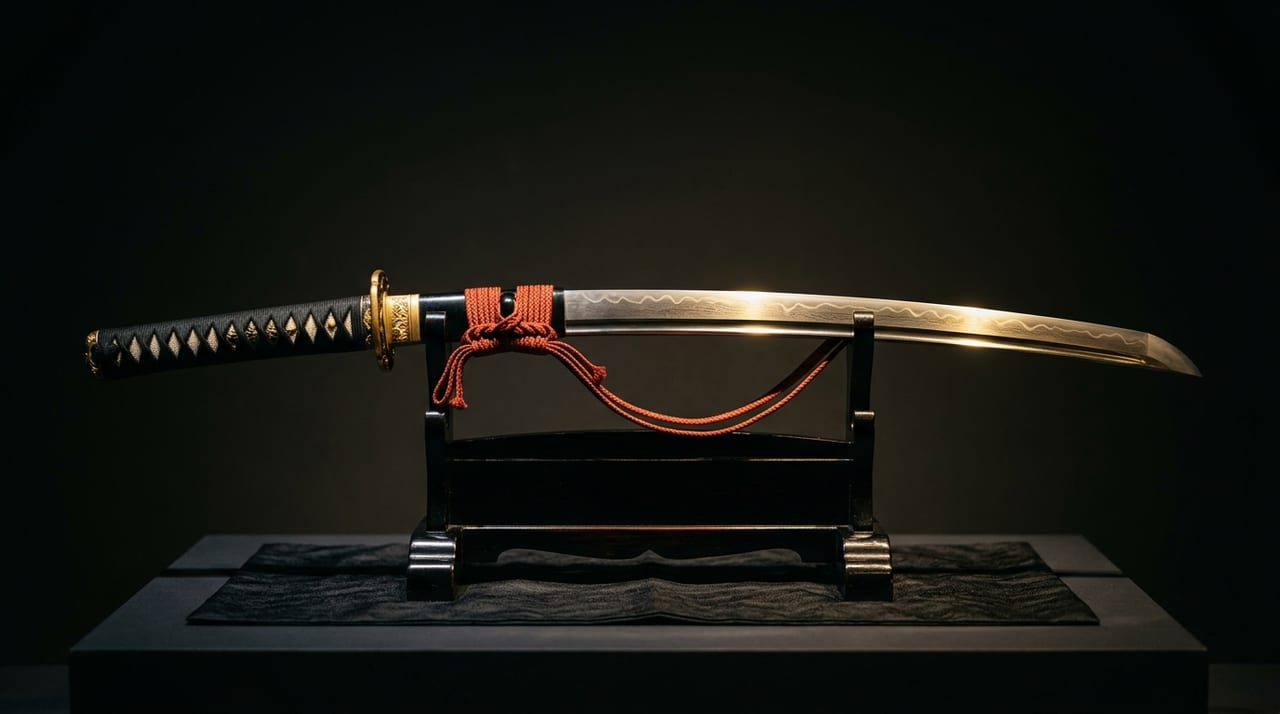
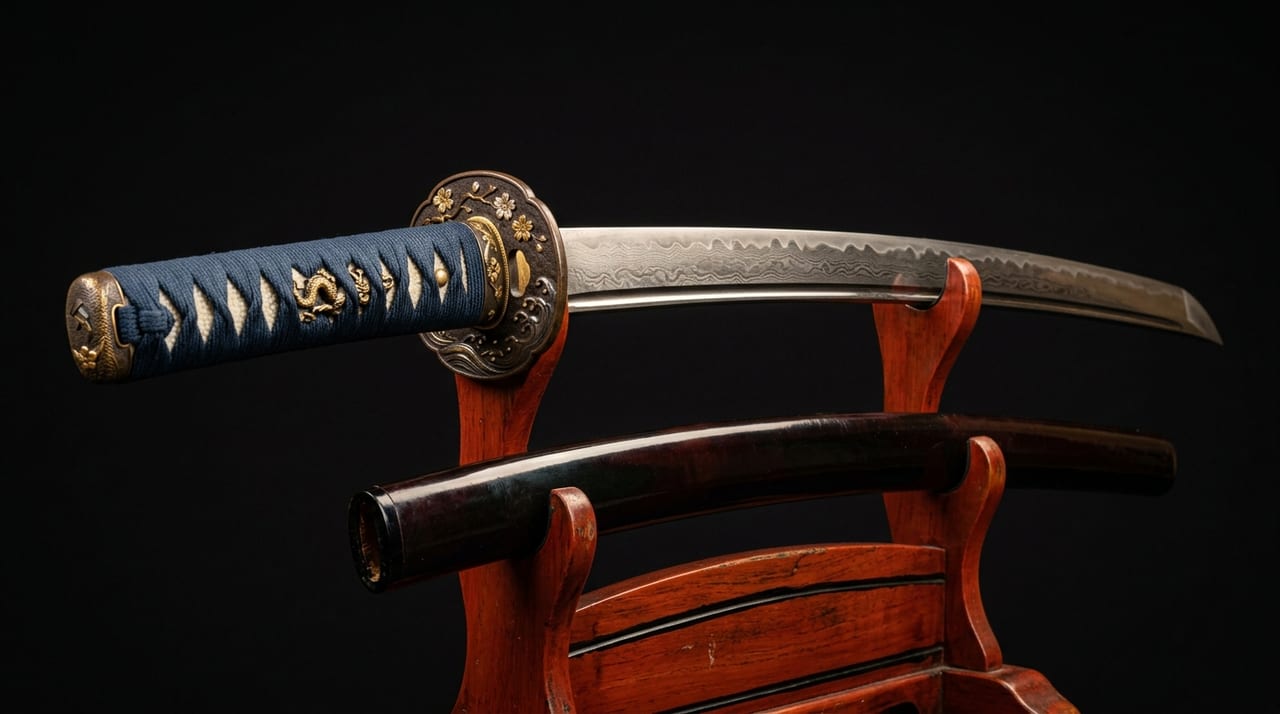
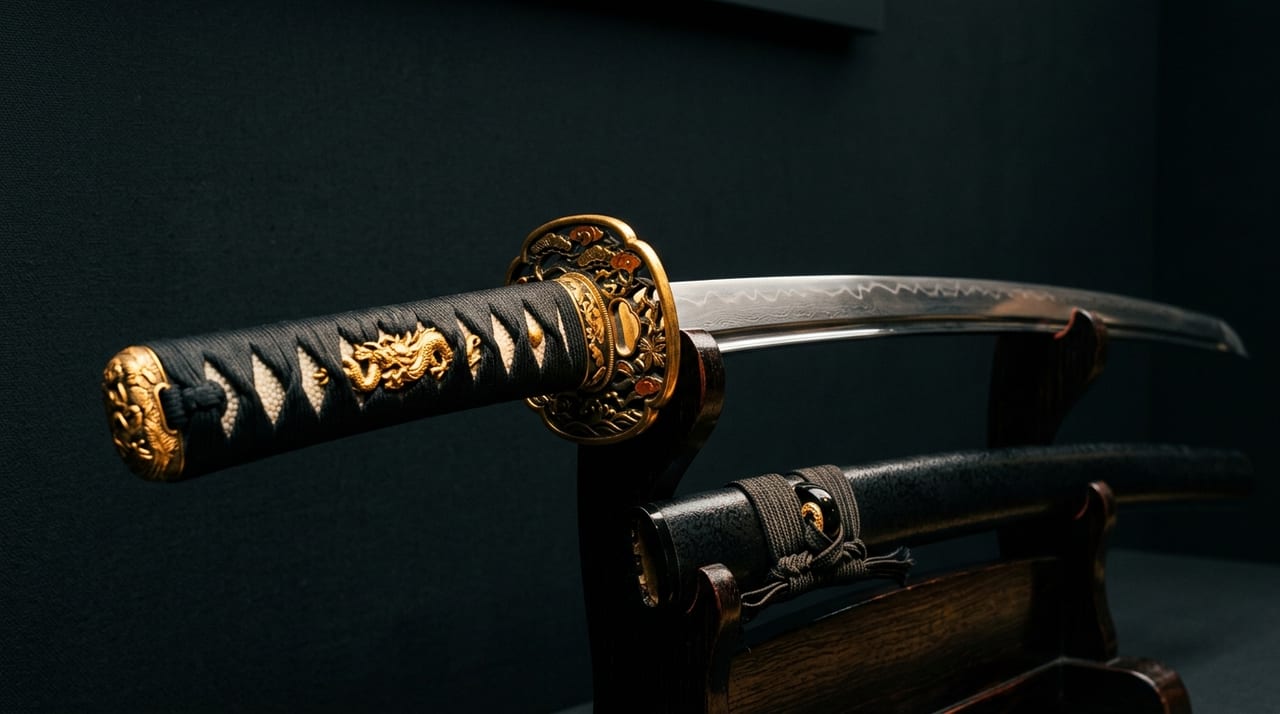
Even as the samurai's sword tilted from practical use toward formal dress, the artistic value of tōsōgu (sword fittings) — tsuba (hand guard), menuki, fuchi-kashira, kozuka, and the like — rose sharply. The Genroku era (1688–1704) was also a time when townsman culture in the Kamigata region (Kyoto and Osaka) flourished against a backdrop of economic prosperity. The culture of sword fittings and decorative swords in this period is examined in greater depth in Genroku Culture and Swords — The Aesthetic of "Decorative Swords" Nurtured in an Age of Peace.
Just as bold designs known as "Genroku patterns" spread to kosode robes and sashes, there was a growing tendency to apply lavish ornamentation to sword fittings as well. Metalworkers and engravers vied to produce intricate designs, and there were even instances where value was found more in the artistry of the tsuba (hand guard) and menuki than in the blade itself.
This tendency posed a complex problem for swordsmiths. Because the value of a sword came to be judged by the luxury of its koshirae (mounting) rather than by the technical evaluation of the tōkō, the market generated a distortion that prioritized producing "display swords" over improving quality as a genuine cutting implement.
Regional Shifts in Sword Production: From Bizen to Osaka and Edo
The centers of sword production also shifted during this era. Bizen Province (Okayama Prefecture), the traditional major sword-producing region, had already shown signs of decline in the early shintō period (beginning of the seventeenth century), and further diminished in status during the Genroku era.
In its place rose the swordsmiths of Osaka and Edo. In Osaka, sharp and practical swords known as Osaka Shintō were produced, meeting the demand of Osaka merchants in the commercial city. Meanwhile, in Edo, swordsmiths positioned as purveyors to the shogunal and daimyo households turned out refined works.
Among the leading swordsmiths of Osaka in the Tenna and Jōkyō periods were the successors of Tsuda Echizen no Kami Sukehiro, and in the Genroku era in Osaka, swordsmiths in the line of Kawachi no Kami Kunisuke (second generation) were active. These tōkō concentrated not on practicality but on "the beauty of the hamon (temper line)" and "the quality of the jigane (steel of the blade surface)," leaving behind works of high aesthetic value.
Connoisseurship Characteristics of the "Genroku Sword"
In modern sword appraisal, certain common characteristics are recognized under the concept of the "Genroku sword."
- Tendencies in blade shape: shallow sori (curvature) (shifting from middle curvature to shallow curvature), a tendency toward shortened nagasa (blade length), thin construction with many examples showing thin kasane (blade thickness) that emphasizes elegant appearance, and a tendency toward a slightly larger kissaki (point) (shifting from medium kissaki to large kissaki).
- Characteristics of the hamon (temper line): In the Osaka Shintō tradition, clear hamon in the suguha style are common; among Edo swordsmiths, some employ bold notare. It was also an era when "nioi-deki" — in which nie (visible martensite crystals) are fine and uniform — was favored.
- Quality of the jigane (steel of the blade surface): Jihada (grain pattern of the steel) with flowing itame and ko-itame received aesthetic appreciation, and jigane rich in ji-nie that gleams when it catches the light was prized.
The Abolition of the Edicts on Compassion for Living Creatures and the Kyōhō Return to Swords
When Tsunayoshi died in 1709, his successor, the sixth shogun Tokugawa Ienobu, immediately abolished the Edicts on Compassion for Living Creatures. There were calls for the revival of militarism, and interest in swords was renewed. The changes in sword culture in the immediately following Hōei and Shōtoku periods are explained in continuation in Sword Culture of the Hōei and Shōtoku Eras (1704–1715).
As a reaction, the "Shōtoku Governance" centered on Arai Hakuseki advanced the organization of Confucian etiquette, while under the "Kyōhō Reforms" of the eighth shogun Yoshimune, "the recovery of a spirit that respects martial valor" was made a policy objective. The cultural foundation for collecting and preserving swords had accumulated during this Genroku era, and the flourishing of "famous sword collections" from the Kyōhō era onward lies as an extension of this.
Conclusion: The Legacy of Sword Culture Bequeathed by the Genroku Era
The sword culture of the Tenna, Jōkyō, and Genroku eras (1681–1704) is positioned as the era that decisively completed the transition "from practical weapon to aesthetic cultural artifact." The wearing of swords by samurai became a ceremonial act, the artistry of tōsōgu (sword fittings) blossomed, and the standards of sword appreciation were formed.
The "Genroku swords" produced by the swordsmiths of this era are evaluated in modern appraisal together with their historical background. Understanding the era of Tsunayoshi provides an indispensable perspective for grasping swords not merely as weapons, but as nodes of history and culture.