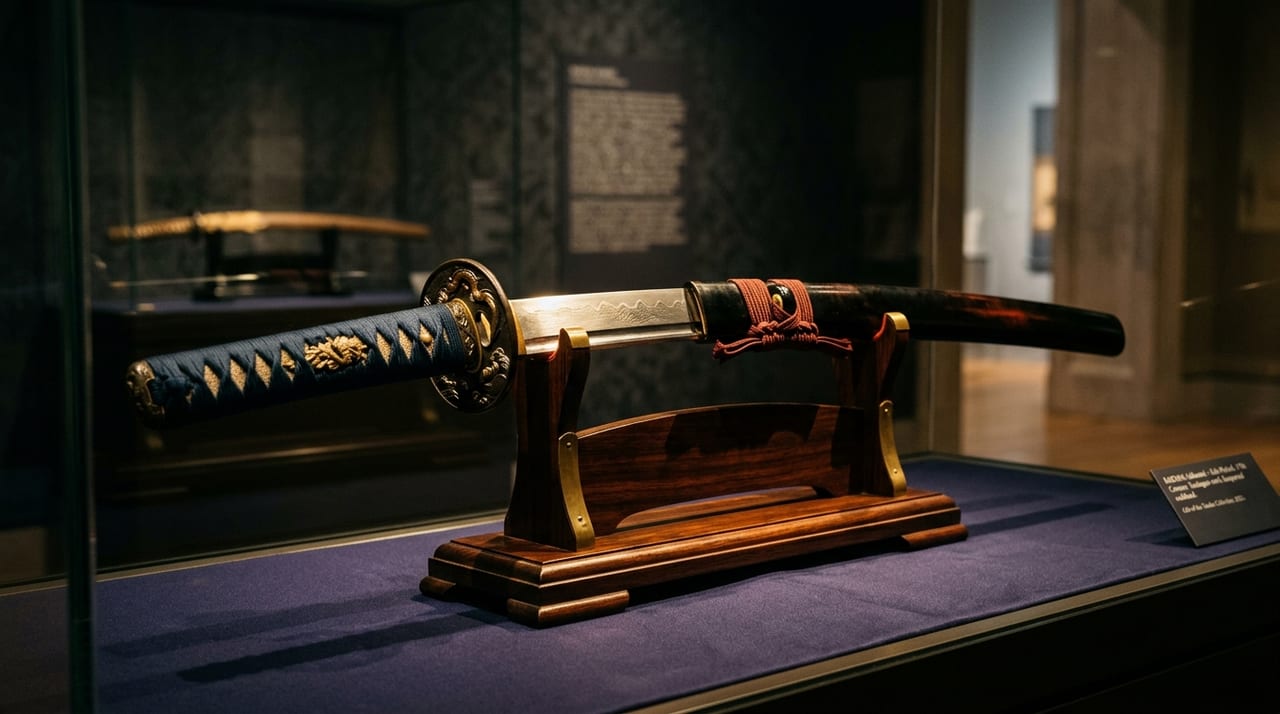
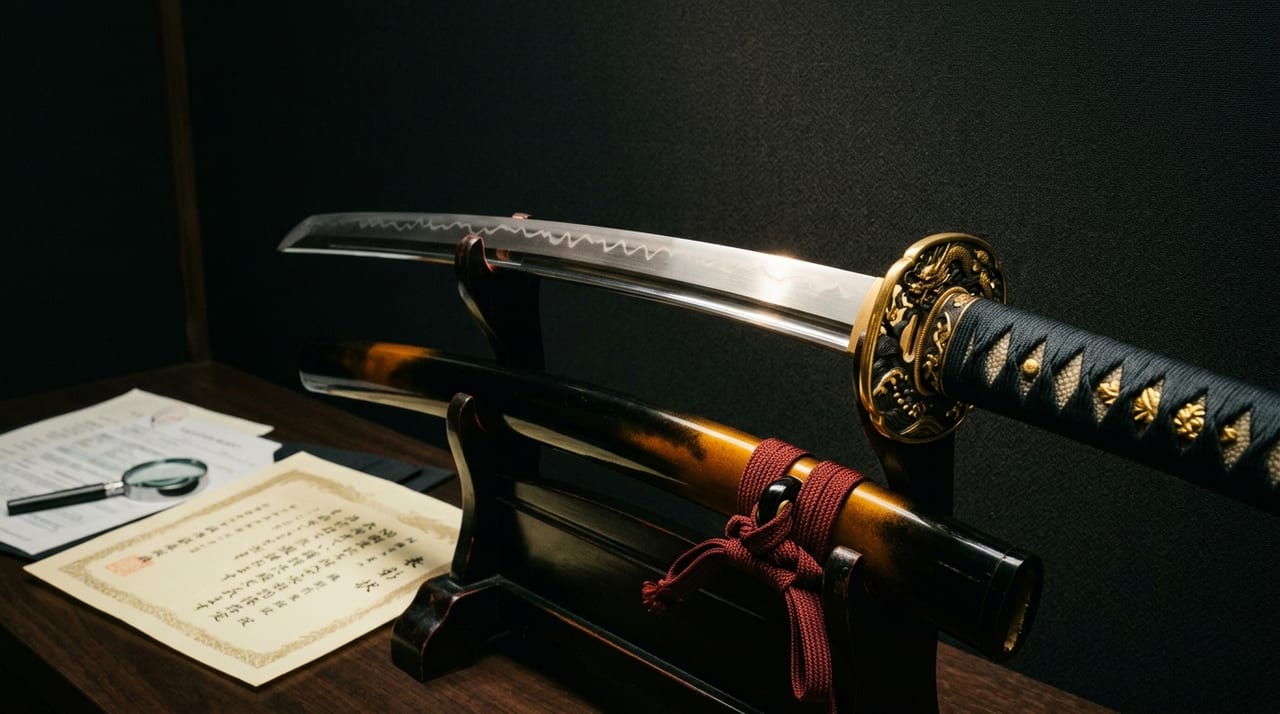
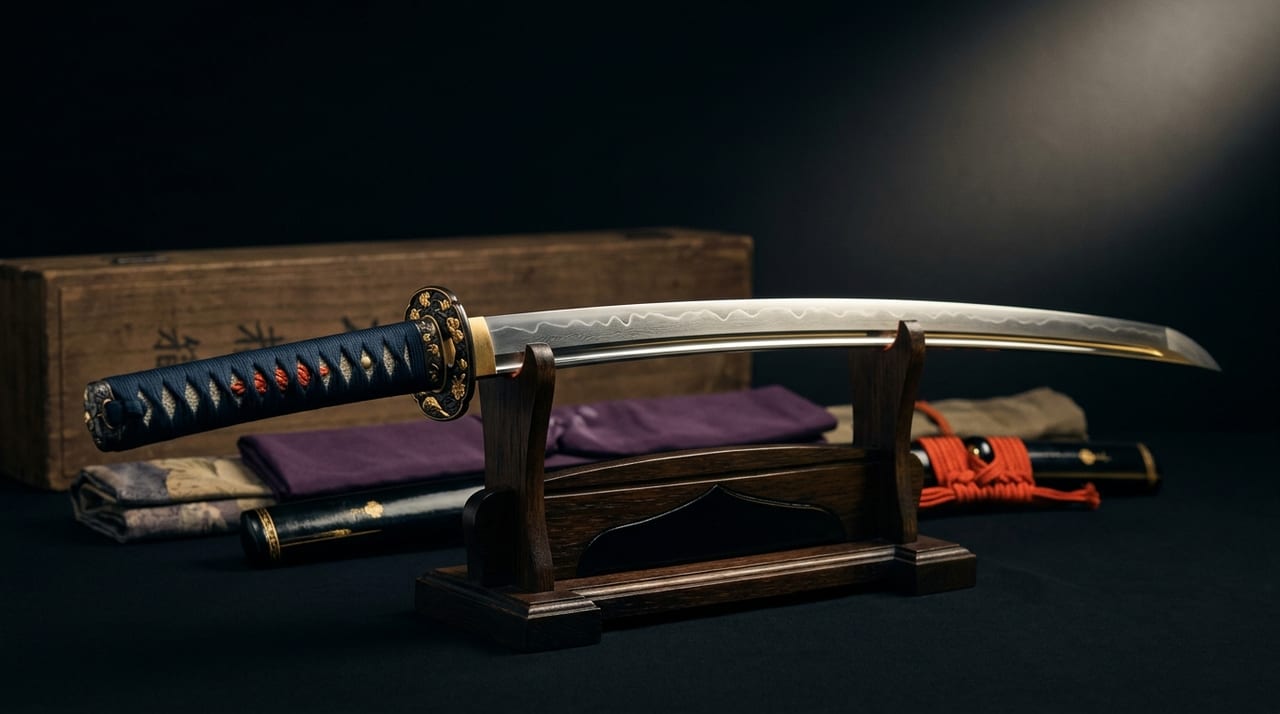
The Complete Guide to Storing and Caring for Nihontō — Essential Maintenance Knowledge for Collectors
 * Image is for illustrative purposes only.
Table of Contents
Why Nihontō Require Maintenance
Nihontō are precision works of art made from steel (hagane), and without proper care they will deteriorate and rust. Oxidation (rust) on the blade surface not only diminishes their beauty — rust that has progressed deeply can permanently damage the hamon and jihada.
The three greatest enemies of nihontō are:
- Moisture (high humidity): The leading cause of rust. An ideal humidity level is 50–60%
- Sweat and sebum (hand oils): Touching the blade directly with bare fingers introduces oils and the salt in sweat, which causes rust
- Sudden temperature changes: Condensation forms easily and promotes rust
Understanding these threats and practicing the correct maintenance procedure is essential for preserving a sword across many generations.
Tools Required for Maintenance — Contents of a Maintenance Set
Nihontō maintenance requires dedicated tools, which can be purchased as a "teire setto" (maintenance set) from sword dealers.
Essential tools:
- Uchiko (powder ball): Pulverized whetstone powder packed in a silk bag. Tapped gently against the blade to absorb and remove old oil
- Nuguigami (wiping paper): Soft washi paper. Dedicated paper for wiping the blade. Tissues and cloth are prohibited
- Chōji oil: An anti-rust protective oil applied to the blade. A plant-based oil derived from chōji (cloves)
- Oil brush / cotton cloth: Tools for applying chōji oil
Useful additional tools:
- Katanakake: A stand for safely resting the sword during maintenance
- Mekugi-nuki: A tool for removing the nakago from the tsuka (for advanced users)
Correct Maintenance Procedure — 6 Steps
Step 1: Safety Check and Preparation
Before beginning maintenance, always secure a work area and prepare the katanakake. Confirm that no one is nearby, and if children or pets are present, isolate the work area.
Step 2: Remove Old Oil with Uchiko
When drawing the sword from the saya, hold it horizontally with the edge facing up (hold the tsuka and draw away from the body). After tapping uchiko lightly across the entire blade, use nuguigami to carefully wipe from the mune toward the edge (in the direction of clearing blood).
Cautions:
- Never wipe from the edge toward the mune (dangerous if fingers catch the edge)
- Do not wipe the entire blade with a single piece of nuguigami; divide the work into several passes using a clean surface each time
- Work along the curved blade at a comfortable angle
Step 3: Check That No Oil Remains
After wiping, hold the blade up to bright light (natural light is best) and check whether any oil film or residue remains. If it does, repeat the uchiko and wiping process.
Step 4: Apply Chōji Oil
Take an appropriate amount of chōji oil on a clean piece of nuguigami or cotton cloth and apply it thinly and evenly across the entire blade. The rule is "thin and even" — applying too thickly causes the oil to deteriorate and itself become a source of rust. Apply with particular care to the hamon and jihada.
Step 5: Check the Mune and Machi
The area around the ha-machi and mune-machi is prone to rust, so inspect it carefully. Also confirm that oil has reached the area where the blade contacts the habaki.
Step 6: Returning the Blade to the Saya
Once the oil application is complete, slowly return the blade to the saya. Align it gently with the sayaguchi (mouth of the saya) and insert it while confirming that the edge faces inward.
How to Arrange the Storage Environment
Equally important to maintenance is the everyday storage environment.
Ideal storage environment:
- Humidity: 50–60% (a hygrometer is recommended for monitoring)
- Temperature: Avoid sudden changes (15–25°C is ideal)
- Location: Avoid direct sunlight and air-conditioning vents
- Orientation: Lay flat with the edge facing up, or stand upright with the edge facing left
On katanabako and katanabukuro:
For long-term storage, a katanabako (wooden box for storing swords) is ideal. Kiri (paulownia) boxes have moisture-regulating properties and have been used since ancient times as a material well suited for storing nihontō. For katanabukuro, bags made from deer skin or fukusa cloth are appropriate; synthetic fiber bags should be avoided (risk of condensation and chemical reaction).
Maintenance Frequency and Timing
General guidelines for maintenance frequency:
| Storage environment | Maintenance frequency |
|---|---|
| Climate-controlled room (ideal environment) | Once every 3–6 months |
| General residence (humidity fluctuations) | Once every 1–2 months |
| Rainy season / summer (high humidity) | Recommended at least once a month |
| After display or handling | Each time |
Also, whenever the sword is removed from the saya, maintenance (at minimum re-oiling) must always be performed. If the blade is touched with bare hands, maintenance is required immediately.
When to Have the Blade Re-Polished
If rust or damage occurs, amateur polishing must never be attempted. Using commercially available abrasives, sandpaper, or similar materials will permanently destroy the hamon and jihada.
When polishing is needed, always commission a specialist in sword polishing known as a togishi. The cost of polishing varies depending on the condition and length of the sword, but the going rate is generally around 100,000–300,000 yen (highly prized blades may cost considerably more). For a breakdown of costs by condition and details on choosing a provider, see the Nihontō Repair and Polishing Cost Guide.
With consistent proper maintenance, a nihontō can preserve its beauty and function for centuries. Please remember that one of a collector's responsibilities is to pass this cultural heritage on to the next generation in good condition.