A Guide to Japanese Sword Restoration and Polishing Costs: Price Estimates by Condition and How to Choose a Craftsman
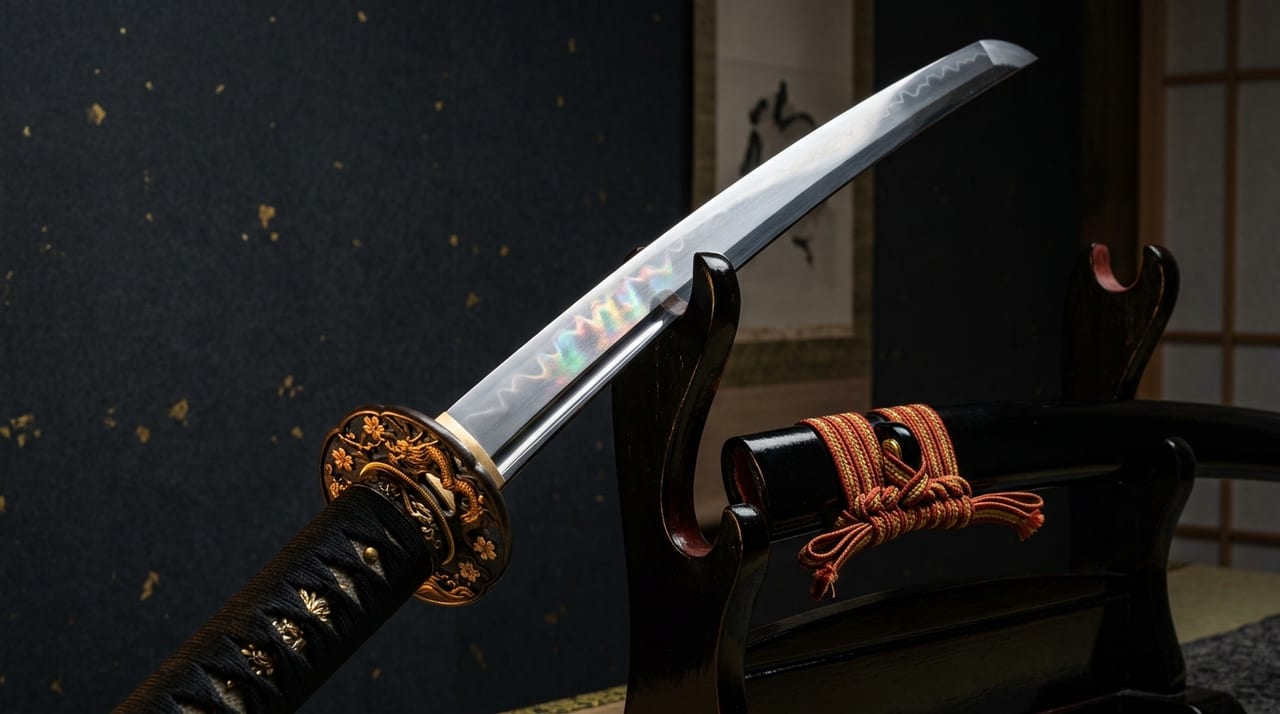 * Image is for illustrative purposes only.
Table of Contents
Nihontō Restoration — When to Commission It
A nihontō can last several hundred years with proper maintenance, but a sword that has not been well cared for may develop problems such as rust, chipping, or damage to the koshirae. These can be addressed with appropriate restoration, though costs vary greatly depending on condition and the procedures required.
This article explains the actual costs for each type of restoration and covers the criteria for choosing a craftsman.
Types of Restoration and the Specialists Who Handle Them
Nihontō restoration is divided into several specialist fields, each handled by a different craftsman:
| Restoration Work | Craftsman | Estimated Cost |
|---|---|---|
| Togi (polishing) | Togishi (polisher) | 100,000–500,000 yen+ |
| Rust removal (minor) | Togishi | 20,000–100,000 yen |
| Chip / break repair | Togishi / tōkō (swordsmith) | 150,000–500,000 yen+ |
| Nakago (tang) rust stabilization | Tōkō / togishi | Individual consultation |
| Saya (scabbard) repair | Sayashi (scabbard maker) | 50,000–300,000 yen |
| Tsuka (hilt) rewrapping | Tsukamakishi (hilt wrapper) | 30,000–150,000 yen |
| Tsuba (hand guard) / accessory repair | Kinkōshi (metalworker) | 20,000–200,000 yen+ |
Togi (Polishing) — Cost Details
Togi is the most costly and most delicate work in nihontō restoration. The togishi uses whetstones to remove rust and scratches from the entire blade while bringing out the beauty of the hamon and jigane.
Types of Polishing Procedures
Shitaji-togi (foundation polishing): The first stage, in which coarse whetstones are used to shape the entire blade. Large areas of rust and deep scratches are removed.
Shiage-togi (finish polishing): The final stage, in which progressively finer whetstones are used to bring out the hamon and jigane completely. Techniques include "uchiko finish" and "nugui finish."
Hadori (edge definition): A finishing procedure that clearly defines the outline of the hamon. It demands the skill of an experienced togishi.
Estimated Costs (by Nagasa and Condition)
| Nagasa (blade length) | Nami-togi (foundation only) | Hon-togi (foundation + finish) |
|---|---|---|
| Wakizashi (up to 60 cm) | 80,000–150,000 yen | 200,000–400,000 yen |
| Uchigatana (60–75 cm) | 120,000–200,000 yen | 300,000–600,000 yen |
| Tachi (75 cm and over) | 150,000–300,000 yen | 400,000–800,000 yen+ |
Note: For swords at the level of Jūyō Tōken or works by Living National Treasure smiths, commissioning a renowned togishi can cost 1,000,000 yen or more.
The Difference Between Nami-togi and Hon-togi
Nami-togi (foundation polishing only) removes rust and scratches and restores the condition of the blade, but cannot fully bring out the beauty of the hamon and jigane. Hon-togi is required when the purpose is appreciation or appraisal.
For practical use (iai or tameshigiri), nami-togi is often sufficient.
Costs for Rust Removal
Procedures and costs vary depending on condition, ranging from light rust (surface rust) to deep rust (pitting or surface-wide rust).
Hyōmen-sabi (surface rust): Thin rust on the surface of the blade. In some cases it can be addressed with uchiko and a cloth wipe. Having a specialist handle it costs around 20,000–50,000 yen.
Ten-sabi (pitting rust): Deep rust in pinpoint spots on the blade surface. Polishing is required; depending on the depth and number of spots, the cost is around 50,000–200,000 yen.
Hada-sabi (widespread rust): Severe rust that has spread across the entire blade surface. Full polishing is required, and costs can exceed 200,000–500,000 yen.
Repair of Chips and Breaks
Repairing chipping and breaks is the most technically demanding and costly type of restoration work.
Minor chipping: Small chips are shaped by polishing. It is common to address these at the same time as polishing, and the additional cost is around 10,000–50,000 yen.
Large chips (1 cm or more): Reshaping by polishing entails shortening the nagasa, so the impact on value should be considered in advance. In some cases, preserving the sword as-is with the chip remaining is also an option.
Repair of a broken sword (rejoining): Rejoining and polishing a broken sword is technically very difficult, and costs exceed 300,000–1,000,000 yen. It is important to judge whether the sword's original value justifies the cost of restoration.
Costs for Koshirae Repairs
Repair of the koshirae — saya, tsuka, tsuba, and accessories — is also an important area of restoration.
Saya repair: Peeling lacquer, cracks, damage to the koiguchi, and similar issues. Depending on the work required, the cost is 30,000–300,000 yen. New fabrication costs 150,000–500,000 yen or more.
Tsuka rewrapping: Replacing broken or frayed tsuka cord with a fresh wrapping. Around 30,000–100,000 yen. The cost varies with the quality of materials used (cowhide, samegawa, silk cord, etc.).
Tsuba, menuki, and kozuka repair: Restoring damage to metalwork items costs 20,000–200,000 yen or more. For works by renowned metalworkers, it is necessary to consult a specialist kinkōshi.
How to Choose a Craftsman
Criteria for Choosing a Togishi
- NBTHK-certified or apprentice lineage of a Living National Treasure: Togishi certified by NBTHK (Society for the Preservation of Japanese Art Swords) are guaranteed to meet a certain standard of skill.
- Verifying track record: Ask to see examples of past polishing work (photographs, records of kanteisho obtained).
- Transparency of estimates: Check whether they provide a clear cost breakdown by procedure.
- Alignment on restoration approach: Confirm whether they offer proposals suited to your purpose — such as "hon-togi for a complete finish" or "nami-togi for practical restoration."
Warning Signs in a Craftsman
- A craftsman who gives a blanket quote as "cheap, all inclusive" without a clear itemized breakdown
- A craftsman who does not take photographic records before and after restoration
- A craftsman with no experience submitting blades for appraisal to NBTHK (not suitable for restoring renowned swords)
Conclusion — Think of Restoration Costs as an Investment
Nihontō restoration is never cheap, but appropriate restoration is also an investment that can multiply the value of a sword many times over. For swords made by renowned tōkō or those considered candidates for Jūyō Tōken designation in particular, commissioning the highest-caliber togishi without sparing on cost leads to long-term value preservation.
Conversely, for swords where nami-togi is sufficient — such as an iai practice sword or a mass-produced sword of low artistic value — limiting restoration to the necessary minimum is also a rational approach from a cost-management perspective. Before commissioning restoration, it is essential to clarify the purpose of the work and then select the craftsman and cost level to match.