The Craftsman Industry Behind Guntō Koshirae — Tōsōgu Craftsmen of the Shōwa Period and the Postwar Transmission of Skills
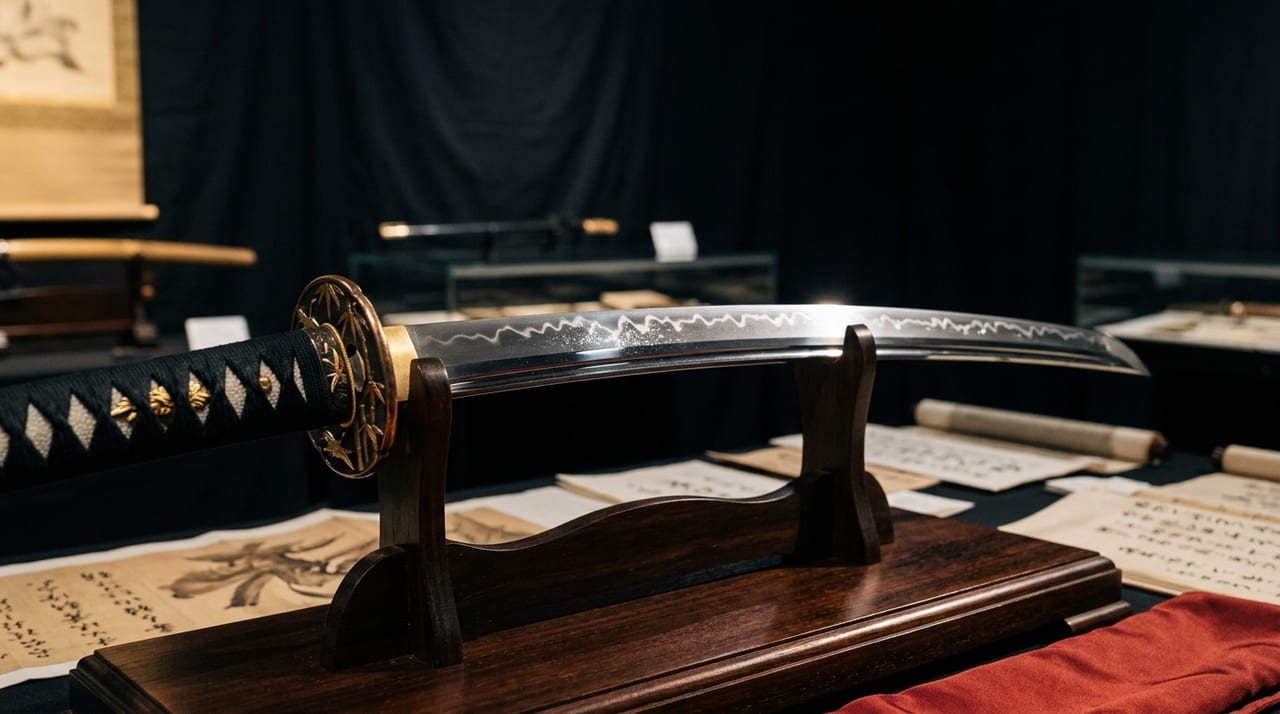 * Image is for illustrative purposes only.
Table of Contents
The Structure of Guntō Koshirae and the Division of Craftsman Labor
The term "koshirae" for nihontō refers collectively to all external fittings other than the blade itself. Specifically, it includes components such as the following.
- saya
- tsuka
- tsuba
- kojiri
- kurigata
- menuki
- fuchi-kashira
- tsukaito
- sageo
These were not mere ornaments but also functional components designed to protect the blade, facilitate wearing the sword, and enhance operability in combat. The styles of koshirae have diversified greatly depending on period, place of origin, and social class, and what has sustained that diversity is a refined system of division of labor among specialist craftsmen.
Traditionally, each component of koshirae has been manufactured under a system of division of labor in which specialist craftsmen handle their respective parts. With skilled craftsmen involved at every stage of the process, a single complete koshirae takes shape.
| Craftsman | Role |
|---|---|
| sayashi | Forms the saya from the wooden core |
| nurimonoshi | Carefully applies many layers of lacquer |
| kinkōshi | Casts and forges tsuba and menuki |
| tsukamakishi | Winds the tsukaito in an orderly pattern |
This system of craftsman collaboration, which dates back to the Edo period, was also carried forward as the basic framework in guntō manufacturing during the Shōwa period.
Regulations for Shōwa Guntō and the Role of Each Craftsman
Officer's guntō of the Shōwa period came in multiple regulation patterns, including the Type 32, Type 94, and Type 98, each with detailed specifications covering everything from the shape and material of the saya to the dimensions of the metal fittings. Koshirae craftsmen had to balance mass production with quality maintenance while adhering to these specifications.
In the work of the sayashi, the "cha-kawa-tsutsumi" (brown leather wrapping) adopted for the Type 98 guntō is a symbolic example. Whereas conventional art swords used black lacquer as their standard, guntō saya were wrapped in brown leather as their outer covering. This prioritized durability and moisture resistance in actual combat, and a new manufacturing process emerged in which leather craftsmen and sayashi worked in close collaboration. The interior of the saya also required wooden-core work for the blade-fitting insert that holds the blade snugly, meaning the sayashi's skill was directly linked to protecting the blade.
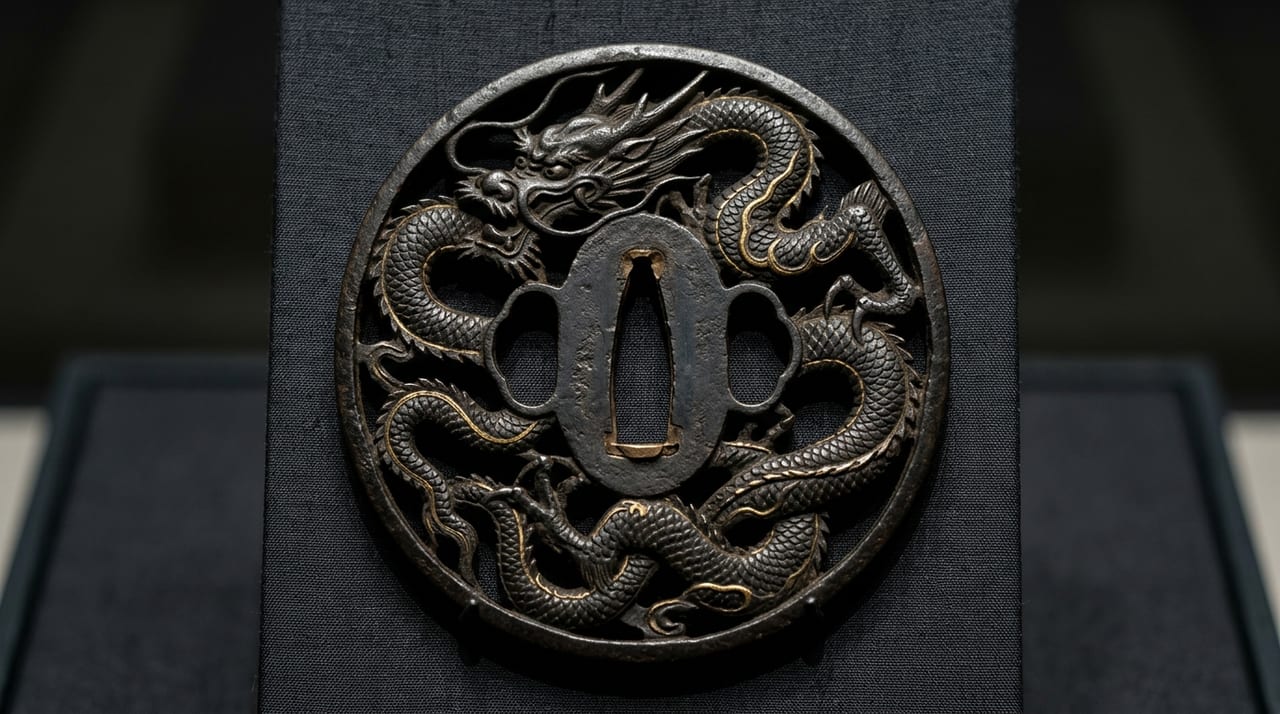
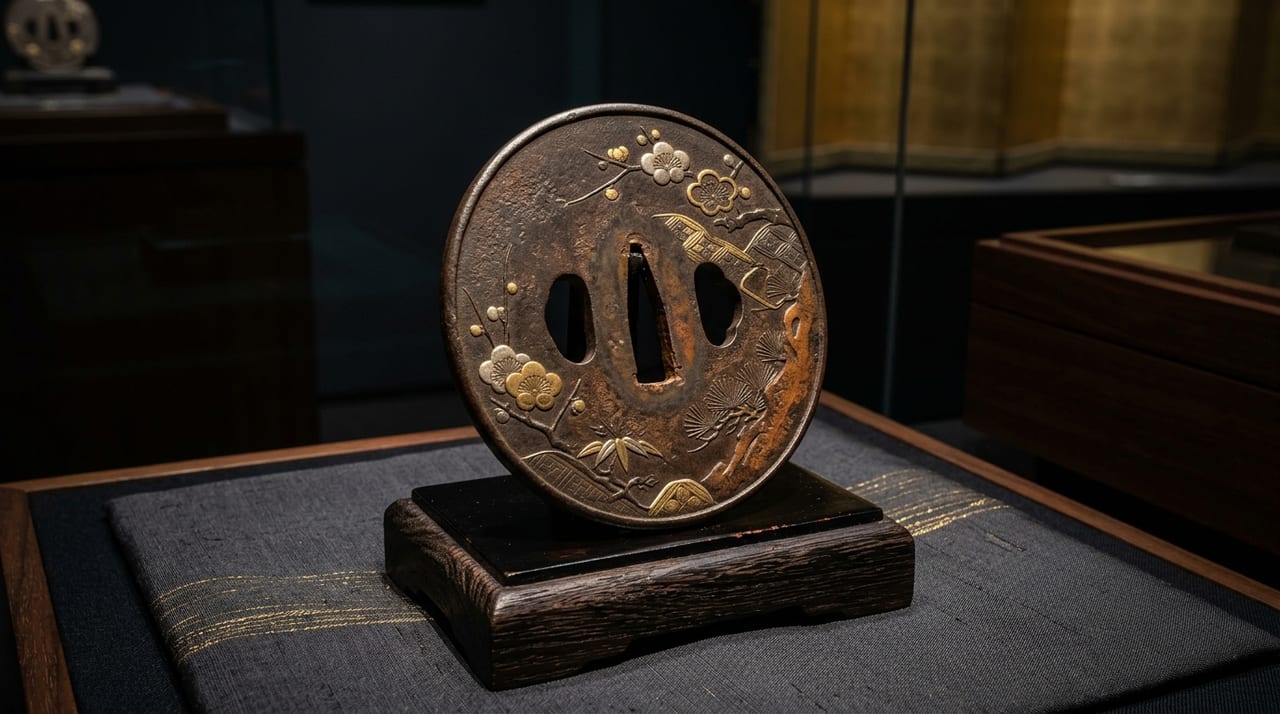
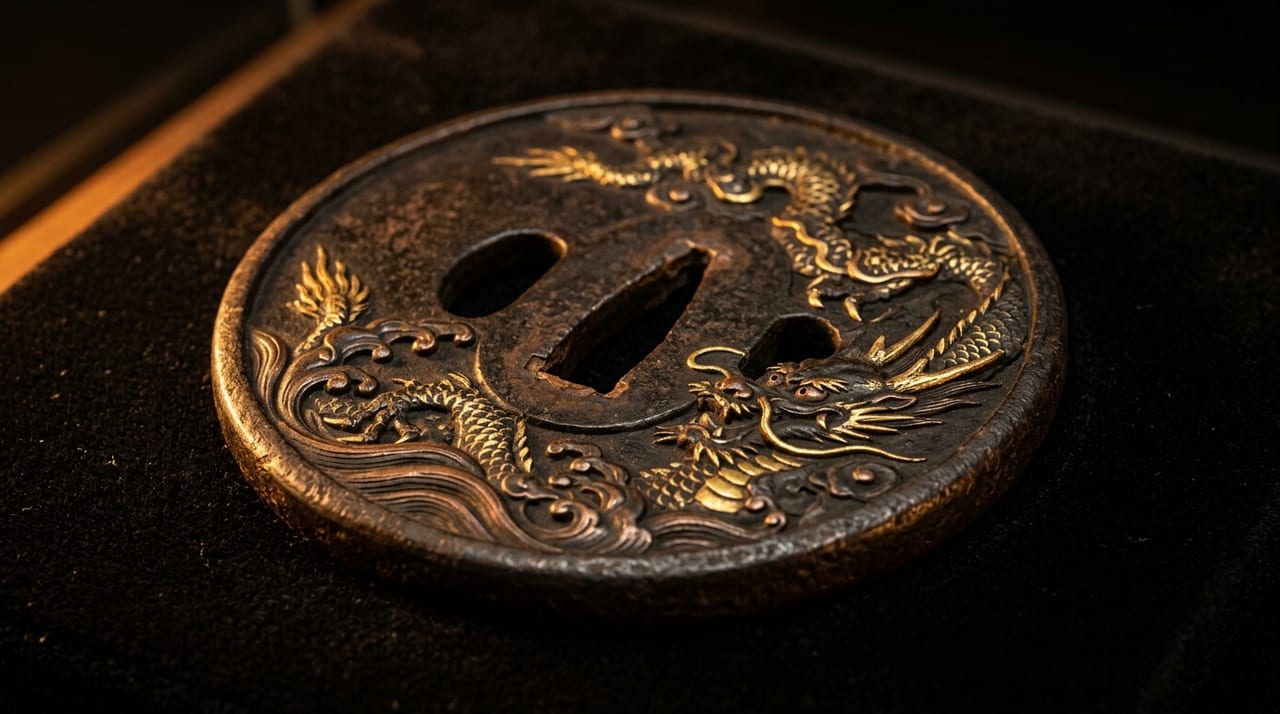
As for the work of the kinkōshi, alongside mass-produced pieces based on regulation specifications, there were no few cases in which individual officers commissioned custom orders from prominent kinkōshi. Custom pieces featuring family crests, chrysanthemum designs, and dragon motifs in relief carving or inlay on iron tsuba are held in especially high regard among today's guntō collectors. Kinkōshi in Kyoto, Osaka, and Tokyo were at the center of this work, and pieces by master craftsmen bear mei and hold value as works of art.
In the work of the tsukamakishi, the technique known as "jabara-maki" unique to guntō was employed. It is a distinctive winding method different from the standard tsukaito wrapping of ordinary swords, combining practical grip with durability. Skilled tsukamakishi were required to maintain a consistently uniform and taut winding while completing several swords per day, demanding a high level of technique.
Wartime Mobilization and the Crisis of Technique
As the Pacific War intensified, the situation for koshirae craftsmen deteriorated rapidly. As labor mobilization to munitions factories was intensified, sayashi and kinkōshi were no exception, and cases of their being reassigned to manufacture other military items such as bayonets, mess kits, and tools increased. The situation in which years of cultivated specialist skills went unused was a great loss both for the craftsmen and for Japanese craft culture.
Material shortages were also a serious problem. Obtaining high-quality materials essential to koshirae — such as lacquer, shakudō, brass, and samegawa — became difficult, and the use of substitute materials became widespread. Around the time the war situation worsened in 1944–45, the quality of guntō koshirae declined markedly, and poorly made, mass-produced pieces also began to circulate. When guntō koshirae from this period are examined from a modern perspective, the deterioration of materials and coarseness of finish clearly reflect the hardships of wartime.
Furthermore, the fact that many young craftsmen were taken into military service gave rise to the problem of technical transmission being cut off. The traditional setting for the transmission of skills — oral instruction and hands-on guidance from master to apprentice — was lost, becoming a distal cause of the postwar break in technical lineage.
Suppression During the Occupation Period and the Suffering of Craftsmen
Immediately after the end of the war, GHQ strictly regulated swords as symbols of militarism, and under the "Disarmament Order" of 1945, swords in civilian possession were widely confiscated. The new manufacture of swords was also effectively prohibited, and koshirae craftsmen found themselves losing their livelihoods overnight. This turmoil of GHQ confiscation and the postwar sword market was an event that struck directly at the economic foundations of koshirae craftsmen as well.
During this period, many sayashi, kinkōshi, and tsukamakishi were forced to close their businesses. Some switched to related fields such as woodworking, lacquerware, and metalwork to make a living, but there were also cases in which the skills of tōsōgu manufacturing were quietly preserved within family trades. In regions containing sword-producing centers such as Okayama, Gifu, and Iwate, craftsman communities continued to pass down skills and tools in a form of concealed transmission.
New sword production was officially recognized again in 1953. When an amendment to the Act on Protection of Cultural Properties formally recognized the production of nihontō as art swords, veteran koshirae craftsmen returned to work, and a new generation that had inherited their skills came to the fore.
Postwar Transmission of Skills and Their Influence on the Present
Many of the workshops that play an important role in contemporary tōsōgu production trace their lineage, directly or indirectly, to craftsmen who were involved in guntō manufacturing during the Shōwa period. There is also an aspect in which the mass production of guntō paradoxically brought about the wider dissemination of koshirae skills. With regard to sayashi and tsukamakishi in particular, some researchers assess that guntō demand maintained the absolute number of craftsmen, thereby preventing a complete break in technical lineage.
It is also not to be overlooked that tools and material-processing techniques developed and refined through guntō manufacturing were passed on to postwar art sword production. The technique of leather-covered saya and certain styles of tsuka wrapping have become a technical heritage that present-day koshirae craftsmen inherit through the culture of guntō.
It is precisely because of this multilayered historical accumulation in the craftsman industry that today's nihontō collectors question the quality of koshirae as much as, or more than, that of the blade itself. Within a single guntō koshirae are inscribed the skills, hardships, and indomitable will toward transmission of Shōwa-era craftsmen. Rather than viewing guntō koshirae merely as relics of war, reading them as a chapter in the history of Japanese craft will be the key to a deeper understanding of contemporary sword culture.