Neuheiten — Aktuelle Neuzugänge finden Sie in unserem Katalog. Ansehen →
Einblicke in das Wissen über japanische Schwerter und die Kultur
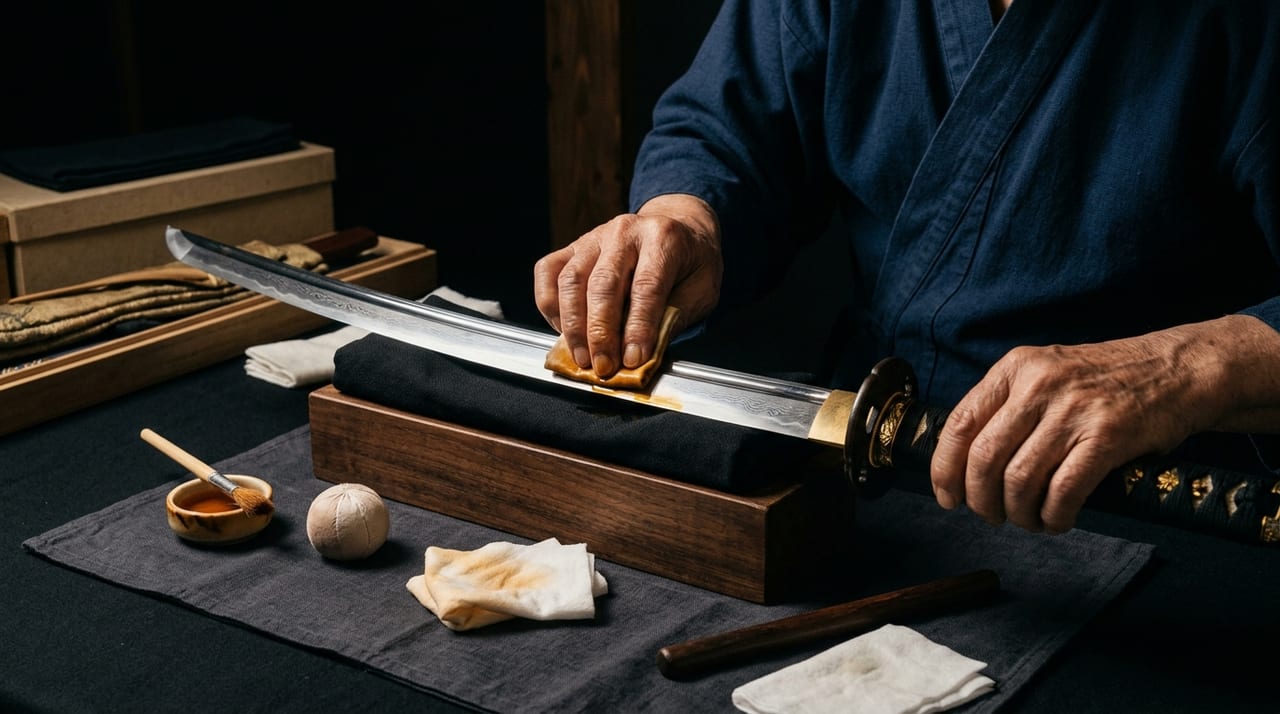
A complete guide to Japanese sword maintenance tools: uchiko powder ball, nuguigami paper, choji oil, and mekugi-nuki punch—functions, correct usage, and common mistakes to avoid.
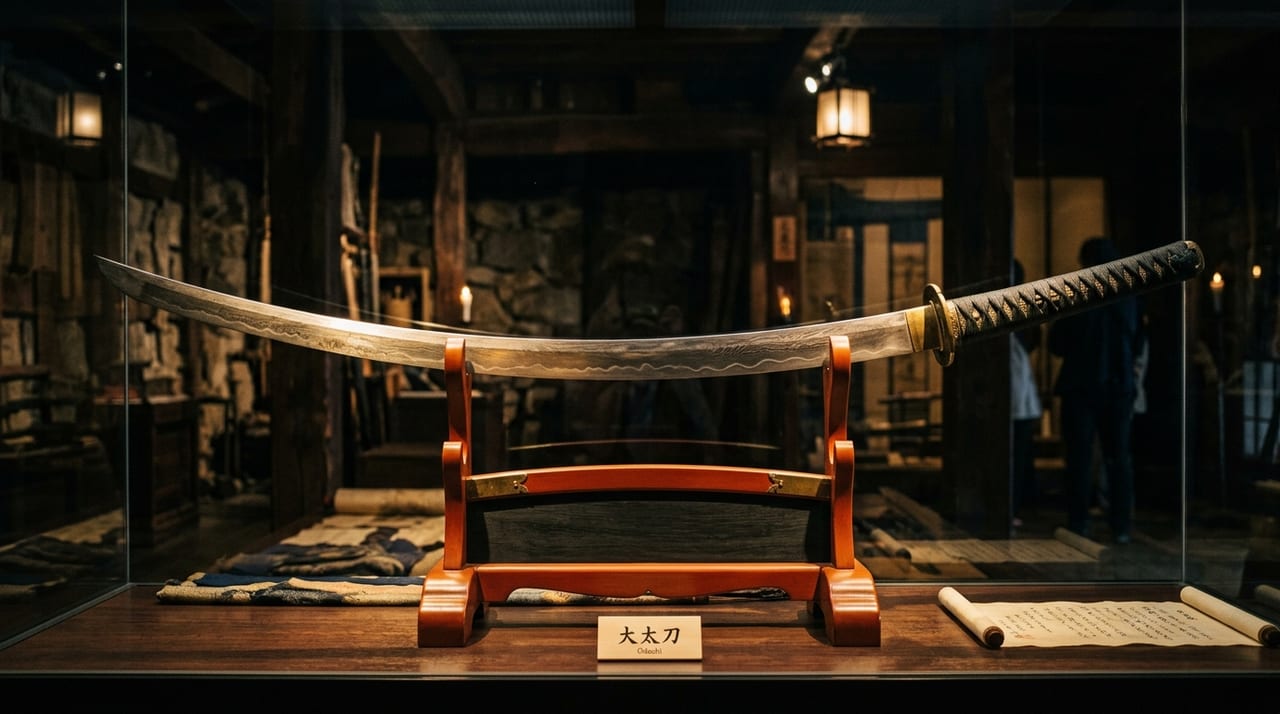
Classification, battlefield use, and famous surviving examples of ōdachi and nodachi—Japanese swords with blades exceeding 90 cm, which flourished during the turbulent Nanbokuchō and Muromachi periods.
From Eiji Yoshikawa to Shotaro Ikenami, explore how Japanese literature has depicted the sword—its spirit, technique, and symbolism in kengō fiction and period dramas.
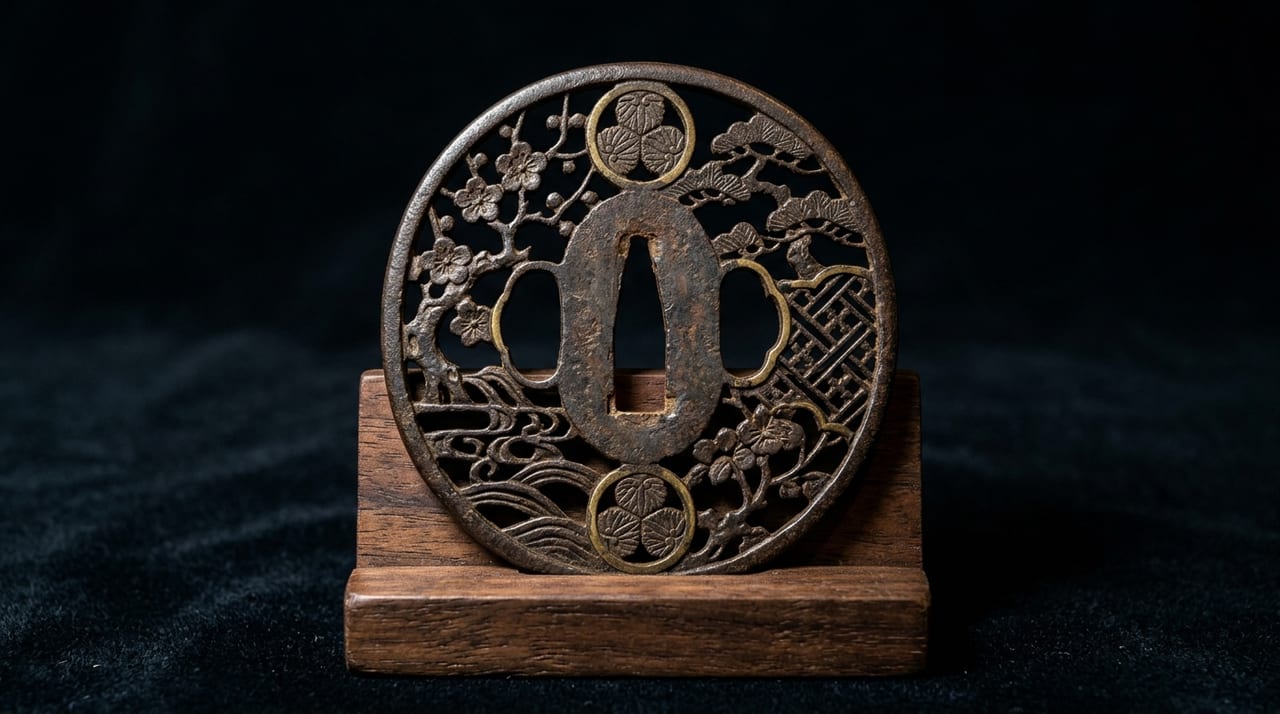
A beginner's guide to appreciating tsuba: how to read materials, silhouette, sukashi openwork, surface texture, and signatures when encountering a guard for the first time.
After quenching (焼き入れ) is complete, the blade passes through a rough-shaping stage called sengake (鏟がけ) before polishing. This explanation covers the procedures of this technique—using a scraper tool to adjust the curve and shape of the blade—as well as the years required for a craftsman to master it.
Hōki Province, which corresponds to western Tottori Prefecture today, was a renowned center of sword-making that produced the master craftsman Yasutsuna during the Heian period. This article surveys the sword-smith lineages rooted in Hōki and the surviving representative masterpiece blades.
The ko-katana (小刀) is known as an accessory blade fitted into the kozuka (小柄) of sword furniture, but it existed as an independent blade long before that. This traces the diversity of blade length, tsukurikomi (造り込み), and applications, and its lineage as a sword.
The 1590 Siege of Odawara marked the completion of Toyotomi Hideyoshi's unification of Japan. This large-scale military campaign is historically examined for how it affected the supply and demand of swords, production centers, and the movement of craftsmen.
On the sets of period dramas, films, and theatrical productions, authentic registered Japanese swords and expertly crafted stage swords are used. This article explains the work of specialized vendors who procure, manage, and lend these swords, as well as their connection points with the sword industry.
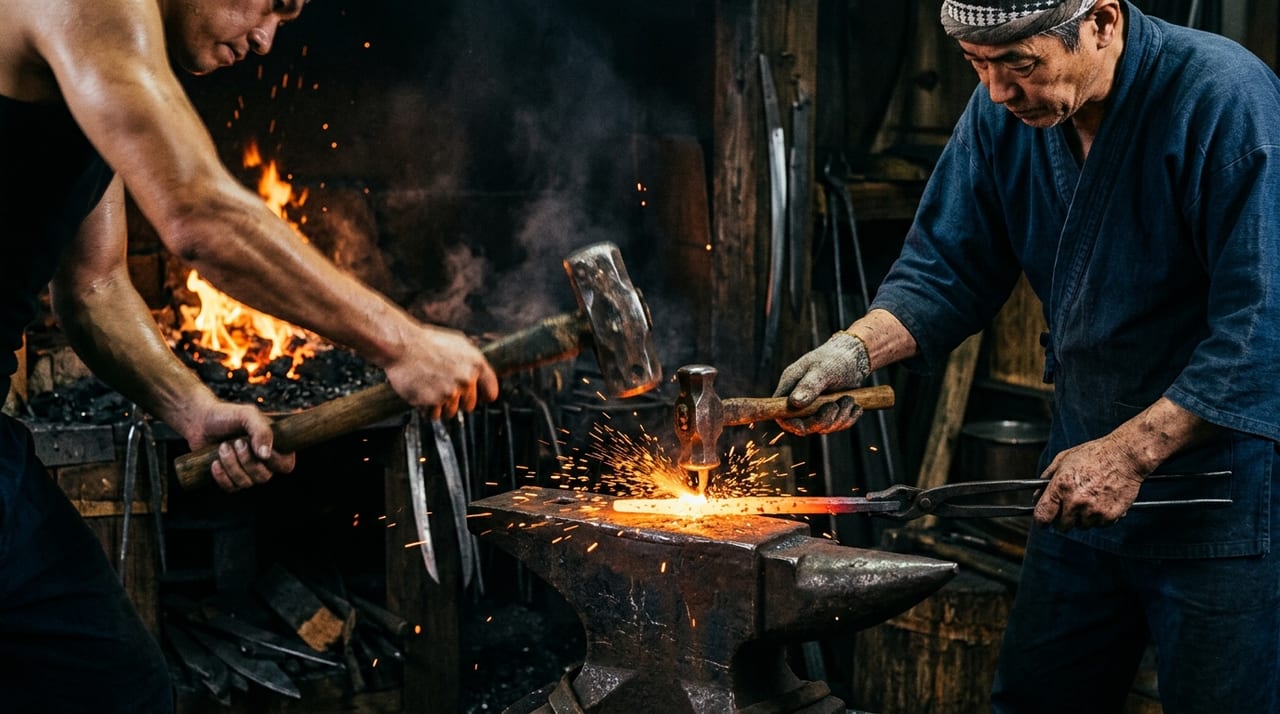
In nihonto forging, the swordsmith's ko-zuchi (small hammer) and the assistant's o-zuchi (large hammer) work in concert to shape the steel. This article explains how hammer weight, shape, and technique affect the forging process.
The Tegai school, one of the Yamato Go-ha (five schools), operated near Todai-ji's Tegai-mon gate. Known for masame-hada grain and deep nie straight hamon, this article traces their lineage from Kamakura through the Nanbokucho period.
The nagamaki is a type of Japanese sword featuring a long handle roughly equal in length to the blade. Used on battlefields from the Nanbokucho to Sengoku periods, this article explains its structure, use, and notable surviving examples.