最新消息 — 最新入荷資訊請查閱商品目錄。 查看 →
深入了解日本刀知識與文化的見解
Seppuku (切腹) was a ritualistic form of death in which samurai demonstrated their innocence and resolve by cutting open their own abdomen, while kaishaku (介錯)—the act of beheading—served the role of minimizing that suffering. In samurai society, where the nihonto (日本刀) was regarded not merely as a weapon but as a 'mirror of the soul,' this very form of death was deeply intertwined with samurai perceptions of swords and their philosophical views on life and death.
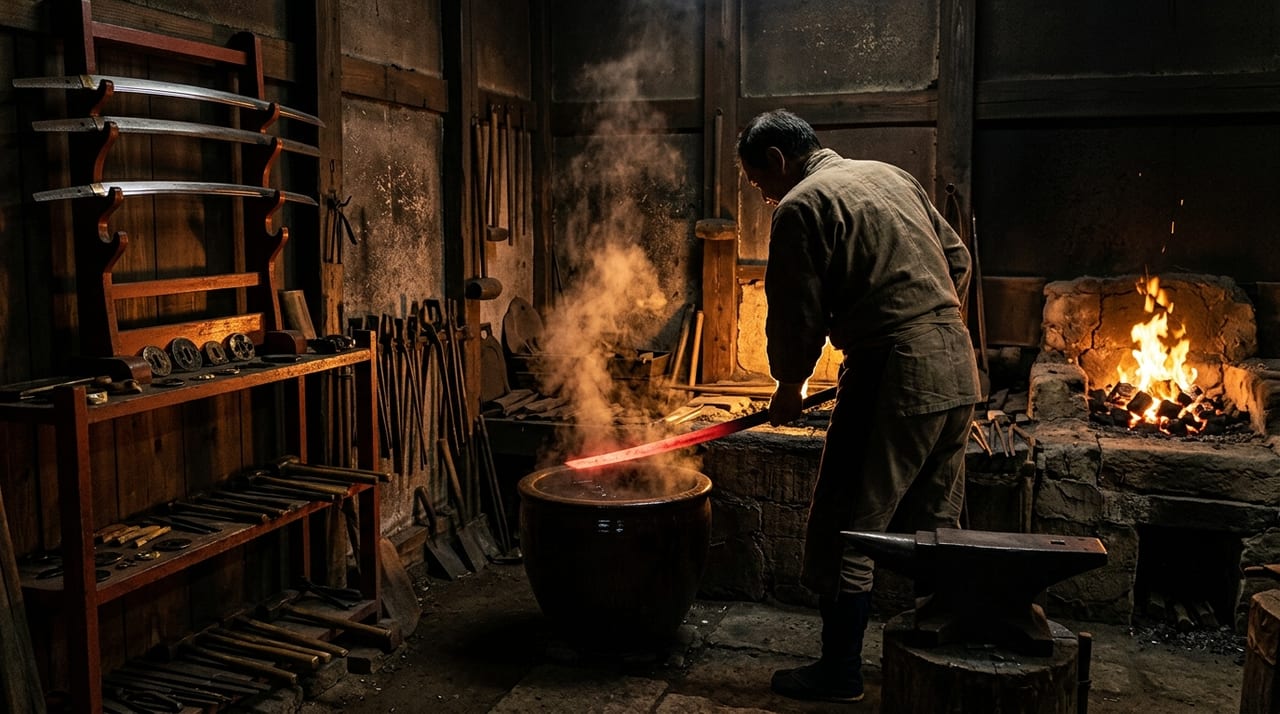
Traditionally, the season called 'winter forging' (fuyu-kaji 冬鍛冶) has been recommended when sword smiths undertake blade forging. The cool season provides stable water temperature management during quenching and allows the hearth's fire color to be seen more clearly. By contrast, summer work presents its own challenges—steel behavior changes due to high temperature and humidity, along with craftsman fatigue. Understanding the relationship between season and blade forging reveals how Japanese swords, as craft works, are intimately connected to the natural environment.
Rai Kunitsugu was a master swordsmith of Yamashiro Province who flourished in the late Kamakura period as the successor to Rai Kuniyuki (来国行), the founder of the Rai school. His elegantly slender tachi blades with graceful curvature, delicate suguha (直刃) hamon with small choji (丁子) features, and finely forged jigane (地鉄) exemplify the refined aesthetic sensibility of the Yamashiro tradition. Many of his works have been designated as National Treasures or Important Cultural Properties, and he is highly regarded as the Rai-school swordsmith who transmitted the greatest number of masterworks bearing his signature.
The Awataguchi school was a group of master swordsmiths based in Kyoto's Awataguchi area during the early Kamakura period. Known for refined jihada and nie-deki, they are considered the fountainhead of the Yamashiro tradition.
Iai-jutsu traces its origins to Hayashizaki Jinsuke Shigenobu in the 16th century. This article traces the lineage from Shimmuso Hayashizaki-ryu to modern iaido, and explores how this sword-drawing art has shaped Japanese sword culture.
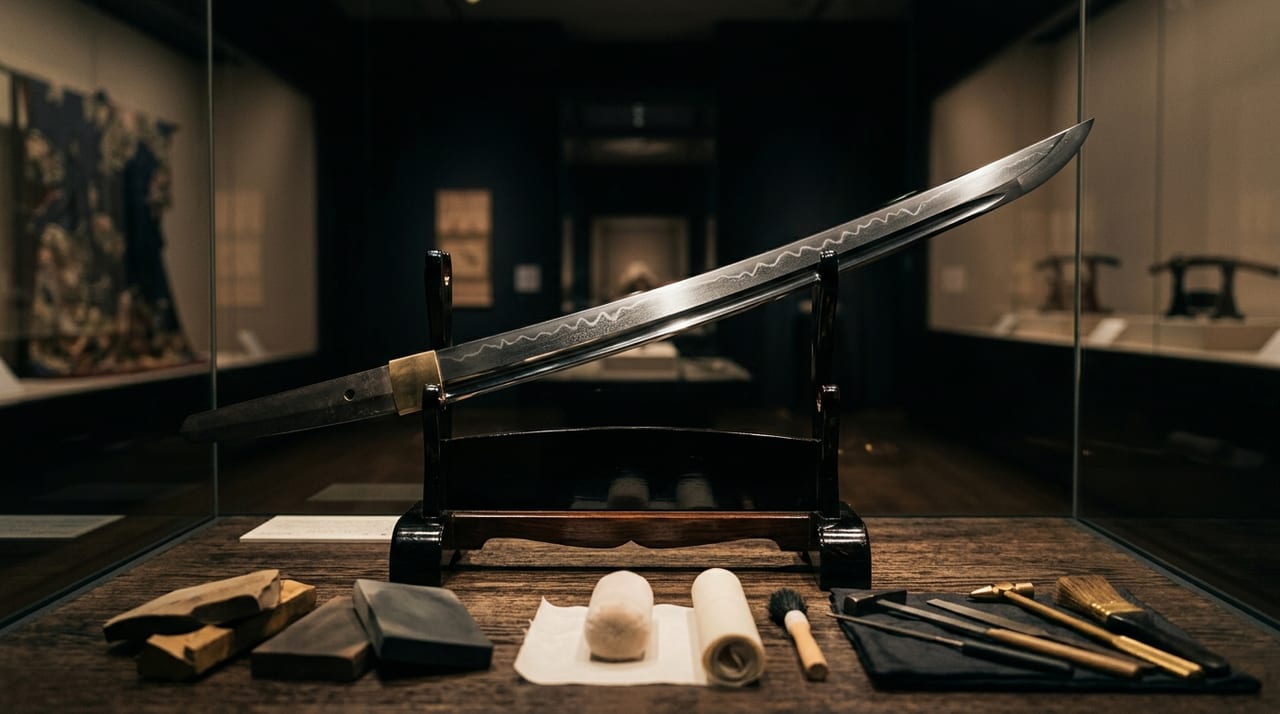
Hadori is the final and most delicate step in Japanese sword polishing, performed by togishi to bring out the hamon. This article explains the technique, tools, and mastery required in this finishing stage.
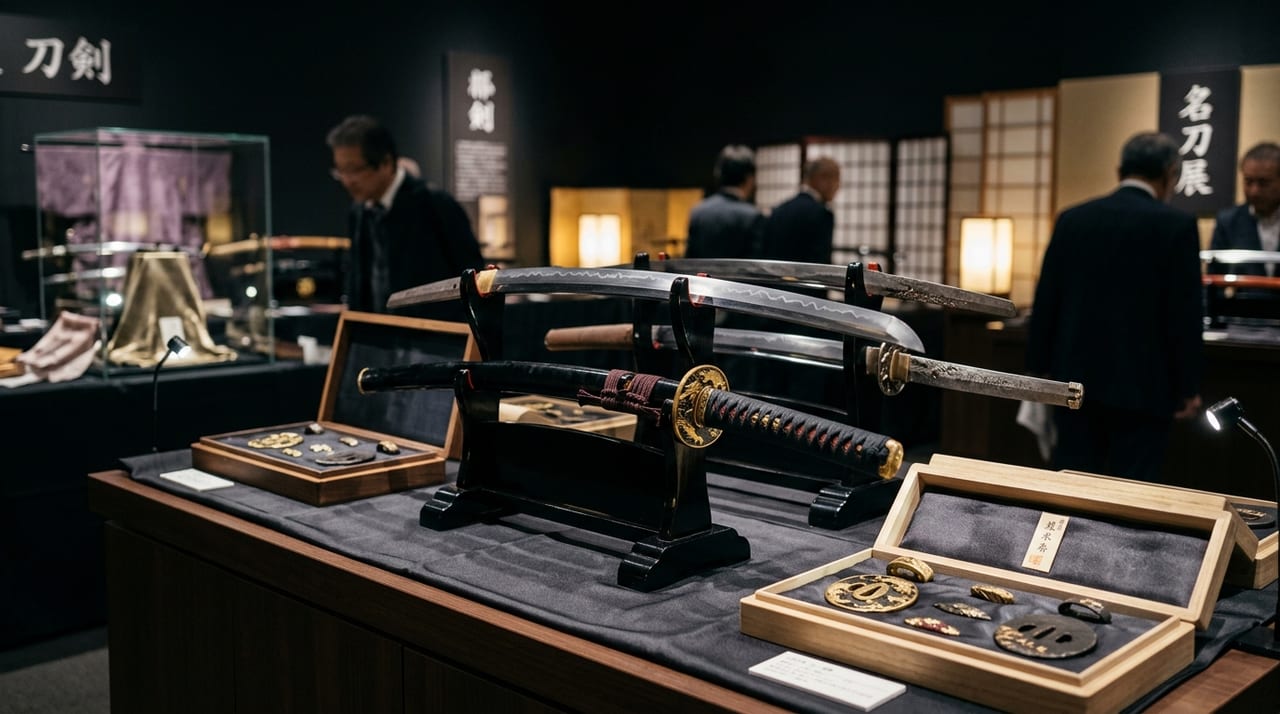
A practical guide to Japan's major annual Japanese sword events including fairs, exhibitions, and appraisal meetings. Covers timing, venue types, and tips for collectors and enthusiasts.
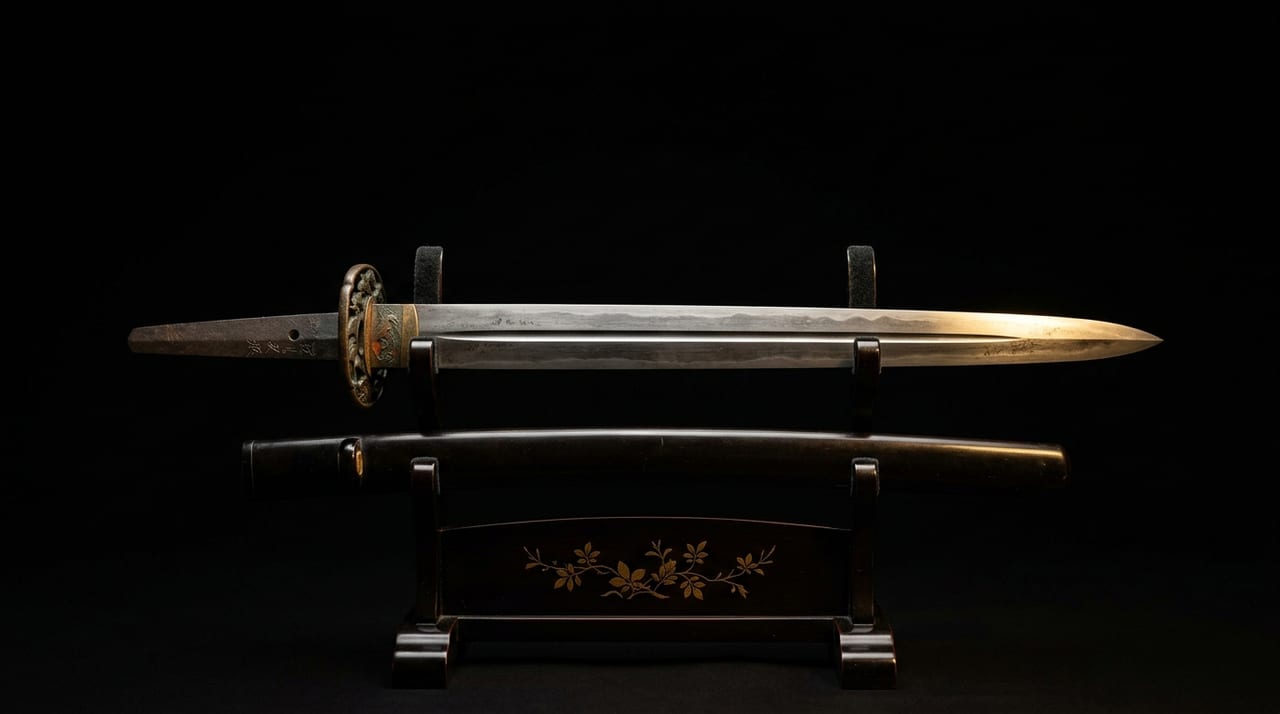
Moroha-zukuri refers to Japanese sword blades sharpened on both edges. This article explores its structure, historical context from ancient warabite swords to Kamakura-period examples, and its place in Japanese blade typology.
In the valuation of Japanese swords, the presence or absence of a mei (銘, signature) is one of the important factors. This article explains how individually signed blades and unsigned blades are treated in authentication and market pricing, including examples of celebrated unsigned masterblades.
Explains the lineages of sword makers rooted in Dewa (Yamagata and Akita) and Mutsu (Miyagi, Iwate, Aomori, and Fukushima). Introduces why the Tōhoku region, far from the major production centers of Kyoto, Yamato, and Bizen, cultivated its own swordsmiths' culture, with representative schools, sword makers, and extant examples.
Explores a new cultural sphere in which Japanese swords are consumed within the context of pop culture, including the musical version of Touken Ranbu ('Touken Mus'), cosplay costumes, and fan art on social media. Examines the points of connection and friction with traditional collector culture, and considers the changes brought about by younger generations.
A guide to the procedures and practical steps for donating privately held nihonto (日本刀) to museums, galleries, and shrines. Covers how to select a recipient institution, procedures under the Cultural Properties Protection Law, transfer of registration certificates, and important considerations in donation agreements—information every collector should know.