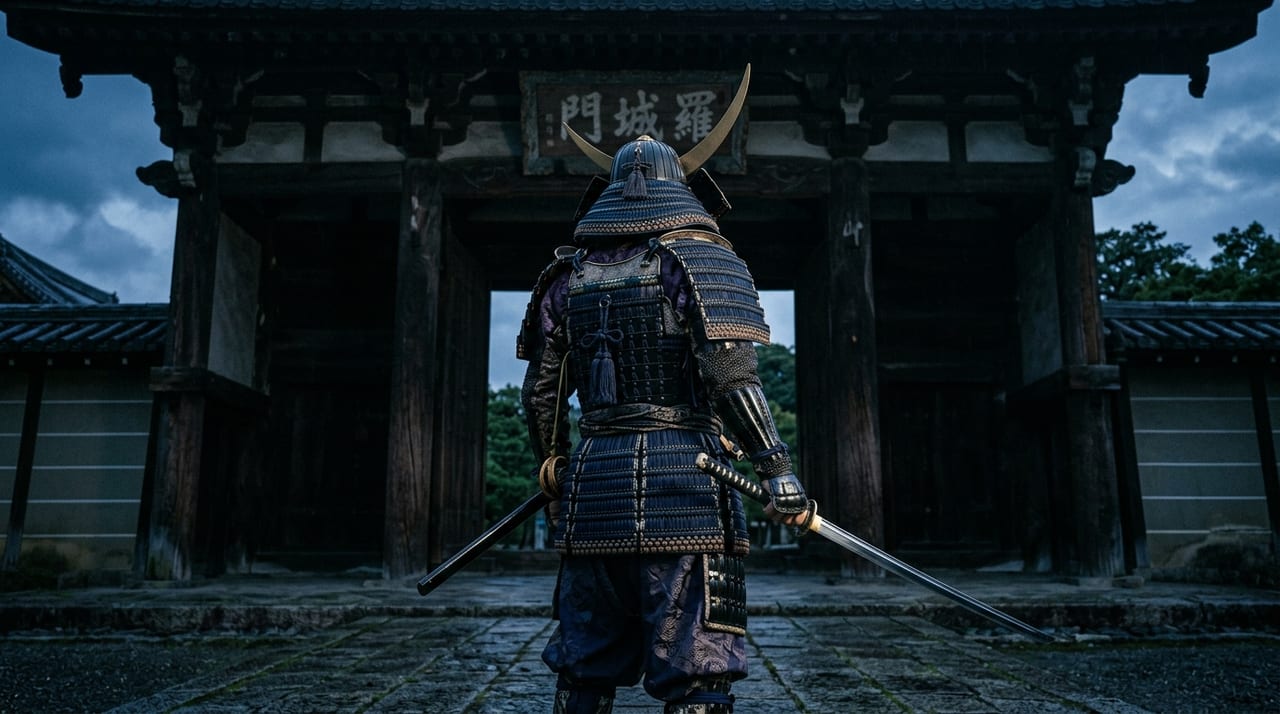
 * Image is for illustrative purposes only.
Watanabe Tsuna
渡辺綱
First of Yorimitsu's Four Heavenly Kings — The Legendary Swordsman Who Cut Off a Demon's Arm
Description
Foremost of Yorimitsu's Four Heavenly Kings
Watanabe Tsuna, born in Tenryaku 7 (953), is a legendary warrior ranked first among Yorimitsu's Four Heavenly Kings, as the most martially accomplished of the retainers who served Minamoto no Yorimitsu. Together with Urabe no Suetake, Sakata no Kintoki (Kintarō), and Usui Sadamitsu, Tsuna formed the Four Heavenly Kings. As an embodiment of the ideal warrior of the Heian period, he had a great influence on later literature and art. In particular, his confrontation with the demon at Rashōmon is one of the most famous stories among Japanese tales of the strange and supernatural, and it has continued to be depicted in many literary works, including kabuki, Noh, jōruri, and painting.
The Demon at Rashōmon and Higekiri
The greatest legend that made Watanabe Tsuna's name immortal is “the Severing of the Demon's Arm at Rashōmon.” Ordered by Minamoto no Yorimitsu to “go alone at night to Rashōmon and bring back proof,” Tsuna encountered a demon in the form of a woman at the dark gate. Recognizing at once that she was a demon, Tsuna swept the blade Higekiri, which he had received from Yorimitsu, in one stroke and cut off the demon's right arm. Tsuna brought back the severed arm and reported to Yorimitsu. The continuation of the story is also famous: the demon, trying to recover its arm, later appeared at Tsuna's residence disguised as an old woman. This legend has been interpreted as a tale that conveys the essence of bushidō: a demon can be defeated only when a warrior's courage, judgment, and the sharpness of his blade all come together.
The Provenance of the Famous Sword Higekiri
Higekiri, the sword with which Watanabe Tsuna is said to have cut off the demon's arm, is a famous blade handed down in later times as a treasured sword of the Minamoto. The name “Higekiri” is said to derive from the cutting of a man's beard during a test cut, but it is also said to derive from the cutting of a demon's arm (including the demon's hair). The blade was later passed down to Minamoto no Yoshitomo and Minamoto no Yoritomo, and as a symbol of the Minamoto it held a special place in the warrior culture of medieval Japan. Today it survives at Kitano Tenmangū as “Onikiri-maru (Higekiri),” and as the most venerable of the Minamoto swords it continues to command the reverence of people today.
Heian-Period Swordsmanship and Swords
The mid-Heian period in which Tsuna lived (10th–11th centuries) was an age in which the form of Japanese swords was completing its transition from the straight blades of the continent (chokutō) to Japan's own curved blades (wan-tō, blades with curvature). The sword Tsuna wielded is a typical example of the long-bladed Heian tachi with curvature. It combined a beautiful curved form with keen sharpness that met the demands of an age centered on mounted combat.
Exploits of Yorimitsu's Four Heavenly Kings
Apart from the Rashōmon tale, Watanabe Tsuna also achieved many military feats as one of Yorimitsu's Four Heavenly Kings. In the subjugation of Shuten-dōji at Ōeyama, too, Yorimitsu and the Four Kings are said to have fought together as a group, and this legend is known as one of the most magnificent stories among Japanese tales of demon-subjugation. Tsuna was especially outstanding in swordsmanship among the Four Kings, and his fame as the “ideal of the sword” had a great influence on the formation of warrior culture from the late Heian period through the Kamakura period.
As the Founder of the Watanabe Clan
Watanabe Tsuna is also a historically important figure as the founder of the Watanabe clan. The Watanabe clan, based in Watanabe in Settsu Province (around present-day Chūō-ku, Ōsaka City), maintained a close relationship with the Minamoto while building its own power in maritime transport and commerce, and it played a role as a bearer of the maritime networks of medieval Japan. The image of the warrior that Tsuna embodied, a master swordsman and a brave warrior of deep loyalty to his lord, was handed down to his descendants as the spiritual pillar of the Watanabe clan. Tsuna's view of the sword embodies the fundamental spirit of bushidō, which regards the sword not merely as a weapon but as proof of being together with one's lord.
Notable Swords
- Higekiri (Onikiri-maru) — the legendary sword received from Minamoto no Yorimitsu, with which the demon's right arm was cut off at Rashōmon. The name “Higekiri” derives from cutting off a man's beard during a test cut. It was later passed down to Minamoto no Yoshitomo and Yoritomo, and today it survives at Kitano Tenmangū as “Onikiri-maru,” a treasure of sword culture representing the legend of demon-subjugation